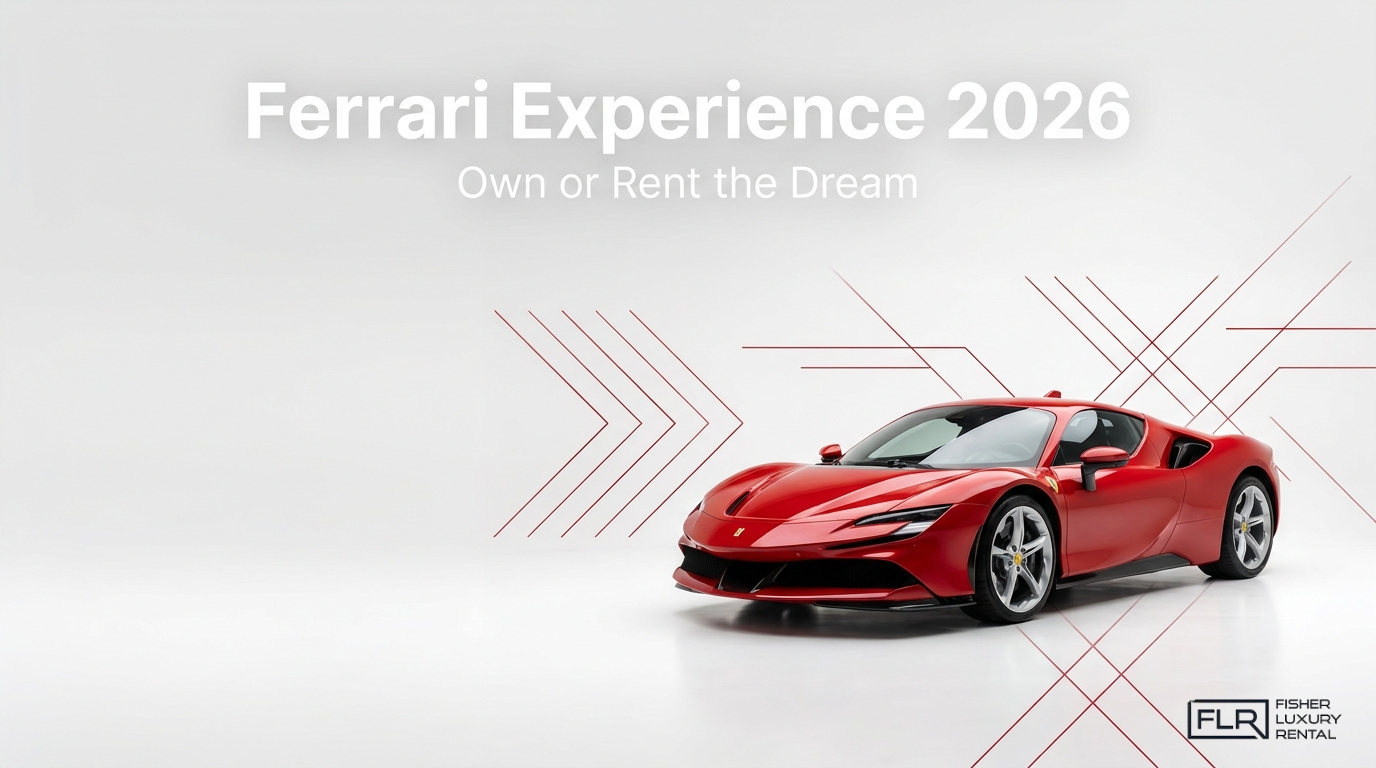
Ferrari ownership in 2026 is a commitment that extends well beyond the purchase price, spanning a model range from the $275,000 Amalfi entry point to the $3.7 million F80, each with its own financial and logistical obligations.
This guide covers what it actually costs to buy and maintain a Ferrari, what day-to-day ownership looks like, how the dealership and allocation system works, how insurance and depreciation play out over time, what hidden costs most buyers miss, what driving one actually feels like, how Ferrari stacks up against Lamborghini, McLaren, and Porsche, and whether renting is the smarter path for most enthusiasts.
Purchase pricing tells only part of the story. Carbon-ceramic brake replacements alone can reach $60,000, and the 7-Year Genuine Maintenance program, while comprehensive for scheduled service, leaves consumables, extended warranty fees, and unplanned repairs entirely to the owner.
Daily ownership rewards those who treat their Ferrari as a secondary vehicle. Hybrid models like the 296 GTB offer 2.4-second 0-60 performance, but they also carry reported reliability concerns, including recall notices and hybrid system failures that demand authorized dealer access.
Ferrari’s allocation system is merit-based, not transactional. Access to limited models is earned through ownership history and brand loyalty, which is reflected in a 74.0% customer retention rate leading the luxury category.
The financial picture grows with hidden costs like PPF, climate-controlled storage, and Corse Clienti events that run $21,000 per outing. For those who want the driving experience without those obligations, rental remains a compelling alternative.
What Does It Cost to Buy a Ferrari in 2026?
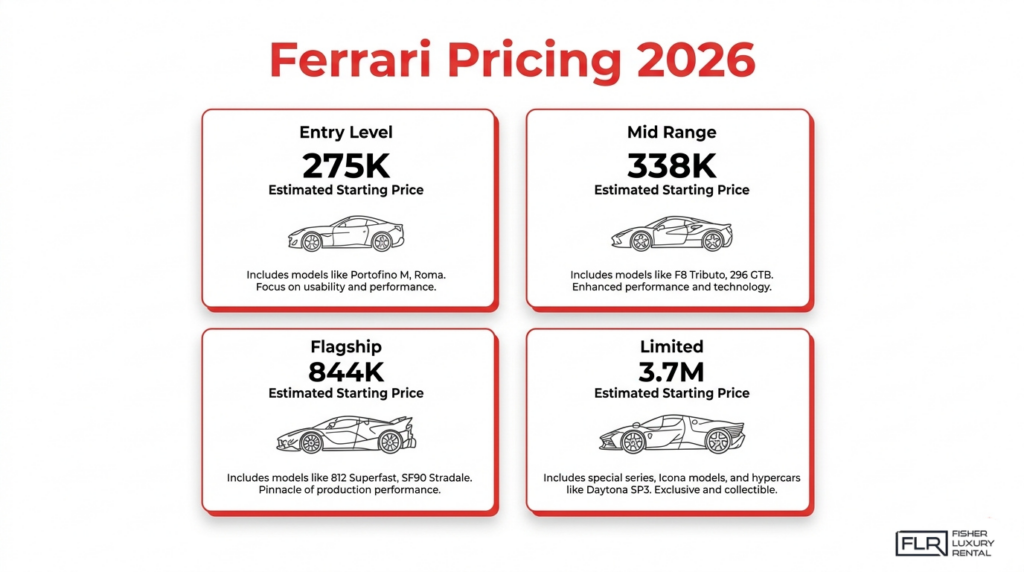
The cost to buy a Ferrari in 2026 ranges from approximately $275,000 for an entry-level model to over $3.7 million for a flagship limited-production car. The sections below cover entry-level, mid-range, flagship, and limited-edition pricing.
How Much Does a New Ferrari Entry-Level Model Cost?
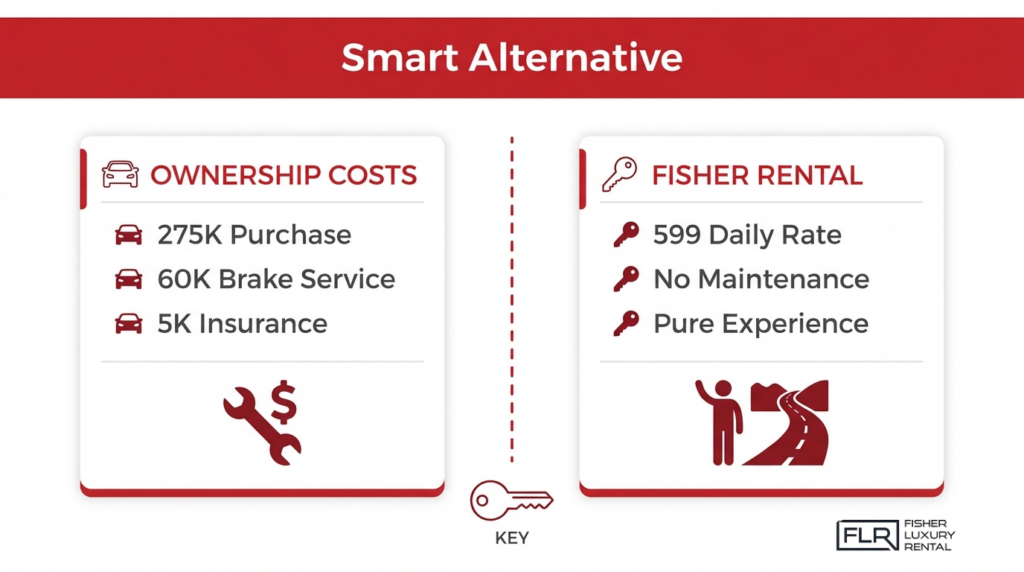
The new Ferrari entry-level model cost starts at approximately $275,000 for the 2026 Ferrari Amalfi, which replaces the Roma as the brand’s most accessible model. According to MotorTrend, this figure represents the base price before factory options, which can add tens of thousands more. The 2026 Ferrari Purosangue, the brand’s first four-door model, carries a higher starting MSRP of $428,636. Beyond the purchase price, buyers should budget for insurance: the average annual cost to insure a Ferrari is approximately $5,377, though rates vary significantly by model and driver profile.
How Much Does a Mid-Range Ferrari Like the Roma or 296 GTB Cost?
The mid-range Ferrari cost centers on the 296 GTB, which starts at $338,250, with the open-top 296 GTS convertible beginning at $374,000. The Roma has been succeeded by the 2026 Ferrari Amalfi, which Top Gear Philippines describes as a “so-called ‘evolution’ of the outgoing Roma” that remains a “near-200mph 2+2.” These mid-range models deliver the core Ferrari experience at a meaningful step below flagship pricing, making them the most popular entry points for serious buyers.
How Much Does a Flagship Ferrari Like the SF90 or 812 Cost?
The flagship Ferrari cost reaches $844,000 for the SF90 XX Stradale, a road-legal special version launched at that MSRP according to CarBuzz. At the top of the range, the 2026 Ferrari F80 carries a starting price of $3,735,000, with production strictly limited to 799 units. For context, the Lamborghini Revuelto, a hybrid competitor to the SF90, starts at $608,358, meaning Ferrari’s flagship tier commands a substantial premium over the broader supercar market.
How Much Does a Limited-Edition Ferrari Cost?
The limited-edition Ferrari cost varies by model, but the 296 Speciale illustrates the premium clearly: according to Car and Driver, the 296GTB starts at $338,250, the 296GTS convertible begins at $374,000, and the 296 Speciale is expected to cost approximately $500,000. Limited editions command this premium because Ferrari restricts production and reserves allocation for its most loyal customers, making price only one part of the accessibility equation.
What Are the Ongoing Maintenance Costs of Owning a Ferrari?
The ongoing maintenance costs of owning a Ferrari extend well beyond the purchase price, covering routine service, consumables, major repairs, and extended warranty protection. The sections below break down each cost category in detail.
How Much Does Routine Ferrari Service Cost Annually?
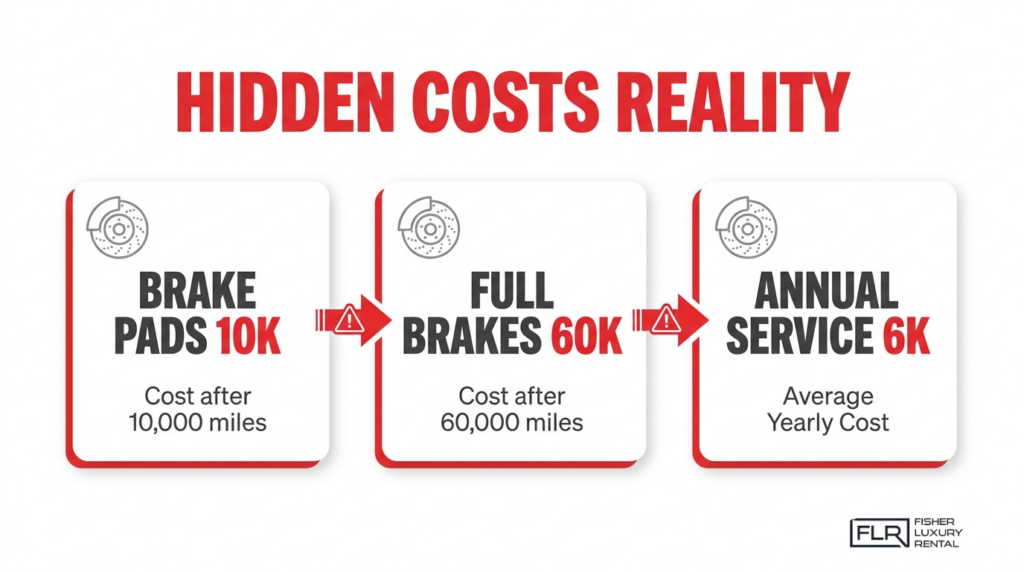
Routine Ferrari service cost is significantly offset for new owners by the 7-Year Genuine Maintenance program, which Ferrari includes with every new vehicle. This program covers scheduled maintenance at intervals of one year or 12,500 miles (20,000 km), reducing out-of-pocket annual costs during the coverage window. Once the program expires, owners should expect to budget meaningfully for dealer labor and certified parts at each service interval.
How Much Do Ferrari Brake Replacements and Tire Changes Cost?
Ferrari brake replacement and tire change costs rank among the most significant ownership expenses outside of scheduled service. Carbon-ceramic brake pad replacements range from $5,000 to $10,000, while a full rotor-and-pad replacement can reach between $25,000 and $60,000. According to Ferrari Lake Forest, maintenance visits for items not covered by the 7-year plan, such as tires or brake pads, typically run between $2,000 and $4,000 per visit. Given these figures, owners who drive aggressively or track their vehicles should budget for brake wear as a near-annual line item.
How Much Does a Major Ferrari Engine Service Cost?
Major Ferrari engine service costs are difficult to predict but can be severe. Ferrari 812 owners have reported engine gasket failures requiring complete engine removal and full disassembly for repair, according to FerrariChat. Labor alone for that scope of work at an authorized dealer can be substantial, even before parts costs are factored in. Engine-level repairs represent the most financially unpredictable category of Ferrari ownership.
How Much Does Ferrari Extended Warranty Coverage Cost?
Ferrari extended warranty coverage costs approximately $6,675 annually for eight-cylinder models, according to Continental AutoSports. The Ferrari Power16 program extends protection to main components, including the engine and transmission, for vehicles up to their 16th year of life. For owners of high-mileage or post-CPO vehicles, this program offers meaningful financial protection against the kind of catastrophic repair costs described above.
What Is Ferrari Ownership Like on a Day-to-Day Basis?
Ferrari ownership on a day-to-day basis balances extraordinary performance with real-world practicality trade-offs. The sections below cover daily reliability, cabin comfort compared to grand tourers, and typical dealer visit frequency.
How Reliable Is a Ferrari as a Daily Driver?
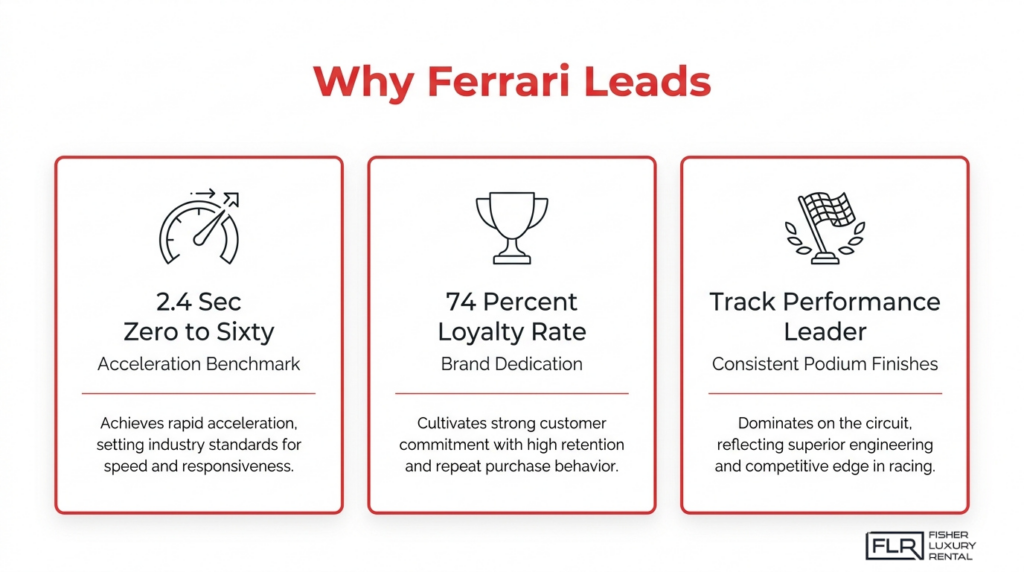
Ferrari reliability as a daily driver depends heavily on how the car is used. Modern models like the 296 GTB and Purosangue are mechanically sophisticated, but they reward low-mileage, pleasure-use ownership rather than commuter duty. Insurance premiums for Ferraris driven fewer than 5,000 miles annually as “pleasure vehicles” are typically lower than those for daily-driven exotics, reflecting how insurers assess real-world usage patterns. According to Car and Driver, the 296 GTB recorded a 0-60 mph time of 2.4 seconds, making it the quickest rear-wheel-drive car they have tested. That performance capability comes with complexity. Most owners treat their Ferrari as a secondary vehicle, and that approach, frankly, is the most sustainable ownership model for preserving both mechanical health and long-term value.
How Does Ferrari Cabin Comfort Compare to Grand Tourers?
Ferrari cabin comfort varies by model. The Purosangue and 12Cilindri prioritize touring refinement, offering rear seating and road isolation closer to a luxury GT than a race-focused sports car. The 296 GTB is tighter and more driver-focused, with comfort taking a secondary role to performance feedback. Grand tourers from Aston Martin and Bentley generally offer quieter cabins and softer suspension tuning by design.
How Often Do Ferraris Need to Visit the Dealer for Issues?
Ferraris need to visit the dealer at scheduled intervals of every 12 months or 12,500 miles under the 7-Year Genuine Maintenance program. Beyond routine service, owners of hybrid models like the 296 GTB and SF90 have reported hybrid system failures linked to the 12V low-voltage battery requiring specialized charging. A “do-not-drive” recall was also issued for the 296 GTB and GTS over a thermal risk related to the fuel tank connecting pipe. Low-mileage ownership reduces the frequency of unplanned visits, but dealer dependency remains higher than with conventional luxury vehicles.
What Is the Ferrari Dealership and Purchase Experience Like?
The Ferrari dealership and purchase experience is unlike any conventional luxury car transaction. The following H3s cover how Ferrari’s allocation system works, what the brand expects from buyers, and how Ferrari’s customer service stacks up against competitors.
How Does the Ferrari Allocation and Waitlist System Work in 2026?
Ferrari’s allocation system works by rewarding relationship history rather than purchase price alone. Access to limited and high-demand models is earned through demonstrated brand loyalty, purchasing patterns, and dealer relationships built over years. According to Forbes, Ferrari maintains a strong backlog of orders extending through 2027, driven by a robust product mix and rising revenues.
Models like the 12Cilindri, priced from $465,994, are frequently waitlisted at launch. The Ferrari Daytona SP3 has reached approximately $7,000,000 on the secondary market in early 2026, illustrating what allocation access is worth. Walking into a dealership without prior Ferrari ownership history and expecting priority allocation is, in practice, unrealistic.
What Does Ferrari Expect from Buyers to Access New Models?
What Ferrari expects from buyers to access new models is a proven ownership history and consistent brand engagement. Ferrari informally evaluates clients based on how they’ve treated previous models, whether they’ve speculated or flipped cars, and how actively they’ve engaged with the brand. Buyers who flip allocated vehicles for profit are routinely deprioritized or removed from future allocation consideration.
Dealerships reward clients who purchase regularly, attend events, and retain vehicles. For those exploring Ferrari before committing to ownership, exotic car rentals start from approximately $395 per day, offering a meaningful preview of the experience without triggering the brand relationship stakes.
How Does Ferrari Customer Service Compare to Other Luxury Brands?
Ferrari customer service compares favorably to other luxury brands, with a 74.0% brand retention rate in 2026, leading the entire luxury automotive category in customer loyalty, according to Digital Dealer. That figure is not accidental. Ferrari’s dealer network delivers highly personalized service, often including dedicated client advisors and direct factory communication for special-order configurations.
In practice, Ferrari ownership creates a concierge-level service expectation that most competing brands cannot replicate at scale. This loyalty infrastructure is a meaningful differentiator, particularly when factoring long-term ownership satisfaction against alternatives in the same price tier.
How Much Does Ferrari Insurance Cost?
Ferrari insurance cost varies primarily by driver age, annual mileage, and how the car is used. The sections below break down typical premiums for young owners, experienced drivers, and limited-use vehicles.
How Much Does Insurance Cost for Young Ferrari Owners?
Insurance cost for young Ferrari owners is substantially higher than the segment average. Drivers under 25 face steep surcharges because insurers treat high-performance exotics and inexperienced drivers as a compounded risk. The average annual Ferrari insurance premium is approximately $5,377 according to Insured Better, and young drivers can expect to pay significantly more than that baseline. Maintaining a clean driving record, completing advanced driving courses, and bundling policies are the most practical ways to reduce premiums in this category.
How Much Does Insurance Cost for Experienced Drivers Over 40?
Insurance cost for experienced Ferrari drivers over 40 is typically closer to, or even below, the $5,377 annual average reported by Insured Better. A clean multi-decade driving record, established financial history, and homeownership status all contribute to lower risk scores with specialty insurers. Drivers in this group who use their Ferrari primarily on weekends and maintain low annual mileage tend to qualify for the most competitive rates available.
How Much Does Insurance Cost for Limited-Use or Garaged Ferraris?
Insurance cost for limited-use or garaged Ferraris is meaningfully lower than for daily-driven exotics. Premiums for Ferraris classified as “pleasure vehicles” with under 5,000 annual miles are typically reduced, as insurers assign lower exposure to cars driven infrequently and stored in secured garages. Agreed-value policies, which guarantee a fixed payout equal to the insured amount, are especially well-suited to low-mileage Ferraris where replacement cost stability matters most.
How Well Do Ferraris Hold Their Value Over Time?
Ferrari resale value is stronger than most luxury competitors, though results vary significantly by model. The H3s below cover which models appreciate, which depreciate fastest, and how mileage affects what a used Ferrari is worth.
Which Ferrari Models Appreciate in Value?
Ferrari models that appreciate in value are typically limited-production, naturally aspirated, or historically significant vehicles. According to Ferrari Lake Forest, Ferraris typically lose only about 20% of their value over the first three years of ownership, outperforming many luxury rivals on depreciation.
Pre-owned models like the 458 Italia are showing strong appreciation trends in the 2026 market as enthusiasts actively seek naturally aspirated V8 engines. Limited-edition Icona series cars and older classics tend to gain value once supply is fully absorbed by collectors. Performance pedigree reinforces this: the 296 GTB completed a Fiorano lap in 1:21.0, 0.5 seconds faster than the V12-powered 812 Superfast, reinforcing why newer hybrid models maintain buyer interest.
Which Ferrari Models Depreciate the Most?
The Ferrari models that depreciate the most are high-volume, heavily optioned flagship launches that hit the used market in large numbers shortly after release. The SF90 Stradale is the clearest example, with some examples losing over $300,000 in value within a few years of their launch, according to HotCars.
New technology, rapid model updates, and inflated dealer markups at launch all accelerate depreciation on high-output production Ferraris. Buyers who pay above MSRP at launch absorb the steepest losses. From an investment standpoint, purchasing a Speciale or limited-production variant carries meaningfully better long-term value than buying a standard production Ferrari at a premium.
How Does Mileage Affect Ferrari Resale Value?
Mileage affects Ferrari resale value significantly, with low-mileage examples consistently commanding higher prices in the secondary market. Collectors and enthusiasts treat annual mileage as a primary quality signal, with under 5,000 miles per year considered ideal for value preservation.
High mileage triggers concerns about powertrain wear, carbon-ceramic brake condition, and hybrid battery health on models like the SF90 and 296. Keeping annual mileage low, storing the car properly, and maintaining full service records are the most reliable strategies for protecting resale value on any Ferrari model.
What Are the Hidden Costs of Ferrari Ownership?
The hidden costs of Ferrari ownership extend well beyond the sticker price, adding thousands of dollars annually through storage, paint protection, and club participation. The sections below cover climate-controlled garage costs, PPF and detailing expenses, and club membership and event fees.
How Much Do Ferrari Storage and Climate-Controlled Garages Cost?
Ferrari storage costs vary by facility type, location, and climate control requirements. A dedicated climate-controlled garage unit in a major metro area typically runs $300 to $800 per month, while premium exotic car storage facilities with security monitoring, dehumidifiers, and concierge services can reach $1,500 or more monthly. For owners without a suitable home garage, purpose-built exotic storage is not optional — temperature swings and humidity cause paint cracking, interior degradation, and seal failure. Budgeting $5,000 to $10,000 annually for proper storage is a realistic expectation that most prospective buyers overlook entirely.
How Much Does Ferrari-Specific Detailing and Paint Protection Cost?
Ferrari-specific detailing and paint protection costs are significant for owners who want to preserve both appearance and resale value. Full-body Paint Protection Film (PPF) for exotic vehicles in 2026 typically costs between $5,000 and $8,000, according to Rapid Window Tinting’s 2026 price guide. Ceramic coating adds another $1,500 to $3,000, and professional detail sessions run $500 to $1,500 each. Given Ferrari’s complex body lines and high-end paint finishes, skipping PPF is a costly gamble — paint correction on an exotic can easily exceed the PPF investment.
How Much Do Ferrari Owners Spend on Club Memberships and Events?
Ferrari owners spend a wide range from modest to substantial on club memberships and events. Annual membership for the Ferrari Owners Club in the USA, Canada, and Mexico is priced at just $150, per the Ferrari Owners Club website. However, event participation escalates costs dramatically: a single Ferrari Corse Clienti official track event costs approximately $21,000 per outing, excluding ongoing maintenance. For most owners, club involvement is one of the most rewarding yet underestimated budget lines in the Ferrari ownership experience.
What Does It Feel Like to Drive a Ferrari in 2026?
Driving a Ferrari in 2026 means choosing between two very different sensory worlds: the electrified urgency of a V8 hybrid or the operatic ceremony of a naturally aspirated V12. The sections below cover each powertrain’s feel and Ferrari’s current driver technology.
How Does Ferrari’s V8 Hybrid Powertrain Feel Behind the Wheel?
Ferrari’s V8 hybrid powertrain feels like controlled chaos delivered with surgical precision. The 296 GTB pairs a twin-turbocharged 3.0-liter V6 with electric motors, producing 819 combined horsepower and a 0–60 mph time of 2.4 seconds, making it the quickest rear-wheel-drive car ever tested by Car and Driver. The electric motors fill torque gaps between turbo spools, creating an unbroken wall of acceleration that feels almost synthetic in its completeness. Austin Parsons of Car and Driver notes that “the 296 wows with nearly incomprehensible speed and cornering ability, and its hybrid V-6 replaces displacement with electrifying results.” For drivers who want maximum performance over emotional theater, the hybrid V8 is arguably the most capable daily-usable Ferrari ever built.
How Does a Naturally Aspirated Ferrari V12 Compare in Driving Feel?
The naturally aspirated Ferrari V12 driving feel is fundamentally different: raw, linear, and deeply emotional in a way no hybrid system replicates. Where the hybrid surges, the V12 builds in a continuous crescendo, rewarding revs with an acoustic experience that enthusiasts describe as irreplaceable. That devotion is measurable: pre-owned Ferrari models like the 458 Italia are showing strong appreciation trends in the 2026 market as buyers specifically seek naturally aspirated engines, according to Accio’s used Ferrari market analysis. The 12Cilindri represents this philosophy at its peak, screaming to redline with no turbo lag and no electric assistance. For purists, the V12 remains the definitive Ferrari.
How Advanced Is Ferrari’s Infotainment and Driver Tech in 2026?
Ferrari’s infotainment and driver tech in 2026 is more connected than any previous generation, while still prioritizing the driving experience over screen complexity. The 2026 Amalfi features a 10.25-inch infotainment display with wireless Apple CarPlay and Android Auto as standard. Ferrari’s driver aids across the lineup include adaptive traction control, e-diff systems, and multiple Manettino dial modes that adjust throttle, steering, and stability settings from wet road comfort to full race configuration. The cabin technology serves the driver rather than distracting from road feel, which is a deliberate engineering philosophy Ferrari has maintained across every model. Ferrari’s order backlog extending through 2027 suggests this balance is resonating strongly with buyers.
What Are the Biggest Pros and Cons of Ferrari Ownership?
The biggest pros and cons of Ferrari ownership span unmatched driving performance, a prestige-driven ownership community, and serious financial and logistical trade-offs. The sections below cover what long-term owners celebrate most and what they complain about regularly.
What Do Long-Term Ferrari Owners Love Most About the Experience?
What long-term Ferrari owners love most about the experience includes the driving performance, brand community, and strong value retention relative to other supercars.
Performance tops every list. The 296GTB recorded a 0–60 mph time of 2.4 seconds, making it the quickest rear-wheel-drive car ever tested by Car and Driver. Beyond raw speed, Ferrari’s Fiorano lap times, exhaust notes, and steering feedback create an emotional connection few cars can replicate.
Brand loyalty reflects genuine satisfaction: Ferrari achieved a 74.0% brand retention rate in 2026, leading the entire luxury automotive category according to Digital Dealer. Owners also value the exclusivity built into allocation, where access to limited models is earned through relationship and behavior, not just payment. For enthusiasts, that earned prestige is a core part of the appeal.
What Do Ferrari Owners Complain About Most Frequently?
What Ferrari owners complain about most frequently includes high ownership costs, reliability concerns, and dealer-dependent service access.
Maintenance costs are the loudest grievance. Carbon-ceramic rotor-and-pad replacements can cost between $25,000 and $60,000, per Ferrari Lake Forest. Hybrid system failures on 296 and SF90 models, gasket failures requiring full engine removal on the 812, and a “do-not-drive” recall on the 296 GTB and GTS have all surfaced in owner forums, raising questions about dependability in modern Ferraris.
Dealer dependency amplifies frustration: nearly all major service requires an authorized Ferrari technician, limiting flexibility and inflating labor costs. The allocation system, while exciting to insiders, alienates new buyers who cannot access desirable models without an existing purchase history.
Is Owning a Ferrari Worth It Compared to Other Supercars?
Ferrari ownership compares favorably to rivals in performance and brand prestige, but the value equation shifts depending on which competitor you stack it against. The H3s below break down Ferrari versus Lamborghini, McLaren, and Porsche across price, experience, and ownership costs.
How Does Ferrari Ownership Compare to Lamborghini Ownership?
Ferrari ownership compares to Lamborghini ownership most directly in the hybrid flagship segment. The Lamborghini Revuelto, a hybrid V12 competitor to the Ferrari SF90, starts at $608,358, making it significantly more expensive than most Ferrari entry points. Both brands demand dealer loyalty and a purchase history for allocation access, but Ferrari’s allocation system is widely considered more merit-based and relationship-driven. For buyers who prioritize track-focused engineering over spectacle, Ferrari tends to offer a more purposeful driving character, while Lamborghini leans into theater and visual drama. The better choice depends entirely on what the owner values most.
How Does Ferrari Ownership Compare to McLaren Ownership?
Ferrari ownership compares to McLaren ownership most clearly at the mid-range hybrid sports car level. According to TrueCar, the McLaren Artura, a direct V6 hybrid rival to the Ferrari 296 GTB, starts at $260,400, making it roughly $78,000 less expensive than the 296 at its base MSRP. McLaren closes that price gap, but Ferrari holds a significant advantage in brand prestige, dealership network stability, and long-term resale value. McLaren has faced well-documented reliability and financial turbulence in recent years, which makes the Ferrari ownership proposition more dependable for buyers weighing long-term cost-of-ownership alongside the performance experience.
How Does Ferrari Ownership Compare to Porsche Ownership?
Ferrari ownership compares to Porsche ownership across very different ownership profiles and price bands. Porsche offers daily-driver reliability, broader service network access, and entry-level sports car pricing that Ferrari simply does not match. A Porsche 911 Carrera starts well under $150,000, while Ferrari’s entry point in 2026 sits around $275,000 with the Amalfi. However, Ferrari delivers a level of exclusivity, emotional intensity, and social cachet that no Porsche can replicate at any price. For drivers who want a weekend supercar with maximum prestige and performance drama, Ferrari wins. For those prioritizing usability, lower running costs, and daily practicality, Porsche remains the more rational choice.
How Can You Experience a Ferrari Without Full Ownership Commitment?
You can experience a Ferrari without full ownership commitment through exotic car rentals, which eliminate purchase costs, maintenance obligations, insurance burdens, and depreciation risk. The sections below cover rental as a practical alternative and the key takeaways from the full Ferrari ownership picture in 2026.
Can Renting a Ferrari from Fisher Luxury Rental Deliver the Thrill Without Ownership Costs?
Yes, renting a Ferrari from Fisher Luxury Rental can deliver the thrill without ownership costs. Fisher Luxury Rental offers the Ferrari California T Convertible starting at $599 per day and the Ferrari 488 Spider at $1,499 per day, placing the full supercar experience within reach for a fraction of what ownership demands. Compared to six-figure purchase prices, five-figure annual maintenance budgets, and thousands in insurance premiums, a rental commitment is measured in days and dollars, not years and depreciation. According to a LinkedIn market analysis, the United States Luxury Sports Car Rental market is projected to expand at a CAGR of 7.8% through 2033, reflecting surging demand from enthusiasts who want the Ferrari experience without the financial anchor of ownership. For most drivers, rental is simply the smarter entry point.
What Are the Key Takeaways About the Full Ferrari Ownership Experience in 2026?
The key takeaways about the full Ferrari ownership experience in 2026 are that it is extraordinary, expensive, and far more complex than the purchase price alone suggests. Ownership delivers genuinely world-class performance, a prestige ecosystem, and models like the Purosangue, which features a 10.2-inch passenger touchscreen as standard equipment designed to involve every occupant in the experience. However, the financial reality includes carbon-ceramic brake replacements, extended warranty costs, club memberships, PPF, storage, and allocation gatekeeping that rewards loyalty over cash. Rental offers the emotional core of Ferrari ownership without any of those obligations.