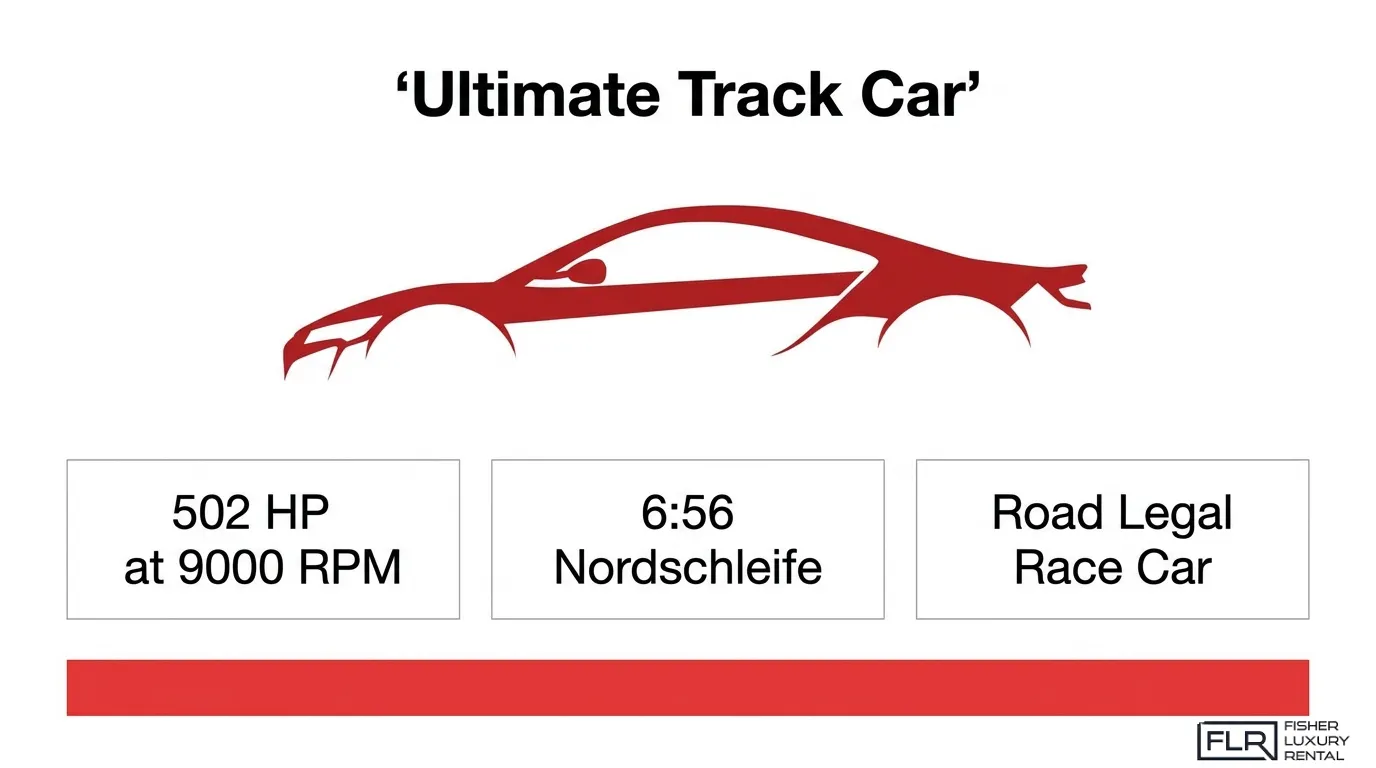
Porsche 911 GT3 is a road-legal race car built around a naturally aspirated 4.0-liter flat-six producing 502 horsepower at a 9,000 rpm redline, race-derived chassis engineering, and aerodynamics refined across more than 200 wind tunnel hours.
This review covers the 992.2 generation’s mechanical updates, on-track performance, driving character, street usability, competitor comparisons, pricing, and how to experience one firsthand before buying.
GT3 arrives with meaningful changes across the powertrain, aerodynamics, chassis, and cockpit. Key updates include the first-ever Weissach Package availability on a GT3 model, a redesigned front splitter and diffuser, and a double-wishbone front suspension derived from the 911 RSR race car, all working together through Porsche Active Suspension Management.
On track, those systems produce results. The 992.2 GT3 with manual transmission and Weissach Package set a Nürburgring Nordschleife lap time of 6:56.294, roughly 3.6 seconds faster than its PDK-equipped predecessor, on road-legal Michelin Pilot Sport Cup 2 R tires.
Behind the wheel, the GT3’s character is defined by an unfiltered flat-six howl, telepathic steering feedback, and adjustable aerodynamics that make the car feel predictable rather than punishing at the limit. Forbes described it plainly as “a true road-legal race car, raw and brutal.”
Against rivals including the BMW M4 CSL, Chevrolet Corvette Z06, and McLaren 750S, the GT3 consistently separates itself through weight discipline, handling precision, and sensory engagement that turbocharged competitors cannot replicate.
Pricing starts at $235,800, with the Touring Package, Weissach Package, and carbon ceramic brakes rounding out the key configuration decisions. For buyers who want to experience a high-performance exotic before committing to a purchase at this level, Fisher Luxury Rental offers top-trim luxury and exotic vehicles across Phoenix, Scottsdale, Portland, and Vancouver.
What Is New on Porsche 911 GT3?
Porsche 911 GT3 introduces meaningful updates across the powertrain, aerodynamics, chassis, and cockpit. The sections below cover each upgrade area in detail.
What Engine and Powertrain Updates Define GT3?
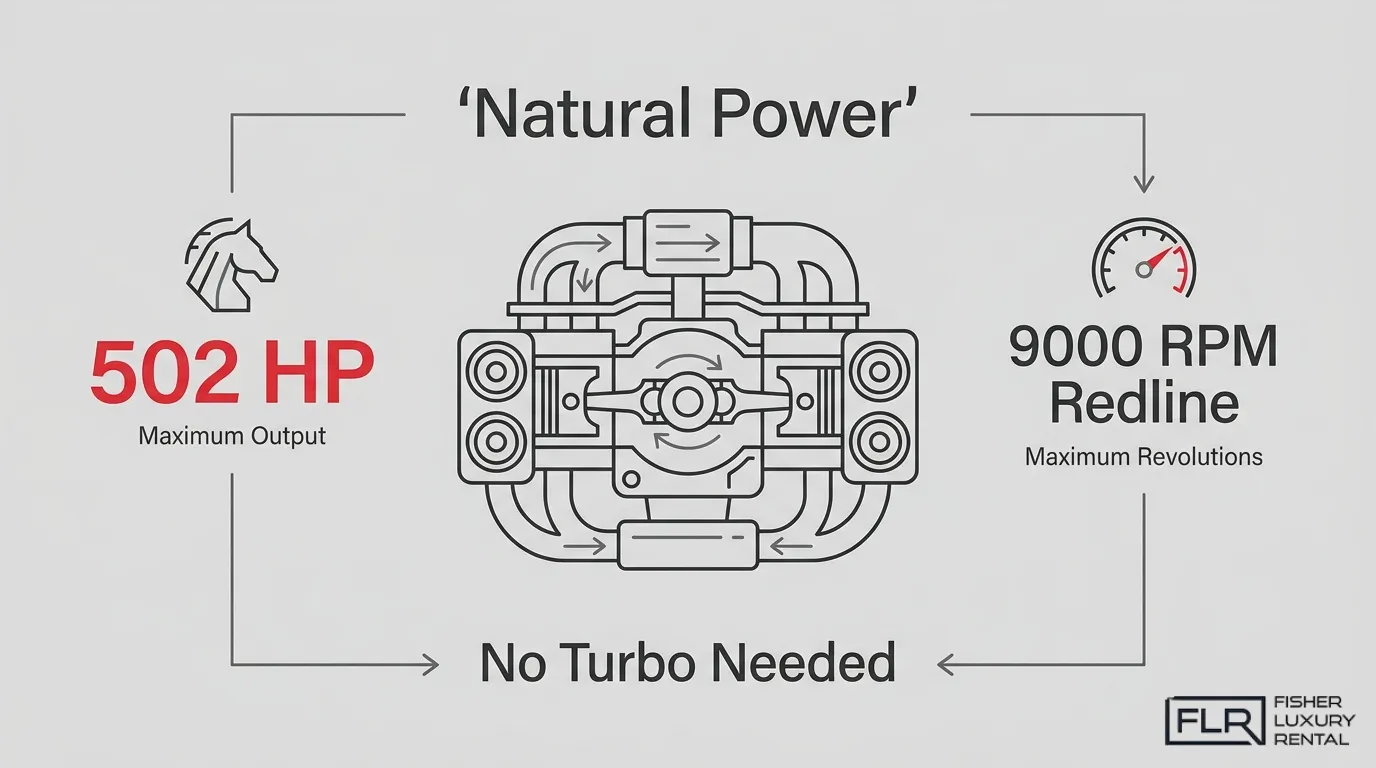
The engine and powertrain updates that define GT3 center on a naturally aspirated 4.0-liter flat-six producing 502 horsepower at 8,400 rpm, 331 lb-ft of torque at 6,100 rpm, and a 9,000 rpm redline. According to Porsche USA, the engine delivers 125 horsepower per liter, exceptional output for a naturally aspirated unit.
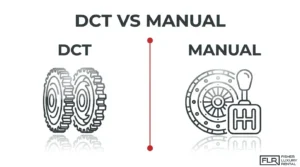
Transmission choices include a 7-speed PDK dual-clutch or a 6-speed GT Sport manual, offered at no extra charge. The PDK variant reaches 0-60 mph in 3.2 seconds; the manual takes 3.9 seconds, with both topping out at 193 mph.
What Aerodynamic Changes Does GT3 Introduce?
The aerodynamic changes GT3 introduces include a redesigned front splitter, a revised rear diffuser, and the first-ever availability of the Weissach Package on a GT3 model. According to Porsche’s official history, the 992.2 generation also adds a new 911 GT3 S/C convertible variant, available with manual transmission only.
The front and rear aerodynamic elements remain manually adjustable to four different angles of attack, allowing drivers to tune downforce balance for specific track conditions.
What Chassis and Suspension Revisions Does GT3 Feature?
The chassis and suspension revisions of GT3 features include a double-wishbone front suspension system derived from the 911 RSR race car, which Excellence Magazine confirms provides improved grip and responsiveness over previous generations. Rear-axle steering enhances directional precision through corners.
Porsche Active Suspension Management (PASM) allows drivers to adjust damper characteristics for different driving conditions and track settings. The manual transmission variant with Weissach Package weighs 3,243 lbs, reflecting the lightweight priority throughout the platform.
What Technology and Cockpit Upgrades Come With GT3?
The technology and cockpit upgrades that come with the GT3 prioritize driver focus over comfort. The cabin features a 918 Spyder-inspired steering wheel, which Road and Track calls “the single best-designed steering wheel on sale today.” Low-mounted race-bucket seats, optional in carbon fiber reinforced plastic (CFRP), position drivers close to the floor for a lower center of gravity.
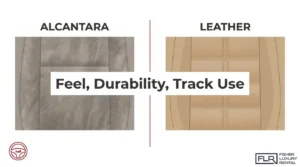
Interior materials include carbon fiber and Alcantara throughout primary touch points. Minimal sound insulation is intentional, letting flat-six acoustics and tire noise fill the cabin unfiltered for maximum driver immersion.
How Does the Porsche 911 GT3 Perform on Track?
The Porsche 911 GT3 performs on track with a combination of aerodynamic downforce, race-derived suspension, precision braking, and purpose-built tires that together produce lap times competitive with purpose-built track cars. The sections below cover cornering, braking, lap time gains, and tire specifications.
How Does the GT3 Handle High-Speed Corners?
The GT3 handles high-speed corners through a double-wishbone front suspension, rear-axle steering, and a swan-neck rear wing generating over 132 lbs of rear downforce. These systems work together to keep the car planted and predictable at the limit. The swan-neck rear wing is adjustable to four angles of attack, allowing drivers to tune balance for different circuit layouts. Porsche brand ambassador Jörg Bergmeister confirmed the improvement firsthand: “The new 911 GT3 inspires even more confidence at the limit than the previous model. I was faster in almost every corner.” For drivers pushing beyond their comfort zone, that confidence margin is the difference between a clean lap and a costly mistake.
How Do the Brakes Hold Up During Extended Track Sessions?
GT3 brakes hold up during extended track sessions through a high-capacity steel brake system engineered for repeated hard stops without fade. According to MotorTrend testing, the 992 GT3 stops from 60 mph in just 93 feet, outperforming the Chevrolet Corvette Z06’s 95-foot stopping distance. Carbon ceramic brake kits are available as an upgrade, priced at approximately $18,600 to $20,455, and are the preferred choice for drivers logging multiple sessions per day. Steel brakes perform well for occasional track use, but the ceramic option offers a meaningful thermal advantage in sustained high-load conditions.
How Does GT3 Compare in Lap Times to Its Predecessor?
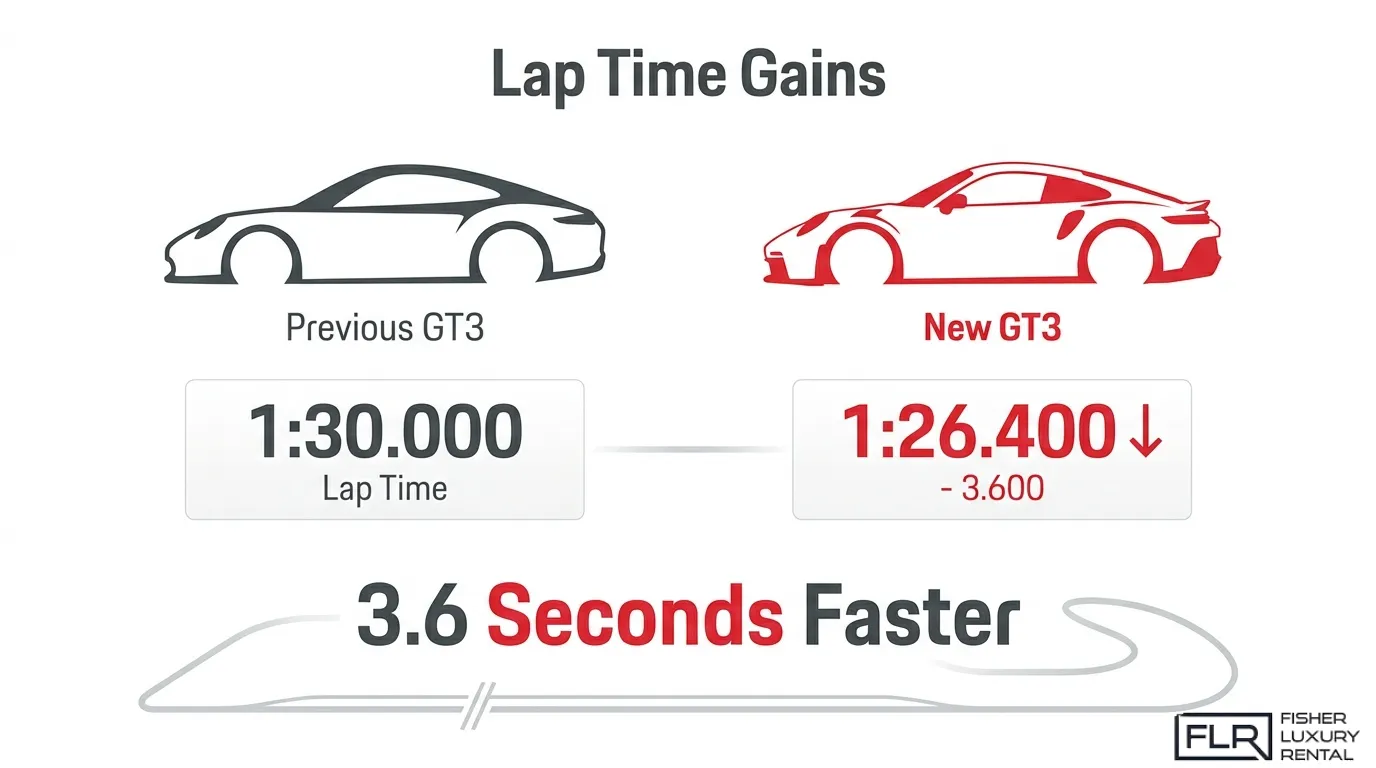
The GT3 is faster than its predecessor by a measurable margin. According to Porsche Newsroom USA, the 992.2 GT3 with manual transmission and Weissach Package recorded a Nürburgring Nordschleife lap time of 6:56.294 minutes, approximately 3.633 seconds faster than the 992.1 model equipped with PDK transmission. That gap is significant: the newer manual car beat the older PDK car, confirming that mechanical and aerodynamic refinements outweighed the transmission advantage. The Weissach Package contributes to this by reducing weight to 1,462 kg through CFRP components such as a carbon fiber hood and lightweight bucket seats.
How Does Tire Performance Affect GT3 on Track?
Tire performance affects the GT3 on track by directly determining grip levels, cornering speed, and lap time consistency. The 992.2 GT3 is equipped with Michelin Pilot Sport Cup 2 R tires sized 255/35 R20 at the front and 315/30 R21 at the rear, the same specification used during the Nürburgring lap time validation. The performance gap these tires enable is measurable: at the Hockenheim GP circuit, the 992 GT3 completed a lap in 1:47.3 minutes on Michelin Cup 2 R rubber, beating the BMW M4 CSL’s 1:50.1 minutes on the same tires. With tires this capable, the GT3’s suspension and aerodynamics can express their full potential on any circuit.
What Does Porsche 911 GT3 Feel Like to Drive?
The Porsche 911 GT3 feels like a road-legal race car with an unfiltered connection between driver and machine. Forbes reviewer Michael Harley described it as “raw and brutal, steeped in Porsche’s motorsport heritage and constantly reminding its occupants what it was built to do.” The sections below cover engine sound, steering feedback, transmission choice, and limit behavior.
How Does the Naturally Aspirated Flat-Six Sound at Redline?
The naturally aspirated flat-six sounds like nothing else in its class at redline, building to a shrieking, mechanical crescendo that turbocharged rivals simply cannot replicate. According to Porsche’s official specifications, the 4.0-liter engine produces 502 horsepower at 8,400 rpm and spins to a 9,000 rpm maximum, yielding 125 horsepower per liter from a completely unassisted intake. Because every rev is earned rather than artificially boosted, the engine rewards drivers who hold gears deep into the rev range. Competitors like the BMW M4 CSL produce 550 horsepower from a twin-turbocharged 3.0-liter inline-six, but the power arrives on a wave of boost pressure rather than a rising, analog howl. That distinction defines the GT3’s character more than any single specification.
How Responsive Is the Steering Feedback on GT3?
The steering feedback on the GT3 is exceptionally precise, communicating grip levels and surface texture directly through the wheel. Rear-axle steering enhances directional control by counter-steering at low speeds and steering in-phase at higher speeds, effectively shortening or lengthening the wheelbase as conditions demand. Road & Track reviewer Lucas Bell captured the result plainly: “the steering delivered crisp feedback of grip levels and surface texture, instilling huge confidence.” That level of communication makes the front axle feel telepathic on track, allowing drivers to request more angle with minimal input and trust the response completely.
How Does the Six-Speed Manual Compare to the PDK on Track?
The six-speed manual and the PDK both deliver exceptional on-track performance, but they reward different driving styles. The PDK achieves 0-60 mph in 3.2 seconds versus 3.9 seconds for the manual, making it measurably faster in outright acceleration. However, the manual transmission variant with Weissach Package set a Nürburgring Nordschleife lap time of 6 minutes 56.294 seconds, beating the previous manual production car record by over 9.5 seconds, according to Porsche Newsroom USA. That result proves the manual can still post elite lap times in skilled hands. For drivers who prioritize mechanical engagement and the satisfaction of rev-matched downshifts over raw split-second speed, the manual remains the more rewarding choice.
How Confidence-Inspiring Is GT3 at the Limit?
The GT3 is extremely confidence-inspiring at the limit, consistently communicating its capabilities before exceeding them. Porsche brand ambassador Jörg Bergmeister stated that “the new 911 GT3 inspires even more confidence at the limit than the previous model” and that he “was faster in almost every corner.” Much of this comes from the adjustable aerodynamics: both the front air curtain elements and rear wing adjust to four angles of attack, with Porsche recommending matching positions front and rear for balanced handling. That balance means the car compresses its limits predictably rather than snapping abruptly. Road & Track’s Bell confirmed it: “the 911 never left me feeling like I was the weak link in the chain.”
How Does GT3 Perform as a Daily Driver?
The GT3 performs as a daily driver with genuine usability, but its race-focused character means trade-offs in comfort and practicality. The sections below cover street ride quality and real-world convenience.
Is GT3 Comfortable Enough for Street Driving?
GT3 is comfortable enough for street driving only in a qualified sense. Forbes reviewer Michael Harley described the GT3 as “a true road-legal race car, raw and brutal, steeped in Porsche’s motorsport heritage and constantly reminding its occupants what it was built to do.” The interior maintains a mission-focused design with minimal sound insulation, allowing engine sound and tire noise to permeate the cabin freely. Low-mounted race-bucket seats and Alcantara-trimmed carbon fiber surfaces prioritize driving precision over cushioned comfort. For short spirited drives, the experience is thrilling; for long highway commutes, the noise and stiff suspension setup demand a higher tolerance than most daily drivers require.
How Practical Is GT3 for Everyday Use?
The GT3’s practicality for everyday use is limited but not absent. As a 911-based platform, it retains a small rear seat area and a front trunk, offering more storage than a pure two-seat sports car. However, the Michelin Pilot Sport Cup 2 R tires fitted for track performance are sensitive to cold temperatures and wet roads, restricting all-weather usability. The PDK transmission eases stop-and-go traffic, while the manual adds engagement at the cost of urban convenience. For enthusiasts who drive sparingly and treat commuting as secondary, the GT3 manages daily duties; as a sole vehicle, its compromises accumulate quickly.
How Does Porsche 911 GT3 Compare to Its Rivals?
Porsche 911 GT3 compares favorably against its rivals by combining lightweight precision engineering with race-derived dynamics that turbocharged competitors cannot replicate. The three key comparisons below cover the McLaren 750S, BMW M4 CSL, and Chevrolet Corvette Z06.
How Does GT3 Compare to the McLaren 750S?
GT3 compares to the McLaren 750S as the more driver-focused, track-optimized option, while the 750S prioritizes raw turbocharged power and mid-engine drama. According to Forbes reviewer Michael Harley, the GT3’s interior maintains a mission-focused design with low-mounted race-bucket seats and minimal sound insulation, allowing engine sound and tire noise to permeate the cabin directly. The 992 GT3 cabin features monochromatic carbon fiber and Alcantara touch points configured for optimal driving precision and low center of gravity. For drivers who prize sensory connection over outright speed, the GT3 is the more rewarding tool.
How Does GT3 Compare to the BMW M4 GT3-Inspired CSL?
GT3 compares to the BMW M4 CSL as the faster, more analytically precise track machine. The BMW M4 CSL produces 550 horsepower from a twin-turbocharged 3.0-liter inline-six and weighs approximately 3,613 pounds. At Hockenheim GP on identical Michelin Cup 2 R tires, the 992 GT3 completed the circuit in 1:47.3 minutes versus the M4 CSL’s 1:50.1 minutes, a 2.8-second advantage. The GT3’s naturally aspirated engine also delivers more linear, predictable power delivery than turbocharged alternatives, which matters greatly at the limit.
How Does GT3 Compare to the Chevrolet Corvette Z06?
GT3 compares to the Chevrolet Corvette Z06 as the lighter, more precise handler despite producing less absolute horsepower. According to MotorTrend, the GT3 weighs 3,213 pounds against the Z06’s 3,686 pounds, a 473-pound advantage that translates directly into better power-to-weight dynamics. Both cars complete the quarter-mile in 10.8 seconds at 127.9 mph, but the GT3 brakes from 60-0 mph in 93 feet versus the Z06’s 95 feet and achieves 1.15 g of skid pad lateral acceleration. The GT3’s figure-eight time of 22.3 seconds at 0.95 g average places it just 0.4 seconds behind the heavier Z06, confirming that weight discipline beats displacement in sustained track scenarios. Drivers curious about how high-performance exotics feel at the limit before purchasing can explore rental options through Fisher Luxury Rental, which specializes in top-trim exotic and luxury vehicles in the Phoenix and Portland areas.
What Are Porsche 911 GT3 Pricing and Trim Options?
Porsche 911 GT3 pricing and trim options cover three main configurations: the base GT3, the Touring Package, and a range of factory add-ons including the Weissach Package and carbon ceramic brakes.
What Does a GT3 Base Model Cost?
GT3 base model costs $235,800 MSRP, according to the Porsche USA Official Website. Both the 7-speed PDK dual-clutch and the 6-speed GT Sport manual transmission are included at no extra charge, making the transmission choice a pure driver preference rather than a budget decision. For a car at this price point, that no-cost manual option is genuinely rare and worth noting.
What Does the Touring Package Add to GT3?
The Touring Package starts at $238,150, a $2,350 premium over the base GT3. It replaces the fixed rear wing with a retractable spoiler for a cleaner, more understated appearance while retaining the full GT3 drivetrain and suspension. The Touring Package suits buyers who want the GT3’s track capability with a lower visual profile on public roads.
Which Factory Options Are Worth Adding to GT3?
The factory options worth prioritizing on GT3 are the Weissach Package, carbon ceramic brakes, and CFRP bucket seats. The Weissach Package adds a carbon fiber hood and lightweight CFRP components for meaningful weight reduction. Carbon ceramic brake kits are available as an upgrade option priced between $18,600 and $20,455 depending on configuration, per Suncoast Porsche Parts. For track-focused buyers, the Weissach Package delivers the clearest performance return on investment.
Who Should Buy Porsche 911 GT3?
Porsche 911 GT3 is best suited for buyers who prioritize track performance, driver engagement, and motorsport heritage over everyday comfort. It rewards drivers across several distinct profiles, such as dedicated track enthusiasts, purist collectors, and serious amateur racers.
- Track-focused drivers who regularly attend track days and want a road-legal car that performs at a professional level without modification.
- Manual transmission purists who value the 6-speed GT Sport manual and the analog engagement it provides over automated performance.
- Experienced collectors seeking a car with appreciating motorsport provenance and a long-standing competition lineage.
- Amateur club racers who need a factory-prepared, homologation-relevant platform with adjustable aerodynamics and race-derived suspension.
- High-performance buyers stepping up from sports cars like the BMW M4 CSL or Corvette Z06 who want superior handling precision over raw horsepower figures.
Forbes reviewer Michael Harley described the GT3 as “a true road-legal race car, raw and brutal, steeped in Porsche’s motorsport heritage,” adding that its performance “far exceeds the abilities of most drivers.” That assessment underscores the most important buyer consideration: the GT3 demands skill and commitment to be fully utilized. Buyers expecting a refined grand tourer will find the experience demanding. Those who arrive at a track ready to push the limit will find the GT3 consistently rewards every input.
How Can You Experience a Porsche 911 GT3 Before Buying?
Experiencing a Porsche 911 GT3 before committing $235,800 is a practical decision, not an indulgent one. The two sub-sections below cover how exotic car rental makes that possible and what the GT3’s core strengths ultimately are.
Can Renting an Exotic Car From Fisher Luxury Rental Help You Test a GT3 Firsthand?
Yes, renting a high-performance exotic car from Fisher Luxury Rental can help you build seat time and familiarity with track-focused vehicles before a six-figure purchase decision. This approach has become increasingly mainstream. According to Fortune Business Insights, the leisure segment of the luxury car rental market is anticipated to exhibit the highest compound annual growth rate through 2034, driven specifically by consumer preference for temporary access to luxury vehicles rather than ownership.
Fisher Luxury Rental serves Phoenix, Scottsdale, Portland, and Vancouver, offering top-trim luxury and exotic vehicles with a focus on quality and memorable driving experiences. Renting before buying is, in my view, one of the most underutilized tools among serious performance car buyers — no test drive replicates an actual day behind the wheel.
What Are the Key Takeaways About Porsche 911 GT3 as the Ultimate Track Car?
The key takeaways about Porsche 911 GT3 as the ultimate track car are that it delivers unmatched sensory engagement, race-derived engineering, and a steering wheel Road & Track calls “the single best-designed steering wheel on sale today,” inspired by the 918 Spyder hypercar. Forbes reviewer Michael Harley confirmed that “for track use, the GT3 is the obvious choice,” citing its texture, sound, and satisfaction on open roads.
The GT3’s strongest attributes, taken together, are:
- A 9,000 rpm naturally aspirated flat-six that rewards mechanical commitment over turbo shortcuts.
- Race-derived chassis components, including double-wishbone front suspension and rear-axle steering.
- A Nürburgring Nordschleife lap time of 6:56.294 with a manual transmission, beating the previous manual production car record by over 9.5 seconds.
- Two transmission choices — PDK and 6-speed manual — available at no extra charge.
Fisher Luxury Rental offers access to top-trim luxury and exotic vehicles, making it possible to experience high-performance cars without the ownership commitment.