Basic car show detailing is a meticulous, multi-stage process of cleaning, protecting, and presenting a vehicle to the standards that judges and spectators evaluate, from clear coat condition to tire finish.
This guide covers the supplies and products that form the foundation of show prep, the correct pre-wash and contact wash sequence, proper drying technique, wheel and tire finishing, common mistakes that damage paint, show-day touch-up priorities, and how professional detailing connects to the luxury vehicle experience.
Selecting the right wash mitts, pH-neutral shampoos, drying towels, quick detailers, and wheel cleaners determines whether the clear coat emerges flawless or compromised before the show begins. The two-bucket method and a foam cannon pre-soak sit at the center of this product foundation.
Pre-washing and contact washing follow a strict top-to-bottom sequence, using straight-line mitt strokes and finish-safe chemistry to lift road grime without introducing swirl marks. Door jambs, emblems, trim edges, and glass each require specific techniques within that sequence.
Drying with a pat-dry waffle-weave towel and a filtered air blower removes water from both flat surfaces and crevices without creating micro-scratches, preventing the etching that baked-on water causes in direct sunlight.
Wheel and tire detailing completes the visual package, requiring pH-controlled cleaners matched to the wheel finish and tire dressing applied in thin, sponge-laid coats to prevent silicone from slinging onto bodywork.
Show-day touch-ups, including quick detailer application for dust and fingerprints and surface-specific interior refreshing, preserve the presentation from transport through judging. Fisher Luxury Rental’s exotic fleet reflects these same principles, offering show-quality condition as the baseline for every rental occasion.
What Supplies and Products Do You Need for Car Show Detailing?
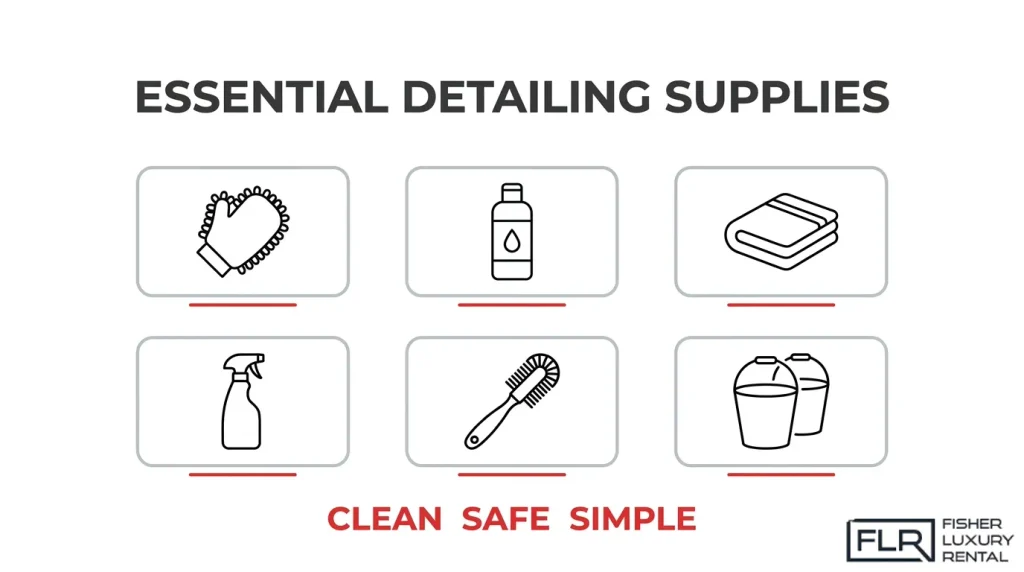
The supplies you need for car show detailing include wash mitts, pH-neutral shampoo, drying towels, quick detailers, wheel cleaners, tire dressing, and a two-bucket setup. The following sections cover each product category and what to look for when selecting them.
What Wash Mitts and Brushes Work Best for Show Prep?
The wash mitts that work best for show prep are wool and microfiber types, not traditional brushes. According to research by Bertrand-Lambotte, Loubet, Verpy, and Pavan on automotive clearcoat scratch resistance, micrometric scratches caused mainly by car wash brushes decrease clearcoat gloss and reduce its protective effectiveness. Wool mitts avoid this risk entirely. Per CARPRO US retailer guidance, wool car wash mitts hold soap well and catch clinging debris while minimizing any threat of scratching. Lambswool mitts are extremely soft but hold slightly less soapy water than pile-type or microfiber-blend options. Always wash on a cool surface in shade, as heat causes products to dry too fast and can leave streaks.
What Car Shampoos Are Safest for Clear Coat Protection?
The car shampoos safest for clear coat protection are pH-neutral formulas specifically designed to preserve coatings, waxes, and sealants. Factory paint typically ranges from 4 to 7 mils (100 to 180 microns) in total thickness, meaning even modest chemical aggression can compromise the clear coat significantly. pH-neutral shampoos from brands such as Gtechniq GWash, Gyeon Q2M Bathe, and Turtle Wax Pure Wash lift road grime without stripping existing protection. For a post-wash boost, Optimum Spray Wax combines Carnauba wax, protective polymers, and UV inhibitors, providing durable protection for up to 5 months on both ceramic-coated and non-coated vehicles. Dish soap and harsh alkaline shampoos should be avoided entirely on show-quality paint.
What Drying Towels and Chamois Prevent Swirl Marks?
The drying towels and chamois that prevent swirl marks are clean, lint-free microfiber towels, waffle-weave towels, and PVA synthetic chamois. Auto Finesse detailing guidance confirms that using a towel contaminated with dirt or debris causes scratch marks on delicate paintwork. After washing, always rinse with clean water to prevent soap from drying on surfaces, then dry thoroughly. PVA chamois options such as the WoollyWormit synthetic chamois absorb many times their weight in water, with construction that is soft, durable, and lint-free. Waffle-weave microfiber towels are highly effective as their textured surface lifts water rather than dragging it across the paint. Never reuse a dropped or visibly soiled towel during drying.
What Spray Detailers and Quick Wax Products Add Final Shine?
The spray detailers and quick wax products that add final shine are ceramic-safe quick detailers, SiO2 spray waxes, and glass cleaners kept in a show-day kit. According to CleanTools car-show preparation guidance, keeping a small maintenance kit with microfiber towels, a quick-detailing spray, and glass cleaner allows you to wipe away dust and fingerprints throughout the day, especially at outdoor events. Mothers Ultimate Hybrid Ceramic Spray Wax lubricates while it cleans, leaving an SiO2-protected, high-gloss finish that repels water and contaminants. Always apply quick detailers on a cool surface in shade, as heat causes the product to dry too fast and leave streaks. GYEON Quick Detailer is safe on all ceramic coatings and traditional waxes.
What Wheel and Tire Cleaning Products Are Essential?
The wheel and tire cleaning products that are essential are a dedicated wheel cleaner, a separate cleaning sponge or brush, and a quality tire dressing. Consumer Reports advises using a separate sponge for wheels and tires, which carry sand, brake dust, and debris that could mar paint if cross-contaminated. SONAX Wheel Cleaner uses an acid-free, non-corrosive formula safe on painted, alloy, anodized, clear-coated, chrome, aluminum, and stainless-steel wheels. Avoid any cleaner containing hydrofluoric acid or ammonium bifluoride, as CDC-referenced guidance confirms these cause severe corrosive chemical burns. For tires, a water-based silicone tire dressing protects against cracking and fading while restoring showroom luster. Apply dressing in thin layers using a sponge rather than spraying heavily, to prevent slinging onto paint.
What Bucket Setup Prevents Cross-Contamination?
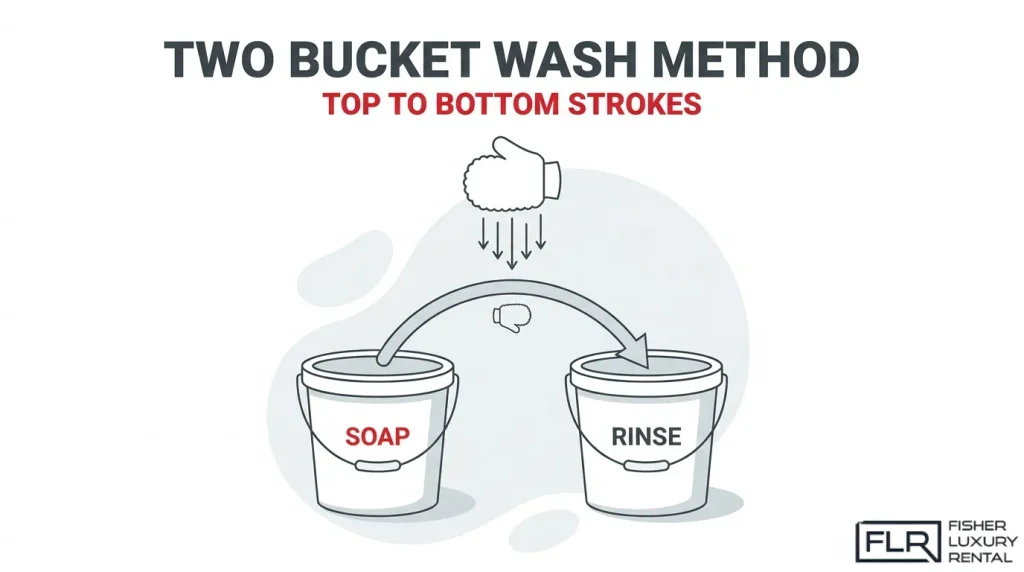
The bucket setup that prevents cross-contamination is the two-bucket method, a standard technique in professional detailing. According to DetailingWiki, the process works by using one bucket for the clean shampoo solution and a second bucket for rinsing the mitt after each panel. After washing a section, the mitt is rinsed thoroughly in the rinse bucket before being reloaded with soapy water for the next area. This prevents dirt and abrasive particles picked up from lower panels from being reintroduced to the paint. Adding a Grit Guard insert to the rinse bucket traps debris at the bottom, further reducing recontamination risk. This setup is one of the most impactful single investments for protecting show-quality paint during the wash process.
How Should You Pre-Wash a Car Before a Full Show Detail?
Pre-washing a car before a full show detail removes the heaviest contamination before any mitt or tool contacts the paint. The steps below cover safe rinsing, foam cannon pre-soaking, and cleaning wheel wells first.
How Do You Safely Rinse Loose Debris Before Touching Paint?
Rinsing loose debris safely means removing surface dirt with water pressure before any physical contact with the paint. According to Classic & Sports Car’s report on Perfection Detailing, the correct sequence starts with a non-caustic traffic-film remover applied to the lower third of the car, followed by a full rinse, then snow foam across the entire vehicle to lift remaining loose dirt.
Key safe-rinse rules:
- Use high pressure at a safe distance to avoid forcing grit into the clear coat.
- Never use a contaminated towel during rinsing; Auto Finesse confirms a dirty towel causes scratch marks on delicate paintwork.
- Work top to bottom, tackling the heaviest grime zones last.
How Does a Foam Cannon Pre-Soak Help Prevent Scratches?
A foam cannon pre-soak helps prevent scratches by encapsulating dirt particles and allowing them to be rinsed away without direct surface contact. According to Koch-Chemie’s manufacturer specification, foam encapsulates dirt so the vehicle can be cleaned by high pressure that is gentle on paintwork, with a VDA-compliant treatment time of maximum 5 minutes at a maximum application concentration of 1:50.
Foam also extends dwell time, keeping the cleaning chemistry active on the surface longer. Products with polymer technology, such as those containing Slick and Slide polymers per Turtle Wax’s manufacturer specification, glide over the clear coat to further reduce the risk of swirl marks. For show prep, a foam pre-soak is one of the most effective scratch-prevention steps available before the contact wash begins.
How Do You Clean Wheel Wells and Undercarriage First?
Cleaning wheel wells and the undercarriage first prevents brake dust, road grime, and chemical runoff from contaminating already-clean painted panels. Always tackle these zones before touching any body panel.
Key protocols to follow:
- Allow wheels to cool before applying any cleaner, as Alcoa Wheels’ official guidance specifies wheels should be below 35°C before treatment.
- Use an acid-free, non-corrosive wheel cleaner. Simple Green’s cleaning guidance warns that many commercial wheel cleaners contain acids or solvents that can strip protective coatings and damage finishes.
- For the undercarriage, Chemical Guys’ manufacturer guidance recommends moderate pressure with the nozzle kept at a distance, as excessive or close-range spraying can damage coatings, rubber parts, seals, and greased joints.
Completing wheels and undercarriage first establishes a clean starting point for every subsequent stage of the show detail.
What Is the Correct Wash Technique for Car Show Prep?
The correct wash technique for car show prep follows a structured sequence: a two-bucket method with pH-neutral shampoo, straight-line mitt strokes from top to bottom, careful attention to trim and jambs, and dedicated glass cleaning.
How Does the Two-Bucket Wash Method Protect Paint?
The two-bucket wash method protects paint by keeping contaminated rinse water separate from your clean soapy solution. One bucket holds fresh shampoo mix; the other holds clean water for rinsing the mitt after each panel. This prevents abrasive particles from being reloaded onto paint with every pass.
Shampoo choice matters equally. According to Gtechniq’s manufacturer specification, GWash is a pH-neutral car shampoo that lifts dirt, road grime, and traffic film without stripping ceramic coatings, waxes, or sealants. Avoid dish soap entirely: per Kelley Blue Book, dish soap removes previously applied wax or paint sealant, leaving paint unprotected.
What Wash Pattern Avoids Swirl Marks on Flat Panels?
The wash pattern that avoids swirl marks uses straight-line strokes rather than circular motions. According to RAC’s guidance, cleaning in straight lines minimizes swirl marks and uneven results. Begin at the roof, which carries the least contamination, and work progressively down toward the rocker panels and lower doors where road grime accumulates most heavily. Reload your mitt in the soapy bucket after each panel pass to maintain lubrication.
How Do You Safely Wash Emblems and Trim Without Damage?
Emblems and trim require reduced water pressure and a softer touch than flat body panels. Use a dedicated soft-bristle detailing brush or a clean microfiber mitt to agitate around badge edges and plastic trim, preventing water intrusion under adhesive backings. Rinse gently rather than with a direct high-pressure blast aimed at edges.
How Do You Clean Door Jambs and Hidden Panel Edges?
Door jambs and hidden panel edges are cleaned during the contact wash stage, before final rinse. Per Dr. Beasley’s detailing-class protocol, wash and rinse door jambs and the fuel door compartment during this phase, and be cautious to avoid directing water into the vehicle interior. A folded microfiber mitt reaches recessed edges without saturating seals or wiring.
How Should You Wash Windows and Glass for a Streak-Free Finish?
Windows and glass should be washed using clean, lint-free microfiber cloths free of residual detergents and fabric softeners. According to Invisible Glass’s manufacturer specification, towels carrying detergent residue are a primary cause of streaking. Apply a dedicated automotive glass cleaner, wipe in overlapping straight strokes, and finish with a dry microfiber cloth to lift any remaining moisture before it dries into film.
With the correct wash sequence complete, thorough drying with the right tools keeps the paint surface spotless for final inspection.
How Do You Properly Dry a Show Car Without Scratching?
Proper drying technique separates a show-quality finish from one riddled with swirl marks. The two methods covered below are the pat-dry towel approach and filtered air blower technique.
How Does the Pat-Dry Method Differ from Dragging a Towel?
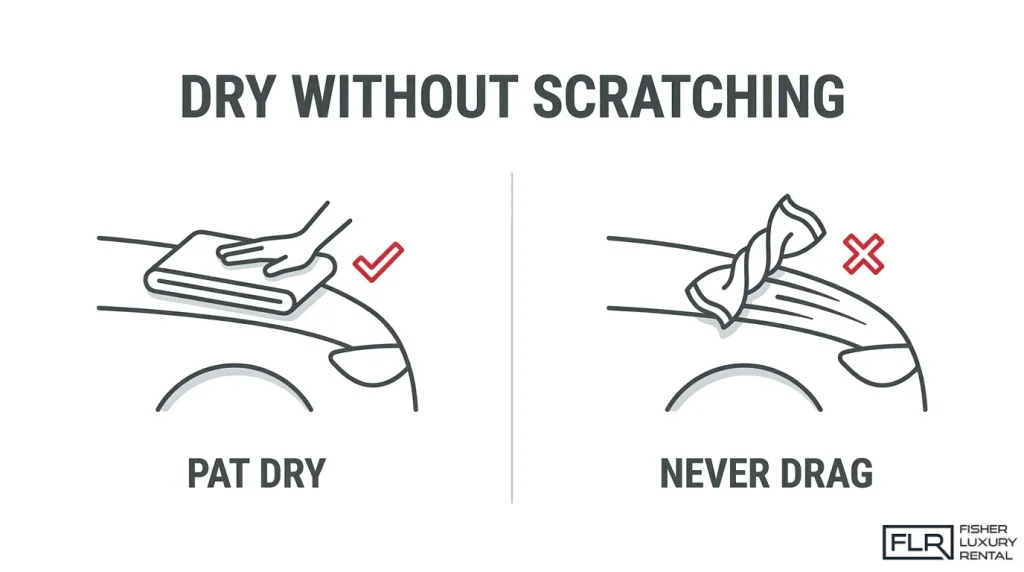
The pat-dry method differs from dragging a towel in that it places the towel flat against the surface and lifts moisture through gentle pressure rather than friction. Dragging a towel across paint drags any residual particles along with it, creating micro-scratches in the clearcoat.
According to Griot’s Garage’s Detailer’s Handbook, a waffle-woven microfiber towel measuring 25″ x 35″ with sewn-in hand pockets allows you to navigate large panels easily, working from top to bottom and front to back. Lay the towel completely flat, pat to absorb water, then lift and reposition. Never slide.
How Does a Filtered Air Blower Remove Water from Crevices?
A filtered air blower removes water from crevices by directing a focused stream of clean air into mirrors, door gaps, trim edges, and emblems where towels cannot reach. These areas trap water that later dries into spots.
According to bigboi’s manufacturer guide, dedicated automotive blowers produce clean, filtered air engineered for safe use on paint surfaces, unlike leaf blowers whose unfiltered intakes can spew dust or small particles directly at the finish. This distinction matters because water left baking on paint in direct sunlight can progress to etching, the most severe form of water-spot damage, according to Adam’s Polishes.
Using an air blower after the pat-dry towel pass is the most reliable way to protect a show car’s finish from both scratches and chemical damage.
What Wheel and Tire Detailing Steps Complete the Show Look?
Wheel and tire detailing completes the show look by combining finish-safe cleaning with correctly applied tire dressing. The steps below cover deep-cleaning wheels without damaging their finish and applying tire dressing for a polished, show-ready result.
How Do You Deep Clean Wheels Without Damaging Finishes?
Deep cleaning wheels without damaging finishes requires matching your cleaner to the wheel’s specific coating or material. Acid-based and solvent-heavy commercial cleaners can strip protective coatings, so choosing a pH-controlled, non-acid formula protects painted, alloy, anodized, chrome, and aluminum surfaces alike. Always allow wheels to cool before applying any product, as heat accelerates chemical reactions that can etch or discolor finishes. Use a dedicated wheel brush and separate sponge to avoid transferring brake dust and road grit to painted panels.
- Start with cool, dry wheels before applying any cleaner.
- Apply a pH-neutral, acid-free wheel cleaner to all surfaces.
- Agitate with a dedicated wheel brush, reaching barrel and spoke areas.
- Rinse thoroughly from top to bottom to flush loosened brake dust.
How Do You Apply Tire Dressing for a Clean Show Appearance?
Tire dressing application for a clean show appearance depends on both formula type and application method. Water-based silicone emulsions restore showroom luster and protect rubber against cracking, fading, and deterioration, while solvent-based formulas deliver a bold, wet-look shine with a durable protective barrier. According to Professional Carwashing & Detailing, operators should apply dressing in thin layers using a sponge or brush rather than misting or spraying, because too thick a layer causes silicone to sling off a moving tire onto the vehicle’s bodywork.
- Clean tires with mild soap and water first to remove all road grime.
- Choose water-based dressing for a natural finish or solvent-based for high-gloss.
- Apply in thin, even coats using a dedicated applicator sponge.
- Avoid over-application on sidewalls to prevent pooling or slinging.
BMW CCA National Concours judging focuses on cleanliness, condition, and attention to detail, making properly dressed tires a direct contributor to your score. This same attention to cleanliness and condition is a baseline standard at Fisher Luxury Rental, where the exotic fleet serving Phoenix, AZ and Portland, OR is maintained to present each vehicle at its best before every rental.
What Common Car Show Wash Mistakes Should You Avoid?
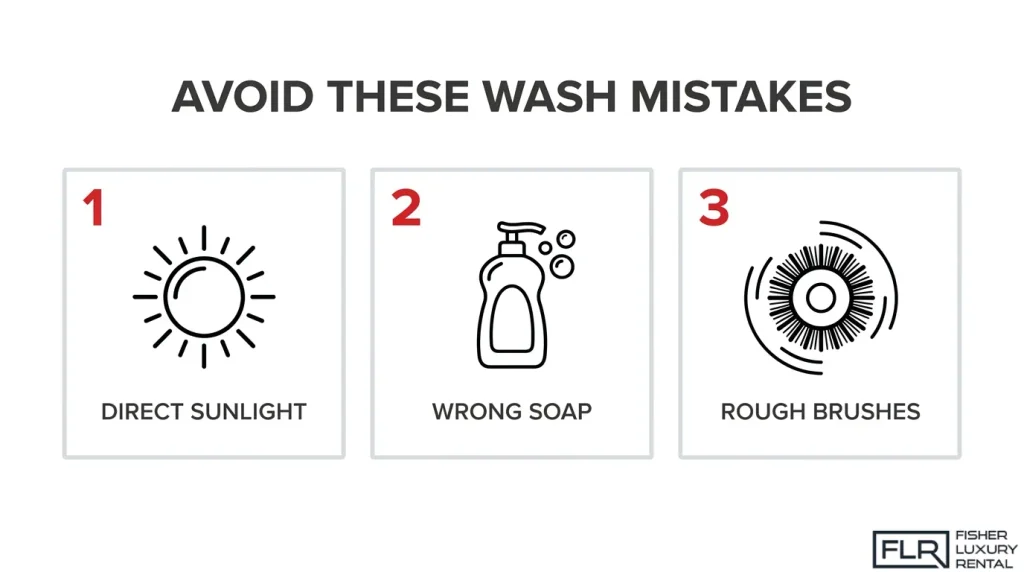
The most damaging car show wash mistakes involve sunlight exposure, wrong soap chemistry, and abrasive wash equipment. Each mistake directly degrades the clearcoat judges evaluate.
What Happens If You Wash in Direct Sunlight?
Washing in direct sunlight causes water and soap to evaporate too quickly, leaving mineral deposits and soap residue baked onto the surface. According to Adam’s Polishes, etching occurs when water is baked onto paint in direct sunlight or high heat, and in the worst cases this damage penetrates the clearcoat permanently. Always wash in a shaded area or during cooler morning hours to prevent this.
Why Should You Avoid Household Dish Soap on Show Cars?
Household dish soap strips protective coatings from show cars. According to Kelley Blue Book, dish soap removes not just contamination but any previously applied wax or paint sealant, leaving the paint completely unprotected. For a show car, this means hours of prep work undone in a single wash. Always use a pH-neutral automotive shampoo formulated to clean without stripping protection.
How Do Automatic Car Washes Damage Show-Quality Paint?
Automatic car washes damage show-quality paint through rotating brushes that create micrometric scratches in the clearcoat. Research published in a peer-reviewed study on automotive clearcoat scratch resistance confirms that car wash brushes decrease gloss, alter appearance, and reduce the clearcoat’s protective capacity. Tunnel-wash chemicals are also rarely pH-neutral and can strip wax or sealant. For show prep, hand washing is the only safe method.
What Quick Detailing Touches Matter Most on Show Day?
The most important show-day detailing touches are dust removal, interior surface refresh, and tire and trim maintenance. These three tasks address the most visible imperfections that appear between transport and judging.
How Do You Remove Dust and Water Spots After Transport?
Dust and water spots after transport are best removed using a quick detailer spray and clean microfiber towels, working in a shaded area. Heat causes products to dry too fast and leave streaks, so shade is essential according to Stoner Car Care’s detailing guide. Spray the quick detailer onto one panel at a time and lift residue with a fresh microfiber towel.
For water spots specifically, Adam’s Polishes notes that etching, the worst progression of water spotting, occurs when water bakes onto the surface in direct sunlight. Address spots immediately upon arrival before sun exposure worsens them.
How Do You Touch Up Interior Surfaces Before Judging?
Interior touch-ups before judging require surface-specific products and a light hand. According to JDCustomsUSA’s show-preparation guide, avoid leaving steering wheels, shifters, pedals, or seats slippery, and carry enough supplies to remove road dust, fingerprints, and small marks without performing a complete detail beside the car.
Focus on these high-visibility surfaces:
- Steering wheel and shifter: wipe with a lightly dampened microfiber towel.
- Dashboard and trim panels: use a dedicated interior detailer matched to the surface material.
- Glass and mirrors: apply glass cleaner with a lint-free cloth for a streak-free result.
How Do You Keep Tires and Trim Fresh at the Venue?
Tires and trim stay fresh at the venue by applying tire dressing in thin layers using a sponge rather than misting directly onto the tire. A Warsaw Chemical Co. publication on tire dressings explains that thin layers prevent pooling and slinging, where excess silicone flings onto bodywork from a moving tire. Wipe any overspray from surrounding painted surfaces immediately.
For exterior trim, carry a small trim dressing applicator in your kit and reapply lightly if UV exposure causes fading during the event.
With show-day touch-ups handled, consistent attention to these details throughout the event maintains the presentation that judges and spectators see all day.
How Does Proper Detailing Enhance a Luxury Car Experience?
Proper detailing enhances a luxury car experience by preserving paintwork, presenting a flawless finish, and signaling the care behind every vehicle. Detailing only helps if entry paperwork is done, so register an exotic for a car show before you roll into the field.
Can Renting a Show-Ready Exotic from Fisher Luxury Rental Elevate a Special Occasion?
Yes, renting a show-ready exotic from Fisher Luxury Rental can absolutely elevate a special occasion. Fisher Luxury Rental maintains a fleet of luxury and exotic vehicles kept to a high standard of cleanliness and presentation, making each vehicle arrival-worthy at weddings, anniversaries, proms, and business events.
Vehicle washing and detailing occur across rental car facilities as part of fleet management, according to the International Carwash Association, underscoring that professional presentation is built into the rental experience. For renters, this means accessing an exotic that looks and feels ready for the spotlight without performing the prep work themselves. That combination of effortless luxury and show-quality condition is central to what Fisher Luxury Rental offers its customers.
What Are the Key Takeaways About Car Show Detailing Prep and Wash We Covered?
The key takeaways from this guide center on protecting paint, using the right tools, and following a disciplined process from pre-soak to show day. According to the International Detailing Association, detailing is a meticulous step-by-step process that restores a vehicle’s beauty and protects the owner’s investment. Every section of this guide reinforces that principle.
The most actionable lessons include:
- Always pre-soak before touching paint to minimize abrasion risk.
- Use pH-neutral shampoo and wool or microfiber mitts to protect clear coat.
- Wash in straight lines, top to bottom, using the two-bucket method.
- Dry with a filtered blower or clean waffle-weave towel, never a dragging motion.
- Apply tire dressing in thin layers to prevent sling onto paintwork.
- Keep a quick-detailer kit on hand for show-day dust and fingerprints.
Consistent technique matters as much as product selection. For those who want to experience a meticulously maintained exotic without performing the prep work themselves, exotic car rental in Phoenix (and Portland) keeps fleet cars at these same high-presentation standards. Whether you are prepping a personal collector car or simply appreciating how Fisher Luxury Rental maintains its exotic fleet, these fundamentals are what separate a show-quality finish from an ordinary wash.