Registering your exotic car for a car show means submitting a formal application to an organizing body, meeting that event’s vehicle eligibility rules, and arriving prepared. Informal exotic car meetups are a lower-friction alternative when you want community time without a full entry packet.
This guide covers the entry requirements and registration process, how to find the right shows, how to prepare your car for judging, the show classes available to you, insurance considerations, common rejection mistakes, and the special rules that apply to rented or leased exotics.
Entry requirements set the foundation before anything else. Most shows ask for title or registration proof, provenance records, and a vehicle that passes an operational inspection covering everything from gauges to air conditioning.
Finding the right show depends on your vehicle and goals. Local club calendars, national concours directories, and brand-specific organizations each open different doors, from community display events to invitation-only competitions.
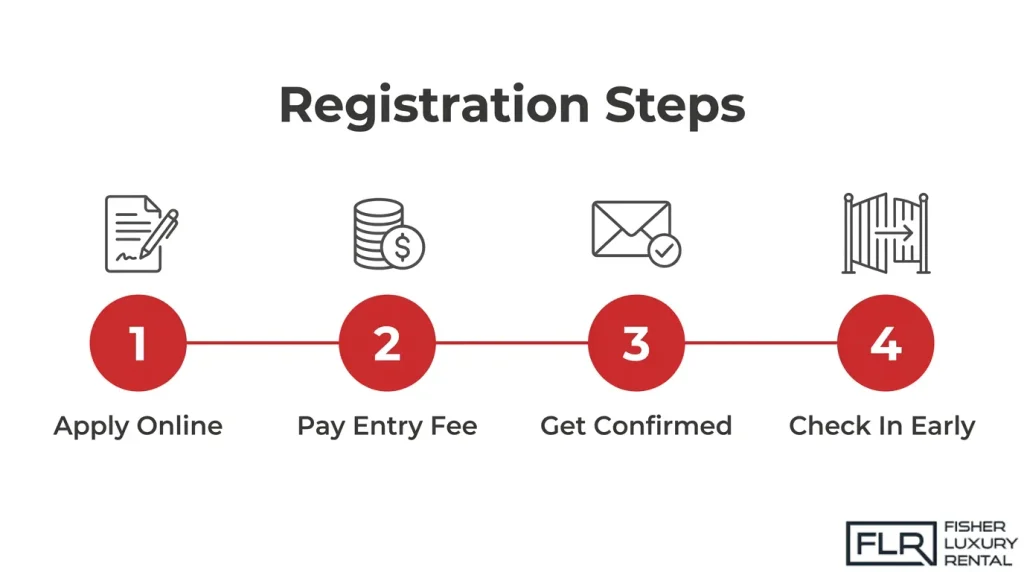
The registration process itself moves through several steps: completing an online or paper application, paying fees that range from $25 at community shows to $175 at selective concours events, and following through after submission to confirm acceptance and check-in logistics.
Preparation before show day spans detailing, mechanical inspection, and assembling a provenance file. Judges score interior, exterior, engine compartment, and boot against strict authenticity and cleanliness standards, and operational checks happen live on the show field.
Show classes range from the rigorous Concours d’Elegance format, where originality and historical significance determine your score, to display-only and People’s Choice categories that welcome well-presented drivers’ cars without competitive pressure.
Insurance, rejection pitfalls, and the ownership documentation challenges that affect rented or leased vehicles each carry their own rules, and understanding them before you register protects both your entry fee and your time on the field.
What Are the Basic Requirements to Enter an Exotic Car Show?
The basic requirements to enter an exotic car show typically include proper vehicle documentation, a car in excellent condition, and compliance with any eligibility rules set by the organizing body. The sections below cover documentation, condition standards, and model year or mileage restrictions.
What Vehicle Documentation Do You Typically Need?
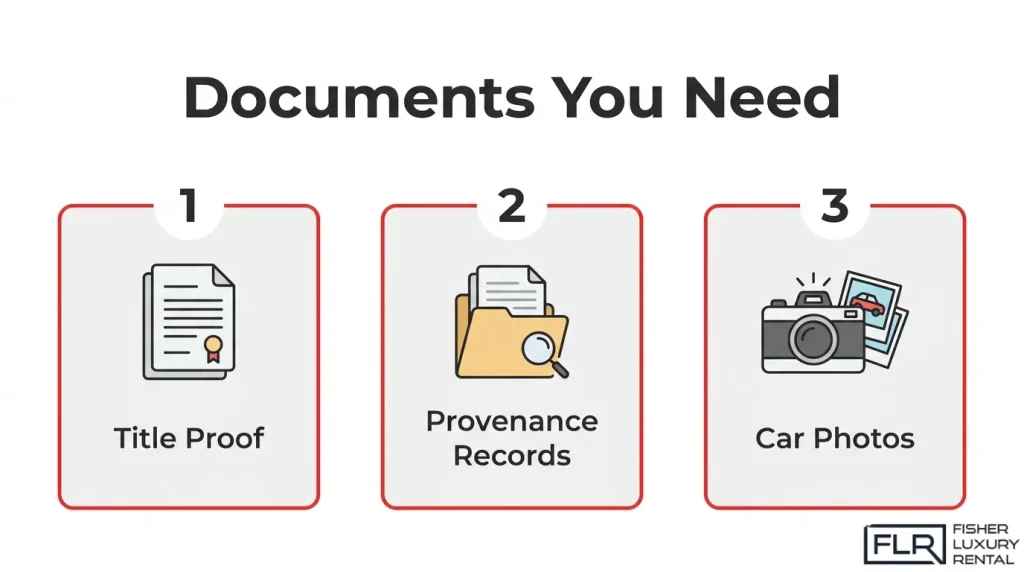
The vehicle documentation you typically need includes title or registration proof, provenance records, and supporting historical materials. According to the Fédération Internationale des Véhicules Anciens (FIVA) Charter of Turin, a historic vehicle’s documentation record should include drawings, photographs, maintenance literature, servicing and restoration reports, investigation results, and reference documents detailing the vehicle’s individual history. Gathering these materials before applying strengthens your entry, particularly at concours-level events where judges weigh provenance heavily.
What Condition Standards Must Your Exotic Car Meet?
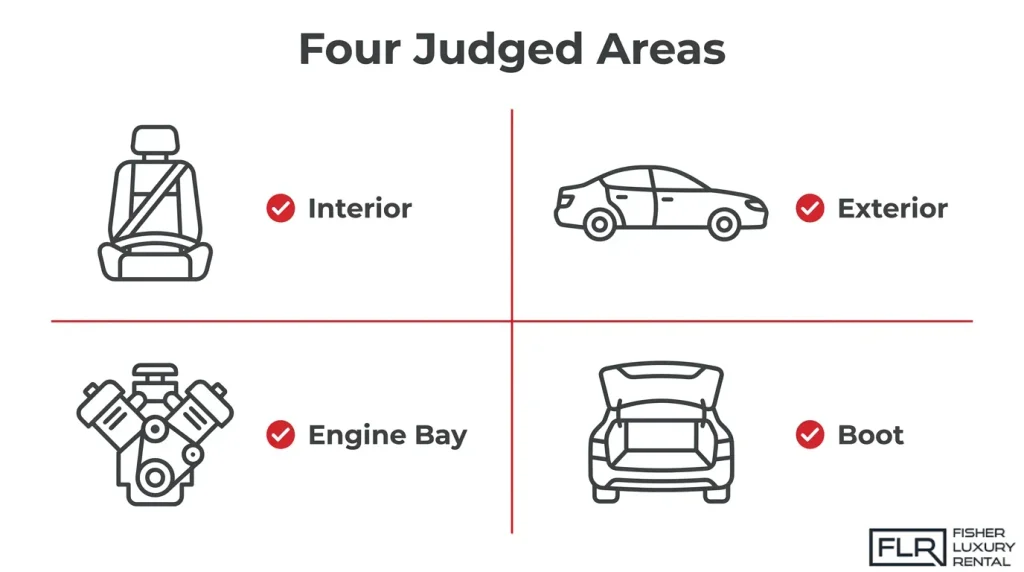
The condition standards your exotic car must meet cover four core areas: interior, exterior, engine compartment, and boot, all judged for authenticity, condition, and cleanliness. According to the 2026 JCNA Concours Rule Book, judges record every cleanliness and condition discrepancy on a C&C Deduction Locations sheet, which entrants can use to address faults before their next event. Operationally, the car must start and demonstrate working gauges, air conditioning, and accessories during inspection. For high-value vehicles, the Massachusetts Division of Insurance recommends obtaining a professional appraisal and insuring the car for that appraised amount. For those who prefer to experience exotic vehicles without the complexities of ownership, appraisals, and specialized insurance, rental options through companies like Fisher Luxury Rental provide access to maintained, top-trim exotics in the Phoenix and Portland areas.
Are There Mileage or Model Year Restrictions?
Mileage or model year restrictions vary by show format and organizing body. Common eligibility structures include:
- Concours d’Elegance events: Typically require vehicles to meet a minimum age threshold, often 25 years or older, and be in near-original factory condition.
- Marque-specific club shows: Restrict entries to approved makes and models, regardless of mileage.
- Display-only or exhibition classes: Generally have broader eligibility, welcoming modern exotics with no strict year cutoff.
- Regional community shows: Often accept any vehicle class, with mileage playing no formal role in eligibility.
Always confirm year and mileage criteria directly with the event organizer before submitting your application.
How Do You Find the Right Car Shows for Your Exotic Vehicle?
Finding the right car shows involves searching local club calendars, national event directories, and brand-specific club pages. The section below cover local and regional discovery, national prestigious events, and marque-exclusive shows.
How Do You Find Local and Regional Exotic Car Shows?
Local and regional exotic car shows are found through municipal event pages, enthusiast club newsletters, and social media groups. Many clubs publish rolling event calendars online; the BMW Car Club of America’s Golden Gate Chapter, for example, invites visitors to subscribe to its newsletter to receive upcoming event notifications. City recreation departments, such as Sunrise, Florida’s Leisure Services division, post registration contacts directly on their event pages. Checking state-level marque club websites and local automotive Facebook groups also surfaces smaller, invitation-friendly shows before spots fill.
How Do You Find National or Prestigious Exotic Car Events?
National or prestigious exotic car events are found through major concours websites, sanctioning-body event directories, and industry publications such as Road & Track or AutoWeek. The Pebble Beach Concours d’Elegance, Amelia Island Concours, and Gooding & Company auction weekends publish annual application cycles well in advance. Monitoring organizer mailing lists is the most reliable approach, as acceptance is competitive and entry windows close early.
How Do You Find Marque-Specific or Brand-Exclusive Shows?
Marque-specific shows are found through the official national clubs tied to each manufacturer, such as the Ferrari Club of America, Porsche Club of America, or Mercedes-Benz Club of America. According to the Ferrari Club of America, the organization has held its Annual International Meet every year since 1964, rotating locations near renowned road racing tracks across North America. Joining the relevant club is often a prerequisite for entry, making membership the first practical step toward securing a spot at a brand-exclusive event.
What Is the Step-by-Step Registration Process for a Car Show?
The step-by-step registration process for a car show typically involves finding the event, submitting an application, paying your entry fee, and arriving during the designated check-in window. The heading sections below cover online applications, club-based pathways, fee expectations, and post-submission steps.
How Do You Complete an Online Car Show Application?
Completing an online car show application requires locating the event’s registration page, filling out your vehicle details, attaching a photo, and submitting before the deadline. Most forms ask for your name, contact information, vehicle year, make, model, and a current photograph of the car. Some organizers, such as the Eagle Lake Car Show (2025), specify that all registration forms must be emailed back with a photo of the vehicle attached. Submit early; popular shows sell out before the event date, leaving no day-of registration option.
How Do You Register Through a Car Club or Invitation?
Registering through a car club requires active membership in the sponsoring organization. According to the BMW Car Club of America By-Laws (amended February 15, 2019), active membership is open to anyone interested in BMW automobiles, and club events are typically reserved for members. Marque clubs such as the Mercedes-Benz Club of America and the Classic Car Club of America similarly gate their show fields behind membership. For invitation-only concours events, an organizer or selection committee issues access directly, so maintaining relationships within the enthusiast community matters.
What Fees Should You Expect When Registering?
Registration fees for car shows vary widely by event type, prestige level, and registration timing. Early registration consistently costs less than day-of entry. The Freedom Car Show charges $25 for early registration and $30 on show day. The Deer Valley High School Band Car Show (2024) set early registration at $25, rising to $35 after the cutoff date. Exclusive concours events charge significantly more, with some reaching $175 per entry, payable only after acceptance by a selection committee. A small number of charity-focused events charge no fee but encourage a donation instead.
What Happens After You Submit Your Registration?
After you submit your registration, you typically receive a confirmation and instructions for check-in day. According to the Porsche Club of America’s 2025 Parade registration process, successfully registered participants receive a confirmation email with next steps, such as booking housing. Note that vehicle registration fees are nonrefundable if you cannot attend or the show is cancelled, a policy confirmed by the Colorado Concours FAQ (2026). Arrive within the designated window: some show fields open gates at 7 a.m. and close promptly at 10 a.m., with no late entries permitted.
How Should You Prepare Your Exotic Car Before Show Day?
Preparing your exotic car before show day covers three critical areas: detailing, mechanical inspection, and documentation. Each heading below addresses one of these areas and explains what judges actually evaluate.
What Detailing Steps Make Your Exotic Car Show-Ready?
The detailing steps that make your exotic car show-ready target every judged surface: exterior paint, glass, wheels, engine bay, and interior. Judges at competitive events deduct points for fading, stains, dirt, poor hardware finish, and even carpet wear. Work from the top down, starting with a clay bar treatment on the paint, followed by machine polishing, sealant, and tire dressing. Clean the engine bay with appropriate degreasers, dry thoroughly, and dress rubber and plastic trim. Inside, address carpeting, floor mats, seat belts, and all interior panels. Overlooking the engine bay or trunk is one of the most common mistakes competitive exhibitors make, yet those areas carry real scoring weight.
What Mechanical Inspections Should You Complete First?
The mechanical inspections you should complete first are those that verify the car starts, runs cleanly, and operates all functional systems. Judges at many events will ask you to start the engine on the show field and demonstrate accessories such as air conditioning, wipers, power windows, and interior lighting. Check for fluid leaks, exhaust smoke, and any warning lights before trailering or driving to the venue. Confirm that gauges read correctly at idle. Addressing mechanical issues before show day is far more practical than discovering a coolant weep or inoperative HVAC during judging, when no corrective action is possible.
How Do You Document Your Car’s Build and History for Judges?
Documenting your car’s build and history for judges means assembling a complete provenance file that covers the vehicle’s physical and historical record. According to the FIVA Charter of Turin, a proper historic-vehicle documentation file includes drawings, photographs, historic maintenance literature, written restoration reports, results of analysis and investigations, and reference documents detailing the individual history of the vehicle. Organize these materials chronologically in a binder or digital folder. Include factory build sheets, service records, restoration invoices, and dated photographs showing the car at each major stage. Strong documentation demonstrates authenticity and supports your claims if an originality question arises during judging.
What Types of Car Show Classes Can You Enter?
Car show classes fall into four main categories: Concours d’Elegance, judged competition, People’s Choice, and display-only. Each class suits a different vehicle type, preparation level, and competitive goal.

Concours d’Elegance
Concours d’Elegance is the most rigorous car show class, scoring vehicles on originality, authenticity, condition, and presentation. According to the Cincinnati Concours d’Elegance Judging Guidelines, final class rankings also factor in historical significance, provenance, and overall appeal. Vehicles are typically accepted by application review, and only the most prepared cars earn placement. For exotic car owners, entering a Concours is the highest-stakes way to validate a restoration or preservation effort.
Judged Competition Class
Judged competition classes evaluate all entries for cleanliness and condition, awarding trophies to the top finishers in each class. Show structures vary widely: some events award three trophies per judged class plus Best of Show and People’s Choice honors, while larger events like the City of Rowlett’s Rowlett Rides competition offer 30 judged classes with 2 awards per class and 8 Best of Show awards. These classes give serious competitors a clear target and structured recognition.
People’s Choice or Popular Vote
People’s Choice is a voting-based class where spectators, not judges, select the winner. Voting categories often segment entries by era or type, such as trucks, pre-1950 cars, and 1950-to-present vehicles, giving a range of entries a fair competitive footing. This class rewards visual impact and crowd appeal rather than technical originality, making it accessible to well-presented drivers’ cars.
Display Only or Exhibition Class
Display-only classes let owners show their vehicles without competitive judging. Some events, such as the Classic Car Club of America’s Grand Classics, offer a Touring Class specifically for drivers’ cars that fall outside strict show-car standards. Membership and vehicle eligibility requirements still apply, but the format removes scoring pressure entirely. This is the ideal entry point for first-time exhibitors testing the car show experience.
Do You Need Special Insurance to Show Your Exotic Car?
Yes, you typically need specialized insurance to show your exotic car, though exact requirements vary by event type. Most casual shows require only valid standard auto insurance, while prestigious concours events and sanctioned competitions often require additional coverage. The sections below cover agreed value policies, event liability, and what organizers commonly require at check-in.
What Type of Insurance Do Most Car Shows Require?
Most car shows require proof of valid auto insurance as a baseline entry requirement. Community and charity shows generally accept standard personal auto policies, while club-sanctioned events may require higher liability limits. According to the Sports Car Club of America, all SCCA-sanctioned events must carry Event Liability and Participant Accident coverage through the SCCA Event Insurance Plan. For exotic vehicles, standard policies often undervalue the car, making additional coverage a practical necessity.
Should You Get Agreed Value or Stated Value Coverage for a Show Car?
Agreed value coverage is the preferred option for exotic show cars. The California Department of Insurance defines agreed value as a loss valuation method where the insured and insurer agree on a fixed payout amount upfront, most commonly used for valuable artwork, antiques, and classic autos. By contrast, a stated value policy still pays only actual cash value at the time of loss, which may fall short of your car’s true market worth. For a high-value exotic, agreed value eliminates that gap entirely.
Does the Event Organizer Provide Any Insurance Coverage?
Event organizers sometimes provide venue-level liability coverage, but this protects them, not your vehicle. The Massachusetts Division of Insurance advises that any high-value vehicle, including antiques and restored autos, should be appraised and insured for the full appraised amount before attending events. Relying on organizer coverage for your exotic is a risk not worth taking. Always confirm your own policy covers the car while on a show field, not just while driving to and from the venue.
What Are Common Mistakes That Get Car Show Entries Rejected?
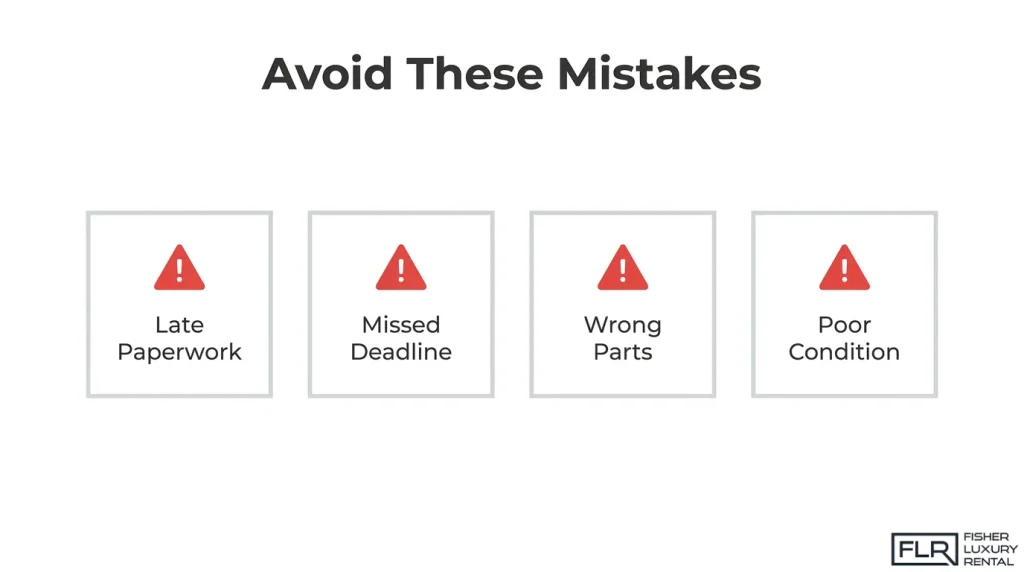
Common mistakes that get car show entries rejected include missing deadlines, non-original components, incomplete paperwork, and vehicles that fail operational checks. Understanding these pitfalls before you register protects your entry fee and your time on the show field.
Submitting Incomplete or Incorrect Registration Paperwork
Incomplete or incorrect registration paperwork is one of the most preventable reasons an entry gets turned away. Most shows require a completed form, proof of insurance, and a vehicle photo submitted together. Missing any single element can result in automatic disqualification before judges ever see your car. Double-check every field, attach all required documents, and submit well ahead of the deadline.
Missing the Registration Deadline
Missing the registration deadline means your car cannot enter the show field, regardless of its condition or quality. Many events enforce hard cutoffs with no exceptions: the Illinois Secretary of State Vehicle Show, for example, closes its registration gate promptly at 10 a.m. with no late entries permitted. Popular events also sell out entirely, making early submission the only reliable strategy.
Entering a Car with Non-Original or Incorrect Components
Entering a car with non-original or incorrect components results in direct scoring penalties at judged events. According to the Alfa Romeo Owners Club of America’s National Concorso Manual, penalties are applied to incorrect items to ensure vehicles are as original and correct as possible, with specific point deductions assigned to common infractions. Even well-intentioned modifications, such as aftermarket gauges or incorrect trim pieces, can cost significant points or trigger disqualification from a class.
Presenting a Car in Poor Condition or with Mechanical Issues
Presenting a car in poor condition or with mechanical issues can disqualify an entry at operational inspection. Judges at concours events check for fluid leaks, test accessories, and verify that systems like air conditioning and wipers function correctly. Interior fading, stained carpeting, and poor hardware finish all carry deductions under standard judging manuals. A thorough pre-show detail and mechanical inspection is not optional; it is a prerequisite for a competitive entry.
How Can Car Show Rules Differ for Rented or Leased Exotics?
Car show rules can differ for rented or leased exotics in several important ways, primarily around ownership documentation, exhibitor conduct, and what the rental or lease agreement permits. Understanding these distinctions before registering saves you from rejection on show day.
Ownership Documentation and Title Requirements
Rented and leased exotic cars present a title documentation challenge that privately owned vehicles do not. According to the New York State Department of Motor Vehicles, a lessee does not receive the original title certificate as proof of ownership because the leasing company holds the title in their own name. Many car shows require the entrant to present vehicle registration or proof of ownership, which means a leased vehicle’s paperwork will list the finance or leasing company, not you, as the owner. For rentals, the rental company’s name appears on all documents. Some show organizers accept this with a letter of authorization; others may require the registered owner to be the exhibitor. Always contact the show organizer in advance to confirm their policy on third-party ownership documentation.
Exhibitor Conduct Rules and Vehicle Operation
Exhibitor conduct rules apply equally to rented exotics as to owned ones, and violations carry real consequences. The U.S. Navy MWR Mid-South Car Show rules state that starting the engine, moving the vehicle, or operating hydraulic and airbag systems is strictly forbidden until after the public has cleared the facility, with the rule enforced to protect audiences and children. For a rental vehicle, any damage caused by violating show-field safety rules may fall outside the rental agreement’s coverage, leaving the renter personally liable. Renters should also verify that their rental contract permits use at a public exhibition event before registering.
How Can Renting an Exotic Car Help You Experience Car Show Culture?
Renting an exotic car can help you experience car show culture by putting you behind the wheel of a show-worthy vehicle without the financial commitment of ownership. Fisher Luxury Rental, serving Phoenix, Scottsdale, Portland, and Vancouver, offers top-trim exotic and luxury vehicles that let enthusiasts experience high-caliber cars firsthand. Their fleet is maintained to a premium standard, making it a practical starting point for anyone exploring the exotic car world before committing to ownership. The section below cover Fisher Luxury Rental’s fleet access and the key registration takeaways from this guide.
Can a Luxury Rental from Fisher Luxury Rental Let You Drive Show-Worthy Exotics Without Owning One?
Yes, a luxury rental from Fisher Luxury Rental can let you drive show-worthy exotics without owning one. A Lamborghini Huracan Spyder rental in Phoenix is the kind of current mid-engine convertible that draws attention in open classes and cruise-in lanes. Confirm the organizer accepts non-owned entries, carry the rental agreement plus required ID, and arrive clean.
What Are the Key Takeaways About Registering Your Exotic Car for Car Shows?
The key takeaways about registering your exotic car for car shows are that preparation, timing, and documentation determine your success on the show field. Applying these lessons makes the process far more manageable:
- Start early. Many shows sell out or close registration weeks before the event, and some charge lower early-bird fees.
- Gather documentation first. Photos, service records, and provenance materials strengthen your application and support judging.
- Know your class. Concours, judged competition, People’s Choice, and display-only classes each carry different preparation demands.
- Confirm insurance coverage. Verify your policy covers agreed value and sanctioned-event liability before show day.
- Arrive on time. Most show fields enforce strict gate-closure rules with no exceptions for late entries.
With these fundamentals in place, your first car show registration becomes a confident, well-organized process rather than a stressful one.