Exotic supercar insurance is a specialized form of coverage designed to protect high-value vehicles whose repair costs, replacement parts, and theft risk far exceed what standard auto policies can handle. Unlike conventional coverage that relies on depreciated actual cash value, exotic policies use agreed value underwriting, custom liability thresholds, and provider networks built for limited-production cars.
This guide covers the core differences between exotic and standard insurance, qualification requirements and costs, the step-by-step process for securing a policy, common mistakes and claims management, and the role of cross-border considerations and rental fleet coverage.
Exotic policies diverge from standard auto insurance in how insurers assess vehicle worth, which risks they underwrite, and what coverage tiers they offer. Agreed value policies guarantee 100% of a predetermined payout on a total loss, while specialty liability minimums for exotic rentals often start at $100,000/$300,000/$100,000, well above state-mandated floors.
Qualifying for exotic coverage requires specific documentation, a clean driving history, and sometimes age or experience minimums; insurers also typically require garage storage and pleasure-use designations rather than daily commuting.
Premium costs in 2026 reflect the vehicle’s make, model, location, and driver profile. Luxury full-coverage averages run roughly $237 per month, though flagship models like the Maserati Quattroporte rank among the most expensive cars to insure nationwide.
Securing the right policy means comparing specialty providers, gathering accurate vehicle valuations, and reading exclusions carefully. Overlooking gaps in track day coverage or OEM parts clauses leads to denied claims.
Filing claims on high-end vehicles follows a distinct process where leading insurers target initial adjuster contact within hours, not days, and options like cherished salvage retention let owners keep a repairable vehicle while collecting full payout.
Cross-border driving and rental fleet operations add layers of complexity, from international liability structures to commercial policy exclusions that omit exotic classes unless explicitly extended.
What Makes Exotic Supercar Insurance Different from Standard Auto Insurance?
Exotic supercar insurance differs from standard auto insurance in risk profile, valuation method, and coverage scope. The subsections below cover the unique risks these vehicles face, how insurers determine their value, and which coverage options are essential.
What Risks Are Unique to Exotic and Luxury Cars?
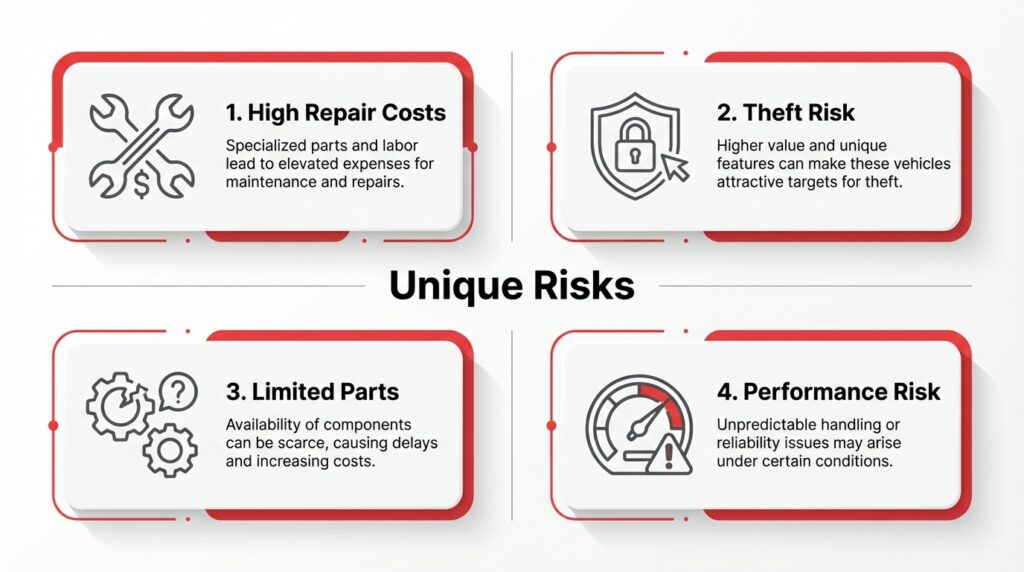
The risks unique to exotic and luxury cars include disproportionately high repair costs, elevated theft targeting, limited parts availability, and extreme performance capabilities that increase accident severity. A minor fender collision on a Lamborghini Huracan or Ferrari 488 can cost tens of thousands in carbon fiber body repairs, whereas the same impact on a standard sedan might total a few hundred dollars.
These vehicles also attract theft and vandalism at higher rates due to their visibility and resale value. According to Insurify, luxury vehicles in 2026 incur higher insurance costs, with an average full-coverage premium of $237 per month. Track use introduces another layer of exposure, since standard personal auto policies typically exclude on-track activities entirely. For owners who push performance limits, that gap in coverage represents significant uninsured financial risk.
How Do Insurers Value Exotic Supercars?
Insurers value exotic supercars using agreed value policies rather than the actual cash value method applied to standard vehicles. Agreed value insurance pays 100% of a predetermined amount in the event of a total loss or theft, eliminating depreciation disputes that commonly reduce payouts on conventional policies.
This distinction matters because exotic vehicles often appreciate or hold value unpredictably. Standard depreciation schedules fail to capture the true market worth of a limited-production Ferrari or McLaren. According to Chubb, claims adjusters for leading high-value vehicle insurers in 2026 typically aim to make initial contact within six hours of a claim report. That accelerated response reflects the specialized handling these assets require, from certified appraisals to OEM-specific repair networks.
What Coverage Options Are Essential for Exotic Vehicles?
The coverage options essential for exotic vehicles extend well beyond standard liability and collision. Key protections include:
- Agreed value coverage locks in a guaranteed payout that reflects the vehicle’s true market worth.
- Track day insurance covers on-track activities excluded from standard policies.
- OEM parts replacement ensures repairs use factory-original components rather than aftermarket substitutes.
- High-limit liability protects against the elevated bodily injury and property damage exposure these vehicles carry.
- Comprehensive coverage addresses theft, vandalism, weather damage, and animal strikes.
According to the U.S. Bureau of Labor Statistics, the motor vehicle insurance index covers physical damage, liability, medical payments, and personal injury protection for private passenger vehicles. However, standard index-level coverage leaves critical gaps for exotic owners. Prioritizing agreed value and track day protection first closes the two largest exposure areas most supercar owners overlook.
With these coverage fundamentals established, the next step is understanding the qualifications insurers require.
What Requirements and Qualifications Do You Need for Exotic Car Insurance?
The requirements and qualifications you need for exotic car insurance include specific documentation, a clean driving record, and meeting minimum age and experience thresholds. Each factor shapes eligibility and premium terms.
What Documentation Is Needed to Apply for Exotic Car Insurance?
The documentation needed to apply for exotic car insurance includes:
- Vehicle title and registration confirming legal ownership of the exotic car.
- Professional appraisal or agreed value documentation establishing the vehicle’s current market worth for policy valuation.
- Proof of secure storage, such as a private garage address, since insurers require protected parking for high-value vehicles.
- Valid driver’s license with a clean status in the state where coverage is sought.
- Photos of the vehicle’s current condition, including exterior, interior, and odometer reading, to establish a baseline for claims.
Gathering these documents before requesting quotes prevents delays during underwriting and strengthens your application.

How Do Driving Records Affect Exotic Insurance Eligibility?
Driving records affect exotic insurance eligibility by serving as the primary risk indicator underwriters evaluate. At-fault accidents, DUI convictions, and multiple moving violations can disqualify applicants outright or trigger significantly higher premiums. Most specialty insurers require a clean record spanning three to five years before approving coverage.
Beyond violation history, insurers also assess how the vehicle will be used. According to Hagerty, specialty insurance for modern classic and exotic vehicles typically requires the vehicle to be used for pleasure driving rather than regular commuting and to be stored in a protected location, preferably a garage. Daily commuting or rideshare use typically voids eligibility entirely.
What Are Typical Age and Experience Limitations for Policyholders?
Typical age and experience limitations for exotic car insurance policyholders start at 25 years old, though some specialty carriers set the floor at 30. Drivers under these thresholds face either outright denial or steep surcharges because younger operators represent higher actuarial risk for high-performance vehicles.
Most underwriters also require a minimum of five years of licensed driving experience, regardless of age. Some carriers add further conditions:
- No gap in continuous insurance coverage for at least 12 months prior to application.
- Ownership of a separate daily-driver vehicle to confirm the exotic car serves as a secondary, pleasure-use vehicle.
For anyone under 30, these restrictions make shopping among multiple specialty providers essential to finding viable coverage options.
How Much Does It Cost to Insure an Exotic Supercar in 2026?
Exotic supercar insurance in 2026 costs significantly more than standard auto coverage, with premiums shaped by vehicle value, driver profile, and location. The following sections break down key pricing factors, model-specific impacts, and strategies to reduce costs.
What Factors Influence Exotic Car Insurance Premiums?
The factors that influence exotic car insurance premiums include vehicle value, repair costs, driver history, storage conditions, and intended use. Because exotic supercars require specialized parts and certified technicians, insurers price policies to reflect elevated claim risk.
Key premium factors include:
- Declared vehicle value: Higher agreed values produce higher premiums.
- Repair and parts costs: Limited OEM part availability increases projected claim payouts.
- Driver record and age: Clean records and experienced drivers qualify for lower rates.
- Storage and security: Garage-kept vehicles with tracking systems reduce theft risk.
- Annual mileage and use type: Pleasure-only use, rather than daily commuting, typically lowers premiums.
According to Insurify, luxury vehicles in 2026 incur an average full-coverage premium of $237 per month, well above the national average. For owners, understanding which factors carry the most weight allows for targeted cost reduction rather than guesswork.
How Do Model, Make, and Location Impact Pricing?
Model, make, and location impact pricing because insurers tie premiums directly to a vehicle’s claim history, replacement cost, and regional risk profile. A Ferrari 488 Spider commands a different rate than a Corvette C8 because parts sourcing, theft frequency, and repair complexity vary dramatically between platforms.
Location compounds these differences. States with higher litigation rates, severe weather exposure, or dense urban traffic consistently generate steeper premiums. According to USA Today, the Maserati Quattroporte and Maserati Ghibli rank as the two most expensive cars to insure in the United States for 2026. Even within a single state, rates shift between metro and rural zip codes based on local accident and theft data. Choosing where you register and garage the vehicle is one of the most controllable pricing levers available.
Are There Ways to Lower Your Exotic Insurance Costs?
Yes, there are ways to lower your exotic insurance costs without sacrificing essential coverage. Strategic adjustments to how you store, use, and insure the vehicle can meaningfully reduce annual premiums.
Effective cost-reduction strategies include:
- Bundle policies with a single specialty insurer to unlock multi-vehicle or multi-policy discounts.
- Increase your deductible to lower the monthly premium, provided you can absorb the higher out-of-pocket cost.
- Install approved security systems such as GPS trackers and kill switches to qualify for theft-prevention discounts.
- Limit annual mileage and designate the car for pleasure use only, which most specialty carriers reward.
- Maintain a clean driving record, since even one at-fault incident can spike exotic premiums dramatically.
- Shop specialty providers like Hagerty or Chubb that understand high-value vehicles, rather than relying on standard auto insurers that often overprice exotic policies.
With pricing factors and savings strategies clarified, the next step is knowing how to secure the right policy.

What Steps Should You Take to Secure Exotic Car Insurance?
The steps you should take to secure exotic car insurance include comparing specialty providers, gathering detailed vehicle and driver information, and carefully evaluating policy terms. Each step below breaks down the process.
How Do You Compare Exotic Insurance Providers?
You compare exotic insurance providers by evaluating their specialization in high-value vehicles, claims responsiveness, and coverage flexibility. Start by identifying insurers that offer agreed value policies, OEM parts guarantees, and dedicated exotic vehicle claims teams. Request quotes from at least three specialty carriers, then compare them across these key factors:
- Coverage types available, such as agreed value, comprehensive, and track day options.
- Claims response speed and access to manufacturer-certified repair networks.
- Underwriting restrictions on mileage, storage, and vehicle modifications.
- Financial stability ratings from agencies like AM Best.
Providers that specialize exclusively in exotic and collector vehicles tend to understand depreciation nuances and replacement part scarcity far better than general insurers.
What Information Should You Gather Before Requesting Quotes?
The information you should gather before requesting quotes includes vehicle specifications, ownership documentation, and personal driving history. Having this ready streamlines underwriting and ensures accurate premium estimates. Prepare the following:
- Vehicle identification number (VIN), year, make, model, and trim level.
- Current agreed value or recent professional appraisal.
- Proof of secure storage, such as a locked garage or climate-controlled facility.
- Your driving record covering at least the past five years.
- Annual mileage estimate and intended use (pleasure, commuting, or track events).
- Photos of the vehicle’s current condition, including modifications.
Incomplete submissions often delay quotes or result in higher preliminary pricing, so thoroughness at this stage saves time and money.
How Do You Evaluate Policy Terms and Exclusions?
You evaluate policy terms and exclusions by reading the full policy document and identifying gaps in coverage that could leave you financially exposed. According to the U.S. Bureau of Labor Statistics, the motor vehicle insurance index tracks coverage categories including physical damage, liability, medical payments, and personal injury protection for private passenger vehicles. Pay close attention to these critical areas:
- Whether the policy uses agreed value or actual cash value for total loss payouts.
- Exclusions for track use, rental to third parties, or cross-border driving.
- Deductible amounts for comprehensive versus collision claims.
- Repair shop restrictions that may prevent use of manufacturer-certified facilities.
Never assume standard language applies to exotic vehicles. With policy terms reviewed, the next priority is avoiding common mistakes that can jeopardize your coverage.
What Common Mistakes Should You Avoid When Insuring an Exotic Car?
The most common mistakes when insuring an exotic car include undervaluing the vehicle, skipping specialty coverages, and failing to disclose vehicle modifications. Below, the key pitfalls that trigger claim denials and the overlooked coverages that can prove costly are examined.
What Pitfalls Can Lead to Claim Denials?
The pitfalls that can lead to claim denials on exotic car policies include:
- Misrepresenting vehicle use. Listing a supercar as a daily commuter when it serves as a pleasure vehicle can void coverage, since specialty insurers typically require the car to be used for pleasure driving and stored in a protected location such as a garage, according to Hagerty.
- Failing to disclose modifications. Aftermarket performance upgrades, custom wraps, or suspension changes that go unreported create grounds for denial when a claim is filed.
- Allowing unlisted drivers. Letting someone not named on the policy operate a high-value vehicle often invalidates the claim entirely.
- Ignoring storage requirements. Many exotic policies mandate enclosed garage storage; parking on the street or in an open lot can breach policy terms.
Reviewing every policy condition before signing prevents these costly surprises.
What Overlooked Coverages Could Cost You Later?
The overlooked coverages that could cost you later are gap insurance, track day coverage, and agreed value protection. Many owners secure basic liability and collision but skip supplemental layers that matter most for high-value vehicles.
- Agreed value coverage. Without it, a total loss payout reflects depreciated market value rather than the full predetermined amount. Agreed value policies pay 100% of the predetermined value, as noted by duPont REGISTRY.
- Track day insurance. Standard personal auto policies exclude on-track activities, leaving owners fully exposed during performance driving events.
- OEM parts coverage. Generic replacement parts can reduce both performance and resale value on vehicles like a Ferrari 488 or McLaren 720S.
- Diminished value protection. Even after professional repairs, an exotic car’s resale value often drops; this coverage compensates for that loss.
For owners who take their supercars seriously, these supplemental coverages are not optional extras but essential safeguards. Understanding what to avoid sets the stage for handling claims effectively when incidents do occur.
How Do You File and Manage a Claim for an Exotic Supercar?
You file and manage a claim for an exotic supercar by reporting the incident immediately, providing thorough documentation, and working with specialty adjusters experienced in high-value vehicles. The process involves specific timelines, evidence requirements, and repair considerations.
What Is the Claims Process Like for High-End Vehicles?
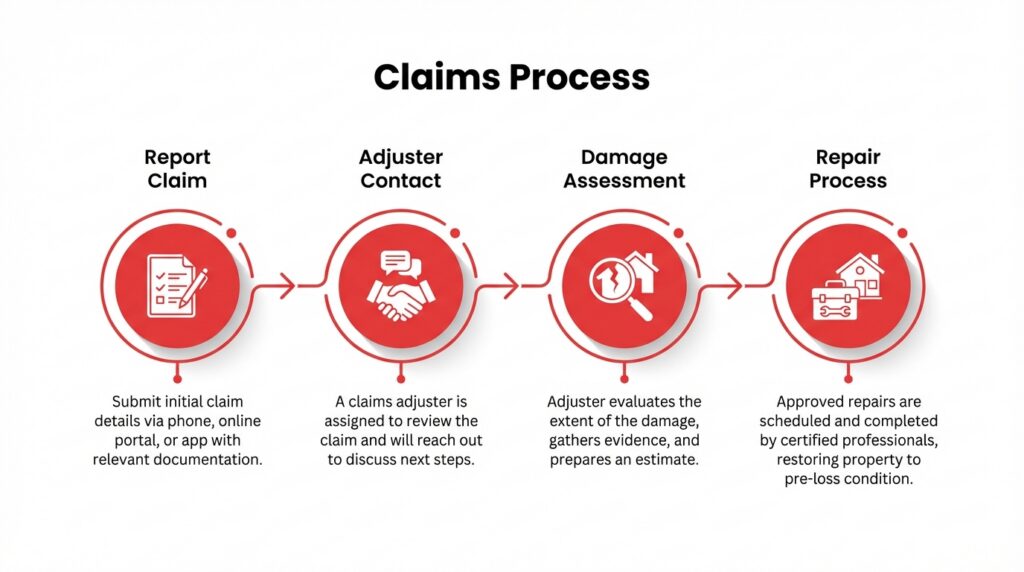
The claims process for high-end vehicles begins with immediate incident reporting to your specialty insurer. According to Chubb, insurance claims adjusters for leading high-value vehicle insurers typically aim to make initial contact within six hours of a claim report in 2026. This rapid response reflects the urgency that six- and seven-figure vehicles demand.
After initial contact, a dedicated adjuster evaluates the damage using the agreed value stated in your policy. Unlike standard auto claims, exotic supercar claims often require factory-certified appraisers who understand rare materials such as carbon fiber monocoques, hand-stitched interiors, and limited-production components. Owners should expect a more hands-on, consultative process compared to conventional insurance claims.
What Documentation and Evidence Will You Need?
The documentation and evidence you will need includes:
- Timestamped photos and video of all damage from multiple angles, captured at the scene.
- A copy of the police report or incident report filed immediately after the event.
- Your current policy declarations page showing agreed value and coverage limits.
- Maintenance and service records proving the vehicle’s pre-loss condition.
- Original purchase documentation, including the bill of sale and title.
- Receipts for any aftermarket modifications or performance upgrades covered under the policy.
Gathering this evidence before contacting your adjuster accelerates the review process. For high-value supercars, incomplete documentation is one of the most common reasons claims stall or face reduced payouts.
What Should You Expect During Repairs or Replacements?
You should expect longer timelines, limited repair facility options, and higher scrutiny during repairs or replacements for exotic supercars. Manufacturer-authorized body shops are typically required; insurers often mandate that only OEM parts from brands such as Ferrari, Lamborghini, or McLaren be used.
If the vehicle is declared a total loss, an agreed value policy pays 100% of the predetermined value, eliminating depreciation disputes. Specialized “Cherished Salvage” coverage, offered by providers like Hagerty, allows owners to retain their vehicle and still receive the full guaranteed value payment. Repairs on exotic models frequently take weeks or months due to parts sourcing from overseas factories. For owners who depend on their vehicle, securing a rental or loaner provision within the policy proves essential during extended repair periods.
With claims resolved, international travel introduces its own insurance complexities worth understanding.
How Do International Rentals and Cross-Border Use Affect Exotic Car Insurance?
International rentals and cross-border use affect exotic car insurance by introducing layered coverage requirements, jurisdictional gaps, and temporary import regulations. The subsections below cover driving abroad and temporary import/export issues.
What Are the Insurance Implications of Driving Abroad?
The insurance implications of driving abroad center on three primary coverage layers: third-party liability, breakdown cover, and damage to the insured vehicle. Most domestic exotic car policies do not extend beyond national borders, leaving significant gaps when driving internationally.
According to a 2026 analysis by Dostupny Advokat, international car insurance for travel is structured around these three distinct layers, each requiring separate verification before crossing any border. Drivers who assume their U.S. policy covers them overseas often discover exclusions only after an incident occurs.
Key steps before driving an exotic car internationally include:
- Confirming whether your insurer offers territorial extensions beyond the U.S. and Canada.
- Purchasing supplemental third-party liability coverage that meets the destination country’s minimum requirements.
- Securing standalone breakdown and recovery coverage rated for high-value vehicles.
- Obtaining written confirmation from your insurer that collision and comprehensive protections remain active abroad.
For most supercar owners, purchasing a short-term international policy from a specialty provider is more reliable than depending on domestic policy extensions.
What Coverage Issues Arise with Temporary Imports and Exports?
Coverage issues with temporary imports and exports arise primarily from jurisdictional mismatches between the vehicle’s country of registration and the country of use. When an exotic supercar enters a foreign country temporarily, the owner’s domestic policy may become void, and local insurance regulations impose separate requirements.
Common coverage gaps during temporary cross-border use include:
- Domestic agreed value policies that exclude claims occurring outside the policy’s defined territory.
- Foreign jurisdictions requiring locally issued liability coverage, regardless of existing U.S. policies.
- Customs bond or deposit requirements that standard auto insurers do not cover.
- Salvage and repair complications when parts must cross borders, causing delays and cost disputes.
Owners planning to temporarily export a supercar should coordinate with a specialty insurer experienced in cross-border transactions well before the vehicle leaves the country. Failing to arrange jurisdiction-specific coverage in advance remains one of the most costly oversights in exotic car ownership.
With cross-border coverage secured, partnering with the right rental or insurance provider simplifies the process further.
How Should You Approach Insuring an Exotic Supercar with Fisher Luxury Rental?
You should approach insuring an exotic supercar with Fisher Luxury Rental by understanding how rental fleet coverage works and what protections are already built into the experience. The following sections cover rental insurance specifics and key takeaways from this guide.
Can Fisher Luxury Rental’s Exotic Car Rental Services Help with Insurance Needs?
Yes, Fisher Luxury Rental’s exotic car rental services can help with insurance needs by maintaining commercial fleet coverage that protects both the vehicles and renters. Exotic car rental companies are required to carry purpose-built commercial fleet insurance specifically designed for rental operations, according to Eazyride’s 2026 business guide. This matters because standard commercial car rental policies often exclude luxury and exotic vehicle classes unless the insurer explicitly extends coverage.
For perspective, full-coverage premiums on luxury vehicles average $237 per month in 2026. Renting through a company that already carries specialized exotic coverage removes the burden of securing and paying for a personal policy on a vehicle you may only drive for a few days. Fisher Luxury Rental offers models ranging from the Corvette C8 to the Ferrari 488 Spider and McLaren 720S, all covered under fleet insurance built for high-value assets.
What Are the Key Takeaways About How to Insure an Exotic Supercar: Guide & Tips 2026 We Covered?
The key takeaways about how to insure an exotic supercar in 2026 are:
- Exotic supercars require specialized insurance that differs significantly from standard auto policies in valuation methods, coverage limits, and provider expertise.
- Agreed value policies, not actual cash value, protect owners from depreciation-based underpayment after a total loss.
- Premiums vary dramatically by model; the Maserati Quattroporte and Maserati Ghibli rank as the two most expensive cars to insure in the U.S. for 2026, per a Keyt.com analysis.
- Documentation, driving history, and storage conditions directly influence eligibility and pricing.
- International use adds complexity through three coverage layers: third-party liability, breakdown cover, and vehicle damage protection.
- Renting from a reputable company like Fisher Luxury Rental lets you experience exotic supercars with commercial fleet insurance already in place, eliminating the need for a personal exotic policy.