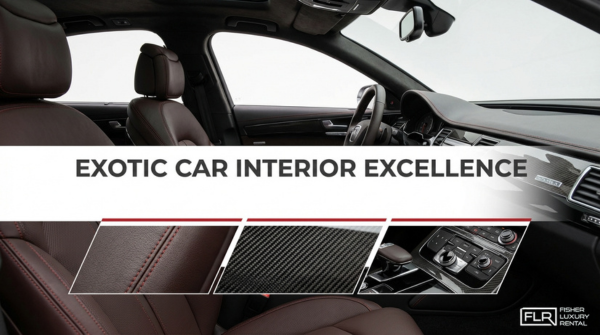
Exotic car interiors are curated environments where premium materials, precision craftsmanship, and advanced technology converge to create a sensory experience that separates supercars from standard vehicles. Every surface, stitch, and accent serves both an aesthetic and functional purpose.
This guide covers luxury interior materials, design techniques and craftsmanship, the balance between functionality and opulence, brand-by-brand interior comparisons, maintenance best practices, and how renting from Fisher Luxury Rental puts these world-class cabins within reach.
Semi-aniline leather, Alcantara microfiber, carbon fiber, and exotic wood veneers form the material foundation of nearly every high-end cabin. Each offers distinct tactile qualities, weight characteristics, and visual depth that manufacturers select based on the vehicle’s performance identity.
Design trends in today’s supercars lean toward functional minimalism, where clean layouts and sculpted surfaces reflect sophistication rather than excess. Bespoke customization programs now let clients specify contrast stitching patterns, proprietary color palettes, and handcrafted details that make each cabin unique.
Manufacturers integrate advanced comfort and technology features (adaptive seats, digital driver displays, ambient lighting systems) while preserving the raw performance feel that defines brands like Ferrari, Lamborghini, and McLaren. Rolls-Royce and Bentley take a different approach, prioritizing whisper-quiet refinement and artisan finishing.
Preserving these interiors demands material-specific care; leather requires regular conditioning to prevent cracking, while Alcantara needs gentle brushing with dedicated cleaners to maintain its soft nap.
We also explore how Fisher Luxury Rental’s fleet lets you experience these interiors firsthand across models like the Lamborghini Huracan Spyder, McLaren 720S, and Ferrari 488 Spider.
Which Materials Are Most Commonly Used in Luxury and Exotic Car Interiors?
The most commonly used materials in luxury and exotic car interiors are leather, Alcantara, carbon fiber, exotic woods, and metals. Each material serves a distinct role in defining comfort, performance feel, and visual sophistication.

Why Is Leather the Preferred Choice for Exotic Car Upholstery?
Leather is the preferred choice for exotic car upholstery because it combines tactile luxury, durability, and timeless visual appeal in ways no other material fully replicates. High-performance automotive leather is often semi-aniline, sourced from specialized Italian tanneries such as Poltrona Frau, which maintains a long-standing supplier relationship with Ferrari, according to AutoWin.
Semi-aniline leather retains natural grain patterns while offering enhanced stain resistance compared to full-aniline hides. This balance between authenticity and practicality makes it ideal for supercar cabins that endure both spirited driving and daily exposure to sunlight and body contact. For anyone serious about experiencing a genuinely premium interior, leather quality is the single fastest way to distinguish a top-trim exotic from everything else on the road.
How Do Alcantara, Suede, and Other Alternative Fabrics Enhance Interior Ambiance?
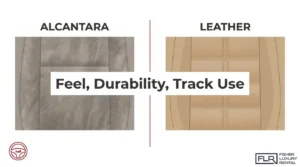
Alcantara, suede, and other alternative fabrics enhance interior ambiance by providing superior grip, softer tactile feedback, and a motorsport-inspired aesthetic that complements leather surfaces. According to CarBuzz, Alcantara is a synthetic microfiber material composed of approximately 68% polyester and 32% non-fibrous polyurethane, produced through spinning, extraction, needle punching, and buffing processes.
These qualities make Alcantara especially popular for steering wheels, seat bolsters, and headliners where grip and reduced glare matter during high-performance driving. Suede and microsuede alternatives offer a similar plush finish at varying price points. While often paired with leather rather than replacing it, these fabrics add visual depth and texture contrast that elevates a cabin from luxurious to genuinely immersive.
What Role Do Exotic Woods, Metals, and Carbon Fiber Play in Car Interior Design?
Exotic woods, metals, and carbon fiber play the role of accent materials in car interior design, adding structural contrast, visual depth, and lightweight performance benefits to the cabin. According to a Scuderia Car Parts analysis, supercar interior accents frequently utilize 2×2 twill weave carbon fiber, available in both high-gloss and matte finishes to reduce glare and fingerprint visibility.
Brushed aluminum and machined titanium trim pieces reinforce a technical, precision-engineered character, while open-pore wood veneers introduce warmth and organic texture in grand touring models from brands like Bentley and Rolls-Royce. Carbon fiber, in particular, serves a dual purpose: it reduces interior component weight while signaling motorsport DNA. Choosing the right combination of these accents defines whether a cabin feels like a race cockpit or a rolling salon, and the best exotics master both.
Beyond materials alone, the craftsmanship behind how these elements are assembled truly defines the interior experience.
How Do Design Techniques and Craftsmanship Elevate the Interior of Exotic Cars?
Design techniques and craftsmanship elevate the interior of exotic cars by combining cutting-edge trends, bespoke personalization, and meticulous handwork. The following sections explore current design movements, client-driven customization, and the enduring value of handcrafted details.
What Are the Latest Interior Design Trends Among Supercars and Luxury Vehicles?
The latest interior design trends among supercars and luxury vehicles center on functional minimalism and a fusion of heritage with modern aesthetics. According to a 2024 Outlook Luxe report, functional minimalism emphasizes a simple yet sophisticated aesthetic that reflects refined taste rather than cost-cutting.
This philosophy shapes how leading marques approach cabin layout, favoring clean sightlines and purposeful controls. Recent designs like the Bugatti Tourbillon illustrate the trend by blending classic and modern elements, featuring air vents designed to resemble miniature jet engines alongside stacked analog-style dials. Rather than overwhelming occupants with complexity, today’s supercar interiors use restraint as a form of luxury. Color palettes are also shifting toward bolder, more daring colorways instead of traditional neutral tones.
How Do Bespoke Customizations Personalize the Cabin for Individual Clients?
Bespoke customizations personalize the cabin for individual clients by offering tailored choices in materials, colors, and finishing details that transform a production vehicle into a one-of-one expression. According to AutoWin’s Ferrari customization analysis, luxury car buyers increasingly demand personalizations such as custom contrast stitching, unique leather textures, and a wide palette of proprietary colors.
These programs let owners specify everything from thread color on seat bolsters to the grain pattern on dashboard leather. The result is a cabin that reflects personal taste at every touchpoint. For most buyers, selecting two or three signature elements, like a distinctive stitch pattern paired with an unconventional hide color, creates a stronger identity than changing every surface at once.
What Is the Importance of Handcrafted Details in Exotic Car Interiors?
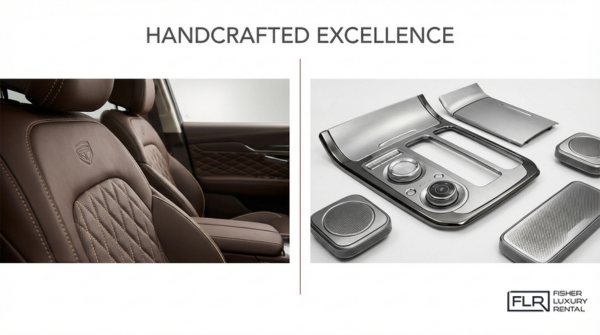
The importance of handcrafted details in exotic car interiors lies in the precision, exclusivity, and sensory quality that machine production alone cannot replicate. Rolls-Royce, for example, incorporates hand-stitched Nappa leather and fiber-optic Starlight Headliners that mimic a night sky using hundreds of individual lights, as documented by Scuderia Car Parts.
Handcraftsmanship introduces subtle imperfections that confirm human involvement, an attribute discerning buyers actively seek. Each stitch, each polished inlay, carries evidence of skilled labor that elevates perceived value far beyond raw material cost. In an era of increasing automation, these details remain the clearest distinction between a luxury vehicle and everything else.
With design philosophy and craftsmanship setting the visual tone, the next consideration is how exotic car cabins merge that opulence with everyday functionality and performance.
How Does Functionality Blend with Opulence in Exotic Car Cabin Design?
Functionality blends with opulence in exotic car cabin design through integrated technology, driver-focused ergonomics, and performance-oriented materials wrapped in luxurious finishes. The following sections explore innovative comfort features and how manufacturers balance performance with refinement.
What Innovative Comfort and Tech Features Are Found in High-End Car Interiors?
Innovative comfort and tech features found in high-end car interiors include fiber-optic ambient lighting, advanced climate systems, configurable digital displays, and driver-assist interfaces seamlessly embedded into premium surfaces. Rolls-Royce, for example, incorporates fiber-optic “Starlight Headliners” that mimic a starry night sky using hundreds of individual lights, according to a Scuderia Car Parts analysis of modern luxury craftsmanship. These elements transform the cabin into an immersive environment without cluttering sight lines.
Additional features commonly integrated into exotic interiors include:
- Multi-zone climate control with ventilated and massaging seats.
- Heads-up displays projected onto the windshield to minimize driver distraction.
- Touch-sensitive haptic controls embedded within carbon fiber or leather-trimmed panels.
- Active noise cancellation systems tuned to each cabin’s acoustic profile.
What separates truly elite cabins from merely expensive ones is restraint. The best interiors hide their complexity behind intuitive interfaces, so the technology serves the driver rather than demanding attention.
How Do Manufacturers Balance Performance Elements with Luxury Touches Inside?
Manufacturers balance performance elements with luxury touches inside by selecting materials that reduce weight while maintaining a refined aesthetic. A prominent trend in 2024 luxury car interiors, according to Outlook Luxe, is “functional minimalism,” which emphasizes a simple yet sophisticated aesthetic that reflects refined taste rather than cost-cutting.
Carbon fiber trim panels, for instance, serve a dual purpose: they lower cabin mass for better acceleration and handling, while their woven texture adds visual depth. Alcantara-wrapped steering wheels provide superior grip during spirited driving, yet their soft texture feels unmistakably premium at a relaxed cruise.
Key strategies manufacturers use to merge performance with luxury include:
- Lightweight bucket seats upholstered in hand-stitched Nappa leather for both lateral support and comfort.
- Exposed carbon fiber weave paired with contrast stitching to signal craftsmanship alongside engineering intent.
- Analog-inspired gauges, like the Bugatti Tourbillon’s jet-engine-styled air vents, that celebrate mechanical heritage within modern cockpits.
This deliberate tension between track capability and cabin refinement is what makes exotic interiors feel purposeful rather than merely decorative. Understanding this balance deepens appreciation for the engineering behind every surface you touch.
How Do Exotic Car Interiors Compare Across Major Luxury Brands?
Exotic car interiors compare across major luxury brands through distinct philosophies in material selection, cabin layout, and design emphasis. The following subsections explore how supercars like Ferrari, Lamborghini, and McLaren differ, and how luxury SUVs from Rolls-Royce and Bentley take a separate approach.
What Sets Ferrari Interiors Apart from Lamborghini or McLaren?
Ferrari interiors are set apart from Lamborghini or McLaren by a driver-focused cabin built around Italian tannery partnerships and extensive personalization. According to AutoWin’s Ferrari customization analysis, Ferrari sources high-performance semi-aniline leather from specialized Italian tanneries such as Poltrona Frau, a long-standing supplier relationship that defines the brand’s tactile identity.
Each brand channels its interior philosophy differently:
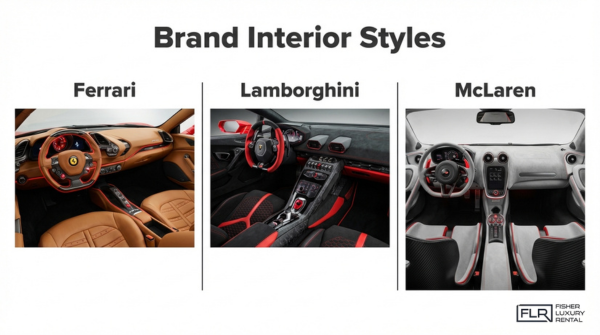
- Ferrari prioritizes elegant ergonomics, with custom contrast stitching, proprietary color palettes, and refined leather textures centered on the driver.
- Lamborghini leans into aggressive, angular design with bold Alcantara and carbon fiber combinations that mirror its sharp exterior lines.
- McLaren favors lightweight minimalism, using carbon fiber monocoque structures that double as visible interior elements, reducing weight without sacrificing premium feel.
While all three brands use similar raw materials, the execution is what separates them. Ferrari feels like a tailored Italian suit; Lamborghini commands attention through dramatic flair; McLaren delivers surgical precision.
How Do High-End SUVs Like Rolls-Royce and Bentley Approach Interior Design?
High-end SUVs like Rolls-Royce and Bentley approach interior design by prioritizing passenger comfort, bespoke craftsmanship, and material volume over the weight-saving priorities of supercars. As reported by Scuderia Car Parts, Rolls-Royce incorporates hand-stitched Nappa leather and fiber-optic “Starlight Headliners” that mimic a starry night sky using hundreds of individual lights.
Key distinctions between these luxury SUV interiors include:
- Rolls-Royce treats each cabin as a bespoke commission, with nearly unlimited personalization in wood veneers, leather hides, and embroidery.
- Bentley blends British heritage with modern technology, using deeply quilted diamond-pattern leather and open-pore wood trims that emphasize warmth.
The larger cabin footprint of an SUV allows these brands to layer materials more generously than any mid-engine supercar can. For buyers who value serene refinement over lap times, Rolls-Royce and Bentley represent the pinnacle of interior luxury. Understanding these brand-level differences helps inform which materials and care practices best preserve each cabin’s character.
What Maintenance and Care Tips Keep Exotic Car Interiors in Pristine Condition?
Maintenance and care tips that keep exotic car interiors in pristine condition include using material-specific cleaners, gentle techniques, and consistent detailing schedules. The following subsections cover the best products and methods, along with recommended detailing frequency.
Which Products and Techniques Are Best for Cleaning Delicate Materials?
The best products and techniques for cleaning delicate materials depend on the specific surface being treated. Leather upholstery requires pH-balanced leather cleaners followed by regular conditioning to prevent cracking. Alcantara demands a different approach entirely; according to AutoWin’s maintenance guide, Alcantara interiors require dedicated cleaners and gentle brushing to lift the nap, as the material can show wear when exposed to hand sanitizer or heavy sunscreen.
For carbon fiber trim, a soft microfiber cloth with a mild, non-abrasive cleaner preserves both high-gloss and matte finishes without scratching. Across all materials, avoiding harsh chemicals and household cleaners is essential since these can strip protective coatings or cause discoloration.
How Often Should Interior Detailing Be Performed on Exotic Cars?
Interior detailing should be performed on exotic cars every two to four weeks for vehicles driven regularly, with a thorough professional detail at least quarterly. Materials like semi-aniline leather and Alcantara are particularly vulnerable to environmental stress. As noted by Assured Testing Services, automotive interior testing evaluates materials against harsh light, temperature extremes, and chemical exposure to prevent fading, cracking, or VOC release, which underscores why consistent care matters.
Leather benefits from conditioning every 30 to 60 days, while Alcantara, though more resistant to temperature-induced cracking, is more susceptible to pilling over time without routine brushing. Staying ahead of wear is always easier than reversing damage once it sets in. With proper care routines established, experiencing these interiors firsthand becomes even more rewarding.
How Can Renting an Exotic Car from Fisher Luxury Rental Let You Experience World-Class Interiors?
Renting an exotic car from Fisher Luxury Rental lets you experience world-class interiors by placing you inside top-trim supercars with premium materials, bespoke craftsmanship, and cutting-edge design. The following sections detail what awaits inside the fleet and the key takeaways from this guide.
What Exclusive Interiors Can You Experience When Renting from Fisher Luxury Rental?
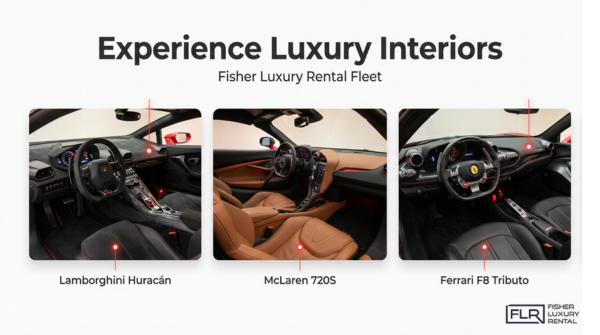
The exclusive interiors you can experience when renting from Fisher Luxury Rental include the cabins of the Lamborghini Huracan Spyder, McLaren 720S, and Ferrari 488 Spider, all equipped with top-level trims. Each vehicle features semi-aniline leather, Alcantara-wrapped surfaces, and 2×2 twill weave carbon fiber accents.
Fisher Luxury Rental purchases only top-tier configurations, so every rental delivers a significant distinction from base models. According to a 2023 DataIntelo report, the global luxury interior materials market, covering leather, Alcantara, and carbon fiber, was valued at USD 14.5 billion and is projected to reach USD 24.2 billion by 2032.
Few rental companies prioritize interior quality at this level, which makes the Fisher Luxury Rental fleet one of the most accessible ways to experience supercar craftsmanship without ownership.
What Are the Key Takeaways About Exclusive Exotic Car Interiors: Materials & Design Guide We Covered?
The key takeaways about exclusive exotic car interiors covered in this materials and design guide are:
- Semi-aniline leather, Alcantara, and carbon fiber form the core material trio defining supercar cabins.
- Hand-stitched details and bespoke customization, such as contrast stitching and proprietary color palettes, separate exotic interiors from standard luxury vehicles.
- Functional minimalism and heritage-inspired design elements represent the leading 2024 interior trends.
- Proper maintenance, including dedicated Alcantara cleaners and regular leather conditioning, preserves material integrity over time.
- Sustainable alternatives like recycled PET fabric and flax-seed-dyed leather are reshaping how manufacturers source interior materials.
Fisher Luxury Rental offers direct access to these world-class interiors through a fleet of top-trim exotic cars available in Phoenix, Scottsdale, Portland, and Vancouver.