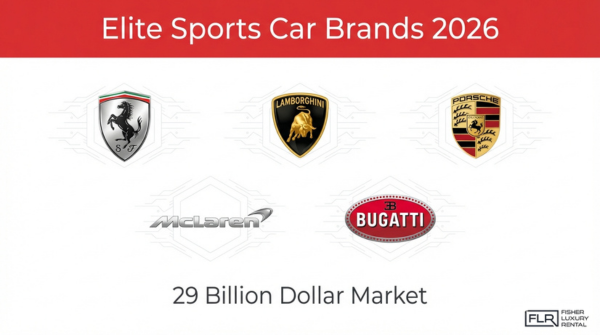
Famous sports car brands are the elite automakers whose vehicles define the highest standards of speed, design, and engineering. Ferrari, Lamborghini, Porsche, Bugatti, McLaren, Koenigsegg, Pagani, and Rimac represent the pinnacle of this world in 2026.
This guide covers the brands leading in prestige and performance, the technologies and innovations shaping the latest models, the standout hypercars pushing the limits of speed and craftsmanship, how these vehicles cater to different lifestyles and preferences, and the ways enthusiasts can experience them firsthand.
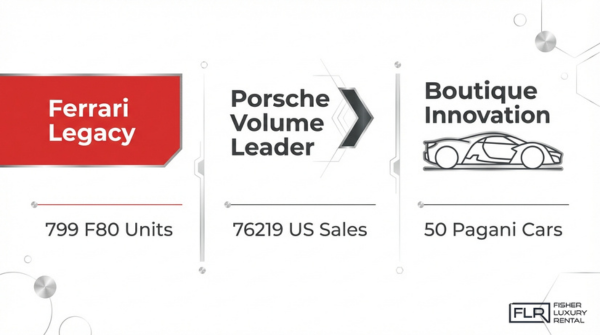
Established marques like Ferrari and Porsche continue to dominate through decades of racing heritage, record-breaking sales, and relentless engineering advancement, while boutique manufacturers and electric newcomers are closing the performance gap faster than ever.
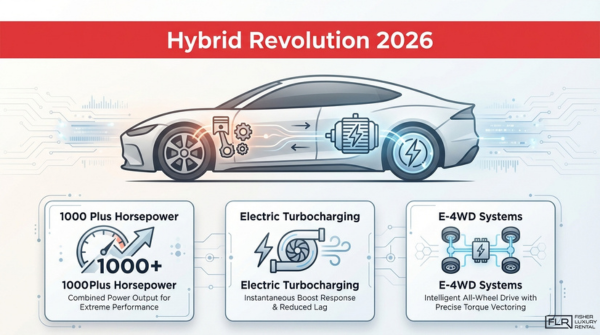
Hybrid powertrains, electric turbocharging, and e-4WD systems now define the technology landscape. The latest luxury sports cars and hypercars pair combustion engines with electric motors to deliver power outputs exceeding 1,000 horsepower alongside improved efficiency.
Limited-production hypercars remain the ultimate expression of automotive ambition. Models from Ferrari, Bugatti, and Koenigsegg are produced in quantities as low as 250 to 799 units, sell for millions before public unveiling, and shatter acceleration records previously thought untouchable.
These vehicles serve collectors seeking appreciating assets, driving enthusiasts craving track-day thrills, and renters who want the experience without long-term commitment. Customization and personalization programs from top brands now let buyers (and renters) tailor nearly every surface, material, and performance characteristic to individual taste.
Which Sports Car Brands Lead the World in Prestige and Performance in 2026?
The sports car brands that lead the world in prestige and performance in 2026 include Ferrari, Lamborghini, Porsche, and a rising tier of boutique automakers. New UN Regulation 51 noise emission standards taking effect in 2026 will further restrict decibel levels for high-performance supercars, pushing every manufacturer to innovate.
What Sets Brands Like Ferrari, Lamborghini, and Porsche Apart From Others?
Brands like Ferrari, Lamborghini, and Porsche are set apart from others by their combination of motorsport heritage, cutting-edge hybrid powertrains, and global brand recognition that consistently defines the luxury performance benchmark.
Each manufacturer approaches performance differently. The Lamborghini Temerario pairs a 4.0-liter twin-turbocharged V8 with three electric motors, producing 920 CV (907 hp) and reaching 0-100 km/h in 2.7 seconds. Porsche dominates volume sales while maintaining racing credibility. Ferrari blends limited production with Formula 1 technology transfer.
According to a 2026 EIN Presswire report, the global sports car market is valued at USD 29.19 billion in 2026 and is expected to reach USD 36.89 billion by 2033, growing at a 3.4% CAGR. Ferrari, Porsche, Lamborghini, and McLaren are identified as key drivers of that expansion. For anyone serious about performance credentials, these three legacy brands remain the standard against which every competitor is measured.
How Do Newcomers and Boutique Automakers Compare With Established Luxury Marques?
Newcomers and boutique automakers compare with established luxury marques by leveraging technological specialization and extreme exclusivity, often surpassing legacy brands in raw performance metrics while lacking their decades of brand equity.
Rimac, Koenigsegg, and Pagani exemplify this shift. Where Ferrari and Porsche build thousands of cars annually, boutique manufacturers intentionally restrict output to dozens or hundreds of units per year. This scarcity creates collector demand that rivals or exceeds mainstream supercar pricing.
The trade-off is clear: established marques offer proven dealer networks, resale confidence, and motorsport pedigree built over half a century or more. Boutique brands counter with bespoke engineering, record-breaking acceleration figures, and owner experiences that feel closer to commissioning art than buying a car. Neither model is objectively superior; the right choice depends on whether a buyer values heritage or innovation more.
With the competitive landscape now spanning legacy giants and agile specialists, the technologies powering these cars reveal even more about where luxury performance is heading.
What Are the Defining Features of the Latest Luxury Sports Cars and Hypercars?
The defining features of the latest luxury sports cars and hypercars include hybrid powertrains, electrified turbocharging, and record-setting acceleration. Below, we explore the key technologies shaping 2026 models and how hypercars are pushing boundaries in speed, design, and exclusivity.
Which Technologies and Innovations Are Shaping 2026’s Luxury Sports Cars?
The technologies and innovations shaping 2026’s luxury sports cars center on hybrid electrification, advanced forced induction, and electric all-wheel-drive systems. The 2026 Ferrari F80 exemplifies this shift: its twin 48-volt electric turbochargers spin to 130,000 rpm, producing 55.5 psi of boost and achieving 300 hp/liter, the highest specific power output of any Ferrari road car, according to MotorTrend. The Lamborghini Temerario pairs a 4.0-liter twin-turbocharged V8 with three electric motors for a combined 907 hp. These hybrid architectures deliver instant torque at low speeds while maintaining peak combustion power at high rpm. For enthusiasts, this generation represents the most capable yet accessible performance technology ever fitted to road-legal sports cars.
How Are Hypercars Redefining Speed, Design, and Exclusivity This Year?
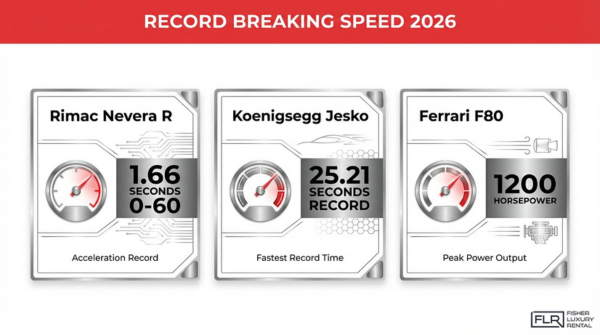
Hypercars are redefining speed, design, and exclusivity this year through record-breaking performance, ultra-limited production, and hybrid engineering that blurs the line between race car and road car. The Rimac Nevera R set a new world record for the fastest accelerating production car, achieving 0-60 mph in 1.66 seconds and completing a 0-400-0 km/h run in 25.79 seconds, according to Rimac Automobili. Meanwhile, the Ferrari F80 combines a 900 hp V6 with an electric front axle for 1,200 total horsepower. Exclusivity remains equally central; production caps rarely exceed a few hundred units. Aerodynamic design now integrates active elements that adjust in real time, optimizing downforce and cooling simultaneously.
With these defining features established, the next section examines which specific hypercar models represent the pinnacle of speed and craftsmanship in 2026.
Which Hypercar Models Stand Out as the Pinnacle of Speed and Craftsmanship in 2026?
The hypercar models that stand out as the pinnacle of speed and craftsmanship in 2026 include the Ferrari F80, Bugatti Tourbillon, and Rimac Nevera R. Below, we cover the leading releases and how they compare to prior top models.
What Are the Leading Hypercars Released or Announced for 2026?
The leading hypercars released or announced for 2026 represent the most exclusive tier of automotive engineering ever produced. Ferrari limited production of the F80 to just 799 units, all sold before the public unveiling at approximately $3.9 million each, according to Forbes. Bugatti’s Tourbillon will see only 250 examples built, with deliveries beginning in 2026 at a starting price of roughly $4.6 million. Meanwhile, Pagani Automobili set a global production target of just 50 cars for 2024, maintaining extreme rarity for its Utopia lineup. When production numbers this low meet price tags this high, each vehicle functions less as transportation and more as a rolling piece of art with appreciating value.
How Do These Hypercars Perform Compared to Prior Top Models?
These hypercars perform at levels that comprehensively surpass prior top models across acceleration, power density, and outright speed. The Rimac Nevera R achieved a 0-60 mph time of 1.66 seconds, setting a new world record for the fastest accelerating production car. The Koenigsegg Jesko Absolut reclaimed the 0-400-0 km/h record for homologated road cars at 25.21 seconds, beating the previous benchmark by over 2.5 seconds, according to The BRAKE Report. Regulatory pressure is also reshaping performance; Euro 7 emissions standards beginning implementation in November 2026 are predicted to increase manufacturing costs by approximately €2,000 per vehicle. For enthusiasts, these records confirm that 2026’s hypercars have moved the performance ceiling well beyond what seemed possible even two years ago.
With performance benchmarks reaching new extremes, lifestyle preferences now shape how buyers and enthusiasts engage with these machines.
How Do 2026’s Luxury Sports Cars and Hypercars Cater to Different Lifestyles and Preferences?
2026’s luxury sports cars and hypercars cater to different lifestyles and preferences by spanning a wide spectrum, from ultra-rare collector pieces to daily-drivable grand tourers and rental-accessible exotics. The following sections break down brand appeal by buyer type and the customization trends reshaping the segment.
Which Brands Appeal Most to Collectors, Daily Drivers, or Occasional Renters?
The brands that appeal most to collectors, daily drivers, or occasional renters vary based on production volume, usability, and accessibility.
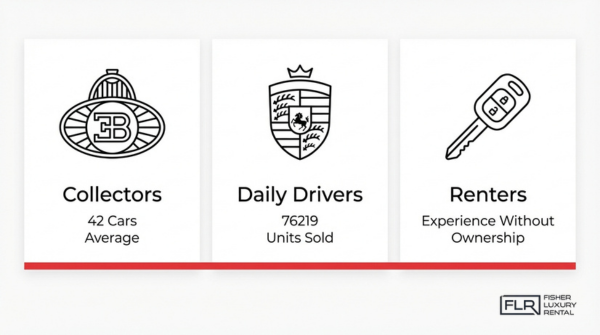
- Collectors gravitate toward Bugatti, Pagani, and Ferrari’s limited-run hypercars. According to a 2026 Dub Magazine profile, the average Bugatti owner possesses approximately 42 cars and three private jets, with a net worth exceeding $200 million. These buyers prioritize scarcity and investment potential over everyday utility.
- Daily drivers favor Porsche above most competitors. Porsche delivered an all-time U.S. record of 76,219 vehicles in 2025, reflecting broad demand for sports cars engineered to handle commutes, road trips, and spirited weekend drives alike.
- Occasional renters seek marquee experiences without long-term ownership commitments, turning to brands like Lamborghini, McLaren, and Ferrari through premium rental providers.
For enthusiasts who want the thrill without the six- or seven-figure commitment, renting remains the most practical entry point into this world.
What Customization and Personalization Trends Are Emerging Among Top Brands?
The customization and personalization trends emerging among top brands center on bespoke configuration programs, exclusive materials, and client co-design experiences. Ferrari’s Atelier and Tailor Made programs let buyers specify everything from stitch patterns to heritage-inspired liveries. Lamborghini’s Ad Personam division offers similar depth, while Porsche Exclusive Manufaktur provides paint-to-sample options spanning thousands of colors.
Hypercar manufacturers push even further. Pagani, which set a global production target of just 50 cars for 2024, treats each build as a one-of-one collaboration between client and craftsman. Bugatti applies the same philosophy to the 250-unit Tourbillon. At this tier, personalization is not an add-on; it is the core product experience.
With customization defining modern luxury ownership, understanding what factors shape the broader experience of driving or renting these vehicles matters just as much.
What Should You Consider When Dreaming of Driving or Experiencing a Top Sports Car or Hypercar?
You should consider legal requirements, environmental regulations, and practical strategies that shape how enthusiasts access these vehicles in 2026. The following sections cover ownership and rental factors alongside ways to maximize the experience.
What Legal, Safety, or Environmental Factors Influence Ownership or Rental in 2026?
The legal, safety, and environmental factors that influence ownership or rental in 2026 include tightening emissions rules, evolving noise regulations, and rising insurance requirements for high-performance vehicles. Key considerations include:
- Euro 7 emissions standards begin implementation in November 2026 for new models, adding compliance costs that manufacturers pass to buyers and renters.
- New UN Regulation 51 noise emission standards further restrict decibel levels allowed for high-performance supercars in major markets, potentially limiting where certain models can operate.
- Lifecycle studies in 2026 indicate that battery electric vehicles can reduce total greenhouse gas emissions by approximately 50% compared to internal combustion engine vehicles, accelerating the hybrid and electric shift across luxury segments.
- Insurance premiums for hypercars often exceed five figures annually, making rental an increasingly practical alternative for enthusiasts who want the driving experience without long-term financial exposure.
For most enthusiasts, understanding these regulatory shifts before committing to ownership or a rental reservation prevents costly surprises.
How Can Sports Car Enthusiasts Make the Most of These Automotive Icons?
Sports car enthusiasts can make the most of these automotive icons by choosing experiences that match their budget, skill level, and goals. Track days offer controlled environments to explore a vehicle’s limits safely, while curated driving tours through scenic routes deliver memorable open-road thrills. Renting before buying remains one of the smartest strategies; it lets you evaluate ergonomics, driving dynamics, and daily livability without a six- or seven-figure commitment.
Staying informed about industry shifts also matters. According to a 2026 Worldwide Mobility ranking, Tesla holds the highest automotive company valuation at $1.56 trillion, reflecting how rapidly electrification reshapes the landscape enthusiasts navigate when selecting their next dream car.
Whether through ownership, rental, or organized events, matching the experience to your priorities ensures every encounter with a world-class sports car feels worth the investment. With these considerations in mind, exploring rental options offers one of the most accessible entry points.
How Can You Experience 2026’s Most Iconic Sports Cars and Hypercars With Fisher Luxury Rental?
You can experience 2026’s most iconic sports cars and hypercars with Fisher Luxury Rental by renting from a curated fleet of exotic vehicles in Phoenix or Portland. The sections below cover available rental services and key takeaways from this year’s luxury automotive landscape.
What Exotic and Luxury Car Rental Services Does Fisher Luxury Rental Offer for Enthusiasts?
Fisher Luxury Rental offers exotic and luxury car rental services that include vehicles such as the Ferrari 488 Spider, McLaren 720S, Lamborghini Huracan Spyder, and Porsche 911 Carrera S. Established in 2022, Fisher Luxury Rental serves Phoenix, Scottsdale, Portland, and Vancouver with a fleet composed exclusively of top-trim models.
Demand for this kind of experience is accelerating. According to a 2026 Research and Markets report, the luxury tourism vehicle rental market is valued at USD 23.28 billion and is projected to grow to USD 31.24 billion by 2030 at a 7.6% CAGR. Rather than committing $209,000 or more to purchase a single luxury vehicle, renting provides access to multiple marques at a fraction of ownership cost.
Fisher Luxury Rental pairs each reservation with attentive customer service rooted in decades of hospitality experience. For enthusiasts who want to feel a supercar’s performance firsthand without the complexities of ownership, this approach delivers lasting memories on every drive.
What Are the Key Takeaways About Famous Sports Car Brands and Top Luxury & Hypercar Models in 2026?
The key takeaways about famous sports car brands and top luxury and hypercar models in 2026 center on three themes: explosive market growth, unprecedented exclusivity, and hybrid performance breakthroughs.
- The global sports car market is estimated at USD 29.19 billion in 2026 and is expected to reach USD 36.89 billion by 2033, growing at a 3.4% CAGR, according to a 2026 EIN Presswire industry report.
- Bugatti will produce only 250 examples of the Tourbillon at a starting price of approximately $4.6 million, while Ferrari sold out all 799 F80 units before the public unveiling.
- Hybrid powertrains now dominate flagship models, combining electric motors with combustion engines to push total outputs beyond 1,000 horsepower.
For most enthusiasts, these production caps and multimillion-dollar price tags make ownership unrealistic. Renting remains the most practical path to experiencing these machines. Fisher Luxury Rental bridges that gap, offering an accessible entry point into the world of exotic driving across Phoenix and Portland.