The best future hypercars and supercars coming in 2026 are a new generation of ultra-limited, hybrid-powered machines from brands like Bugatti, Ferrari, McLaren, Koenigsegg, and Rimac that push performance, design, and technology beyond anything currently on the road.
This guide covers the most exciting 2026 hypercar launches, standout supercar reveals, the role of electrification and sustainability, how these models compare to today’s elite cars, and what buyers and enthusiasts need to know before release day.
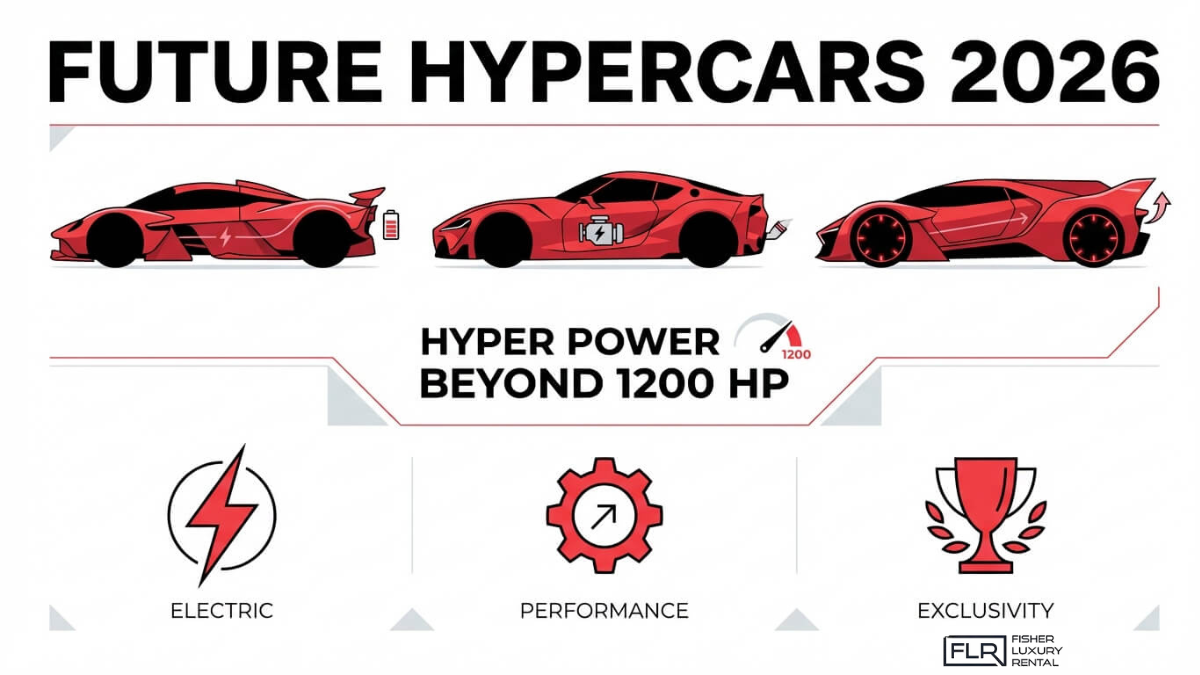
Models like the Bugatti Tourbillon, Ferrari F80, and McLaren W1 are generating enormous buzz for their hybrid powertrains that pair combustion engines with electric motors, producing outputs above 1,200 horsepower while meeting tighter global emissions standards.
On the supercar side, the Aston Martin Valhalla, Zenvo Aurora, and Pagani Utopia Roadster showcase emerging design trends rooted in F1-derived aerodynamics, active chassis systems, and lightweight construction that prioritize driver connection alongside raw speed.
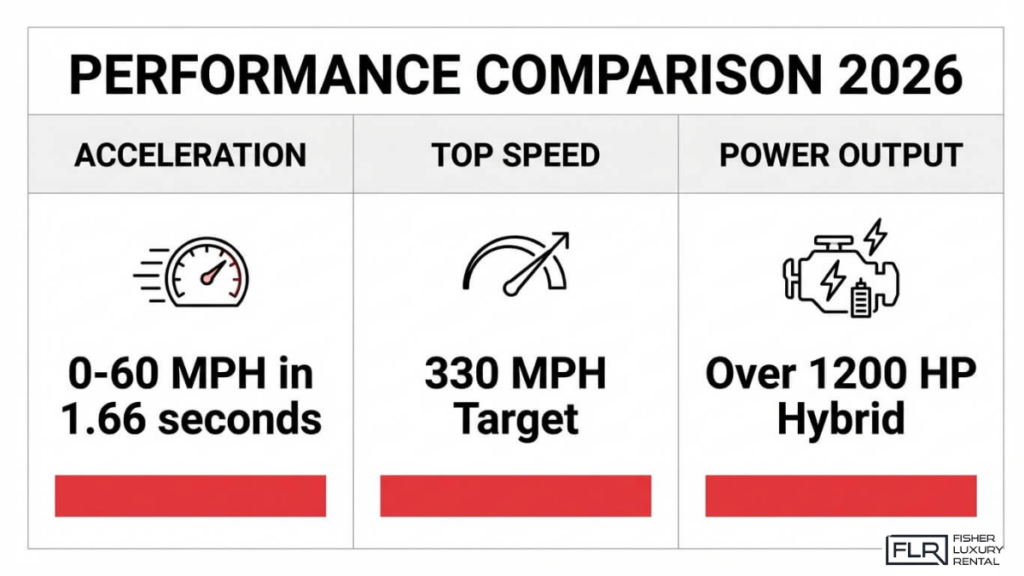
Stricter regulations in both Europe and the U.S. are accelerating the shift toward hybrid and fully electric architectures. Manufacturers are treating electrification not as a compromise but as a performance multiplier, with the all-electric Rimac Nevera R hitting 60 mph in 1.66 seconds as proof of concept.
Compared to current benchmarks, 2026 models will deliver measurably faster acceleration, higher top speeds, and more sophisticated onboard technology while maintaining the exclusivity collectors expect through production runs often limited to fewer than 250 units.
For enthusiasts not ready to commit millions on a purchase, renting exotic cars offers a direct way to experience this next wave of supercar performance firsthand.
Which 2026 Hypercar Launches Are Generating the Most Excitement?
The 2026 hypercar launches generating the most excitement come from brands pushing hybrid powertrains past 1,200 horsepower while keeping production numbers extremely low. The key factors driving anticipation are groundbreaking features, fierce brand competition, and unprecedented performance benchmarks.
What Are the Most Anticipated Features of 2026 Hypercars?
The most anticipated features of 2026 hypercars are hybrid powertrains combining internal combustion engines with electric motors, ultra-limited production runs, and performance figures that rewrite existing records. Buyers and collectors are closely watching several defining characteristics:
- Hybrid systems pairing high-revving engines with multiple electric motors for combined outputs exceeding 1,200 hp
- Extreme production scarcity, with some models limited to as few as 40 or 50 units worldwide
- Formula 1-derived aerodynamics and battery technology migrating directly into road-legal platforms
- Top speeds approaching or exceeding 300 mph in select configurations
According to a Statista Market Forecast, the luxury car market is anticipated to generate revenue of $26 billion by 2026, confirming massive demand for these cutting-edge machines. The convergence of electrification and exclusivity makes this generation of hypercars the most technically ambitious ever produced.
Which Brands Are Leading the 2026 Hypercar Race?
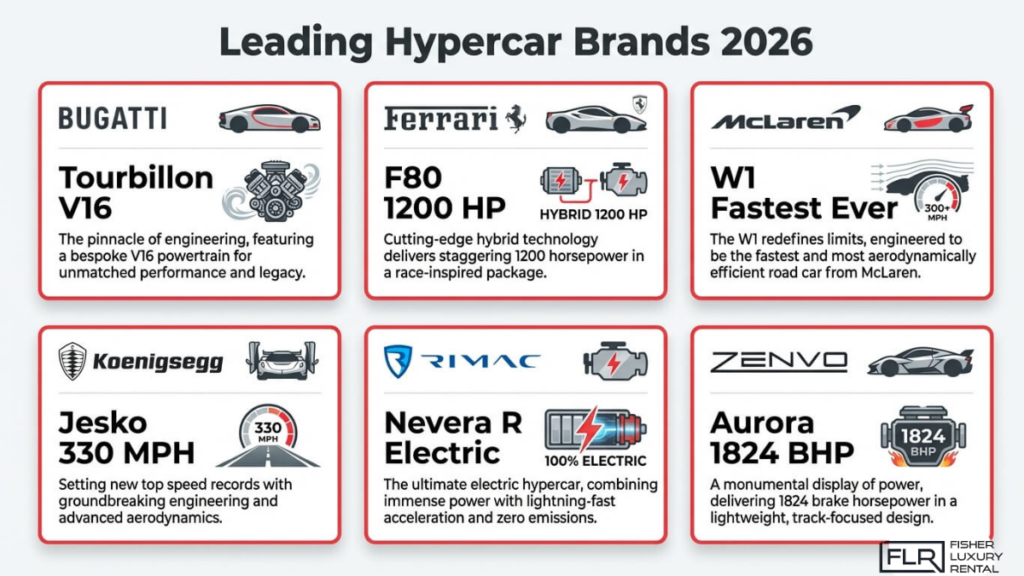
The brands leading the 2026 hypercar race are Bugatti, Ferrari, McLaren, Koenigsegg, Rimac, and several emerging challengers. Each brings a distinct philosophy to the segment:
- Bugatti replaces the Chiron with the Tourbillon, its first model in over 20 years without a W16 engine, now featuring a V16 paired with three electric motors.
- Ferrari introduces the F80, its most powerful road car ever at 1,200 hp, produced in just 799 examples.
- McLaren answers with the W1, the fastest accelerating road-legal McLaren in the brand’s history.
- Koenigsegg targets the ultimate top speed record with the Jesko Absolut.
- Rimac pushes all-electric performance to new extremes with the Nevera R, limited to 40 units.
- Zenvo and Czinger challenge established names with the 1,824 bhp Aurora and 3D-printed 21C, respectively.
This level of simultaneous competition across established and boutique manufacturers is rare, making 2026 a landmark year for the segment.
How Do Rumored Powertrains and Performance Numbers for 2026 Hypercars Compare?
Rumored powertrains and performance numbers for 2026 hypercars compare as follows, revealing how varied the engineering approaches have become across the segment:
| Model | Powertrain | Power Output | Top Speed | Production Limit |
| Bugatti Tourbillon | V16 + 3 electric motors | ~1,800 hp (est.) | 276 mph | 250 units |
| Ferrari F80 | V6 hybrid | 1,200 hp | TBA | 799 units |
| McLaren W1 | MHP-8 hybrid + E-module | 1,200+ hp (est.) | TBA | Limited |
| Koenigsegg Jesko Absolut | Twin-turbo V8 | 1,600 hp | 330 mph (target) | Limited |
| Rimac Nevera R | All-electric | 1,900+ hp (est.) | 268.2 mph | 40 units |
| Zenvo Aurora | Hybrid V12 | 1,824 bhp | TBA | 100 units |
| Red Bull RB17 | V10 hybrid | 1,200 hp | 217+ mph | 50 units |
According to Rimac Newsroom, the Nevera R achieved a 0-60 mph time of 1.66 seconds, setting a benchmark that combustion-powered rivals will struggle to match in straight-line launches. Still, the Koenigsegg Jesko Absolut’s theoretical 330 mph top speed and the Bugatti Tourbillon’s naturally aspirated V16 represent philosophies that pure electric acceleration cannot replicate on high-speed runs.
With powertrains spanning V6 hybrids to all-electric platforms, the variety in 2026 ensures there is no single dominant formula for hypercar supremacy.
What Are the Standout 2026 Supercars Announced or Teased So Far?
The standout 2026 supercars announced or teased so far include the Ferrari F80, McLaren W1, Aston Martin Valhalla, and Zenvo Aurora. Each model pushes boundaries in design, hybrid powertrain integration, and driver-focused technology.
Which 2026 Supercar Models Are Expected to Redefine the Segment?
The 2026 supercar models expected to redefine the segment are the Ferrari F80, the McLaren W1, and the Aston Martin Valhalla. The Ferrari F80 delivers a V6-hybrid powertrain with a combined 1,200 hp, making it the most powerful road car Ferrari has ever produced, limited to just 799 examples. The McLaren W1 pairs an all-new MHP-8 engine with F1-derived battery technology and reaches 200 km/h from standstill in 5.8 seconds. Aston Martin’s Valhalla represents the brand’s first mid-engine PHEV hybrid supercar, combining a twin-turbo V8 producing 817 bhp with three electric motors across 999 units. These three models signal that the supercar class is closing the performance gap with traditional hypercars.
What Design Trends Are Emerging in 2026 Supercars?
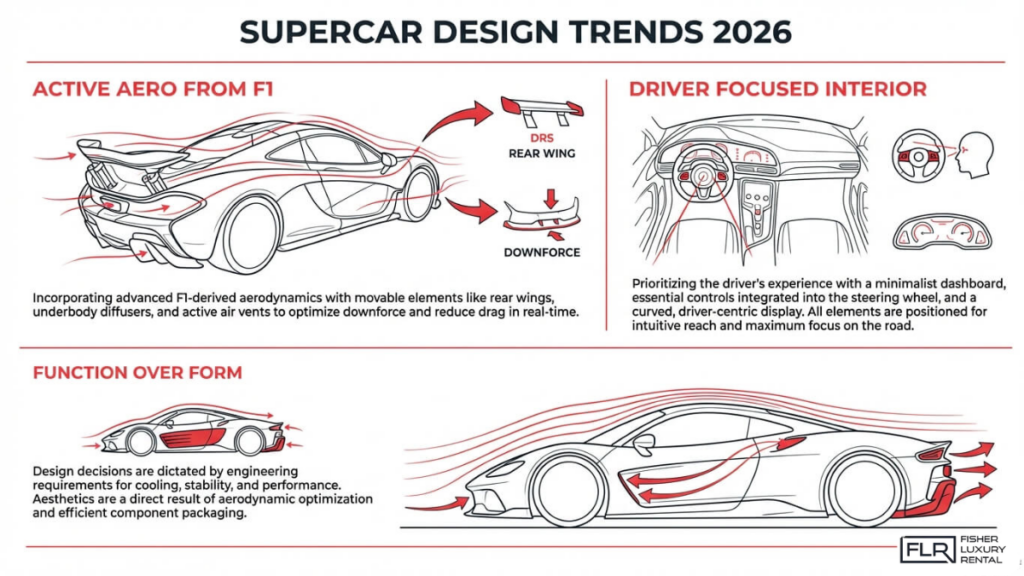
The design trends emerging in 2026 supercars center on active aerodynamics, motorsport-derived bodywork, and minimalist cockpit architecture. Key patterns across announced models include:
- Active aero elements borrowed directly from Formula 1, seen in the Valhalla’s Valkyrie-inspired surfaces and the McLaren W1’s integrated E-Differential packaging.
- Sculptural mid-engine proportions that prioritize airflow management over purely decorative styling.
- Driver-focused interiors stripped of unnecessary ornamentation, emphasizing analog controls alongside digital displays.
According to Car and Driver, Adrian Newey, Red Bull’s F1 aero guru, designed the advanced aerodynamics of the Red Bull RB17, a philosophy now filtering into the broader supercar segment. Form following function has never been more literal in this class.
How Are New Technologies Shaping 2026 Supercar Experiences?
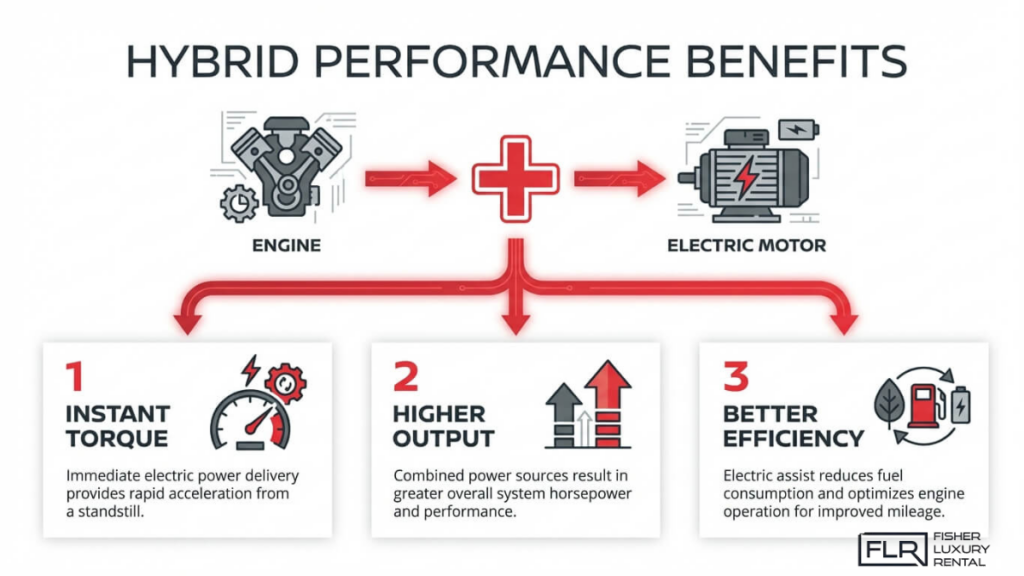
New technologies are shaping 2026 supercar experiences through hybrid powertrains, advanced transmission systems, and battery innovations derived from racing programs. The McLaren W1 exemplifies this shift with its High-Performance Hybrid Powertrain featuring a lighter E-module and an 8-speed dual-clutch transmission. Similarly, the Aston Martin Valhalla integrates a 6.1 kWh battery with three electric motors for instant torque delivery. These systems do more than add horsepower; they fundamentally change how drivers interact with throttle response, torque curves, and regenerative braking. For anyone tracking how supercars will feel behind the wheel, hybrid architecture is now the defining variable separating good from extraordinary.
With design and technology evolving this rapidly, sustainability and electrification are reshaping the entire segment’s direction.
How Will Sustainability and Electrification Impact 2026 Hypercars and Supercars?
Sustainability and electrification are reshaping 2026 hypercars and supercars through hybrid powertrains, eco-conscious manufacturing, and tightening global emissions regulations. The following sections cover eco-friendly innovations, hybrid and electric performance, and the regulatory forces accelerating this shift.
What Eco-Friendly Innovations Are 2026 Hypercar and Supercar Makers Adopting?
The eco-friendly innovations 2026 hypercar and supercar makers are adopting include hybrid powertrain architectures, advanced battery technology, and sustainable material integration. The Ferrari F80 pairs a V6 with electric motors for 1,200 hp, while the McLaren W1 uses F1-derived battery technology in its High-Performance Hybrid Powertrain. The Aston Martin Valhalla combines a twin-turbo V8 with three electric motors and a 6.1 kWh battery. Czinger takes a different approach entirely, using AI-driven 3D printing to manufacture structural components for the 21C, reducing material waste during production. These innovations prove that sustainability no longer means sacrificing power. For most buyers in this segment, the hybrid approach offers the best balance of environmental responsibility and visceral driving experience.
How Do Hybrid and All-Electric Powertrains Influence Performance and Appeal?
Hybrid and all-electric powertrains influence performance and appeal by delivering instant torque, faster acceleration, and higher total output than combustion engines alone. The Rimac Nevera R, an all-electric hypercar, achieves 0 to 60 mph in 1.66 seconds and a top speed of 268.2 mph, setting production EV records. According to Ferrari CEO Benedetto Vigna, Ferrari electric cars will complement combustion and hybrid models while preserving driving emotion and customer experience. The Bugatti Tourbillon pairs a V16 engine with three electric motors, and the Red Bull RB17 produces 1,200 hp from a V-10 hybrid system. Electrification has become a performance multiplier rather than a compromise; the data consistently shows that hybrid and electric architectures now outperform their pure-combustion predecessors.
Are Regulations Driving Change in the 2026 Supercar Landscape?
Yes, regulations are driving significant change in the 2026 supercar landscape. Europe’s emissions law requires a 55% reduction in CO2 from all new cars by 2030 compared to 2021 levels, according to Forbes. The Euro 7 regulation extends beyond tailpipe output, setting particulate matter limits for brake systems at 7 mg/km for combustion vehicles and 3 mg/km for electric vehicles. In the United States, new EPA rules taking effect in 2026 reduce emissions targets by 56%. These combined pressures make hybrid and electric powertrains a strategic necessity rather than an option. Supercar makers that invested early in electrification now hold a clear regulatory advantage, positioning their 2026 lineups for compliance without performance sacrifice.
With regulatory and technological forces aligning, the next question is how these 2026 models stack up against today’s benchmarks.
How Will 2026 Hypercars and Supercars Compare to Today’s Elite Models?
2026 hypercars and supercars will surpass today’s elite models through hybrid powertrains exceeding 1,200 hp, tighter production limits, and F1-derived technologies. The following sections break down specific advancements and how the ownership experience will evolve.
What Advancements Will Set 2026 Models Apart from Current Hypercars?
The advancements that will set 2026 models apart from current hypercars are hybrid powertrains with significantly higher output, stricter exclusivity, and motorsport-level aerodynamics. Today’s benchmarks like the Bugatti Chiron relied on a W16 engine alone; the Bugatti Tourbillon replaces it with a V16 plus three electric motors and a 276 mph top speed. The Ferrari F80 produces 1,200 hp from a V6 hybrid, making it the most powerful road car Ferrari has ever built. According to Car and Driver, Adrian Newey, Red Bull’s F1 aerodynamics guru, designed the RB17 to deliver F1-equivalent lap times at speeds exceeding 350 kph. Production caps have also dropped sharply: the Rimac Nevera R is limited to just 40 units, and the Red Bull RB17 to 50. These numbers make current limited-run models look accessible by comparison.
How Will Ownership and Driving Experiences Evolve with 2026 Supercars?
Ownership and driving experiences will evolve with 2026 supercars through deeper personalization, electric-assisted torque delivery, and heightened collectibility. Hybrid systems in models like the McLaren W1, which reaches 200 km/h in 5.8 seconds, provide instant low-end torque that reshapes how drivers feel acceleration compared to purely combustion predecessors. Ferrari CEO Benedetto Vigna has stated that Ferrari electric powertrains will complement combustion models while preserving driving emotion and customer experience. Tighter production volumes across the 2026 class, from 100 Zenvo Auroras to 250 Bugatti Tourbillons, will intensify demand and drive residual values higher than today’s equivalents. For enthusiasts who want to feel the generational leap firsthand, renting current exotic models offers a tangible reference point for measuring just how far the next generation has come.
Fisher Luxury Rental in Phoenix and Portland offers direct access to current-generation supercars including the McLaren 720S, Ferrari 488 Spider, and Lamborghini Huracan Spyder models that share the core engineering DNA and hybrid philosophies defining the 2026 hypercar class.
What Should Potential Buyers and Enthusiasts Consider When Eyeing 2026 Hypercars and Supercars?
Potential buyers and enthusiasts should consider target demographics, pricing, production limits, and preparation strategies. The following sections cover who these cars are built for, what they cost, and how to position yourself for a successful acquisition.
Who Are the Target Customers for 2026 Hypercars and Supercars?
The target customers for 2026 hypercars and supercars are ultra-high-net-worth individuals, established collectors, and passionate enthusiasts with significant purchasing power. With models like the Rimac Nevera R limited to 40 units and the Red Bull RB17 capped at 50, manufacturers are prioritizing buyers who have existing brand relationships. According to a BCG report, sales of used luxury and exotic cars are expected to grow 1.5 times faster than new car sales over the next decade, rising 5% to 8% annually. This signals that even secondary market participants represent a growing buyer segment. First-time hypercar buyers will find 2026 particularly challenging, since most allocations reward loyalty and prior purchase history.
What Are Estimated Price Ranges and Availability Timelines?
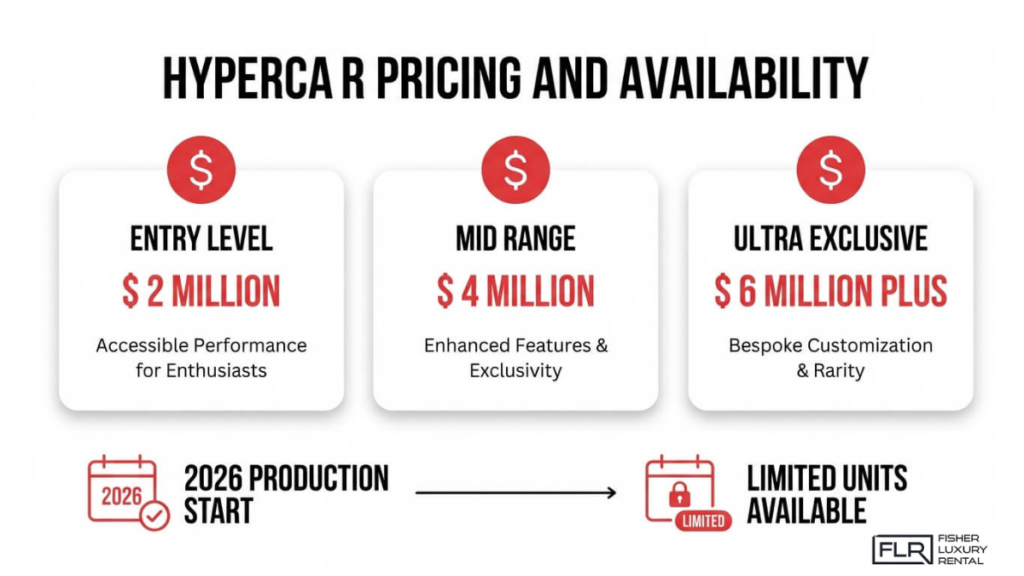
The estimated price ranges for 2026 hypercars and supercars span from roughly $2 million to over $6 million, depending on the model and specification level.
- The Czinger 21C starts at $2.35 million for its 80-unit production run.
- The Zenvo Aurora begins at approximately $2.83 million, with only 100 total units planned.
- The Red Bull RB17 commands around $6 million per unit, with just 50 examples scheduled for 2026 production.
- The Bugatti Tourbillon, limited to 250 units, enters production in 2026.
- The Ferrari F80 is restricted to 799 examples, while the Aston Martin Valhalla caps at 999 units.
Most deliveries will stretch from late 2026 into 2027, so prospective owners should expect extended wait times even after securing an allocation.
How Can Collectors and Enthusiasts Prepare for 2026 Model Releases?
Collectors and enthusiasts can prepare for 2026 model releases by building brand relationships, securing financial readiness, and staying informed on allocation timelines. Establishing a purchase history with marques like Ferrari, Bugatti, or McLaren significantly improves allocation chances, since most manufacturers offer limited-production models to existing clients first. Attending major auto events, such as the Geneva Motor Show or Monterey Car Week, provides early access to configurators and direct contact with brand representatives. For enthusiasts not yet ready to commit millions, renting current-generation supercars offers valuable perspective on driving dynamics and brand preferences before making a purchase decision.
How Can You Experience the Hottest Supercars and Hypercars As They Launch?
You can experience the hottest supercars and hypercars as they launch by renting current exotic models that share the DNA of upcoming flagships. The following sections cover how rental access works and the key takeaways from this guide.
Can Renting an Exotic Car from Fisher Luxury Rental Let You Sample Future Supercar Thrills?
Yes, renting an exotic car from Fisher Luxury Rental can let you sample future supercar thrills. Fisher Luxury Rental specializes exclusively in exotic and luxury vehicles, offering models like the McLaren 720S, Ferrari 488 Spider, and Lamborghini Huracan Spyder that share core engineering principles with upcoming hypercars. Driving a current McLaren, for example, gives firsthand insight into the hybrid powertrain philosophy and carbon-fiber construction that define the forthcoming W1.
According to a 2024 LinkedIn market analysis, the luxury sports car rental market is projected to grow from USD 1.2 billion in 2024 to USD 2.5 billion by 2033. That trajectory reflects surging demand from enthusiasts who want to experience supercar performance without multi-million-dollar commitments. For anyone tracking the Bugatti Tourbillon or Ferrari F80, renting their predecessors through Fisher Luxury Rental offers the closest available taste of what is coming next. With locations serving Phoenix, Scottsdale, Portland, and Vancouver, Fisher Luxury Rental provides access to top-trim exotic vehicles that let enthusiasts experience the performance baseline these 2026 models will surpass.
What Are the Key Takeaways About Best Future Hypercars & Supercars 2026: Ultimate List We Covered?
The key takeaways about the best future hypercars and supercars of 2026 are:
- Hybrid powertrains dominate the next generation, with the Bugatti Tourbillon, Ferrari F80, McLaren W1, and Zenvo Aurora all pairing combustion engines with electric motors to push past 1,000 horsepower.
- Production numbers remain extremely limited, ranging from 40 units for the Rimac Nevera R to 999 for the Aston Martin Valhalla, making ownership nearly impossible for most enthusiasts.
- Stricter emissions regulations from both the EU and EPA are accelerating electrification without eliminating high-revving combustion engines.
- Top speed and acceleration records continue to fall, led by the Koenigsegg Jesko Absolut’s projected 330 mph capability and the Nevera R’s 1.66-second 0 to 60 mph sprint.
- Renting current exotic cars from Fisher Luxury Rental is the most accessible way to experience supercar-level performance while these future models enter production.