
Honda exotic cars are rare, high-performance vehicles that combine supercar-level engineering with the reliability Honda is known for. Models like the NSX, Integra Type R, S2000, and Civic Type R occupy a unique space in the automotive world, delivering track-ready capability through limited production runs that now command collector-level prices.
This guide covers the iconic models that earn Honda its exotic status, the engineering and technology behind them, how they compare to European supercar rivals, their rising collector market value, and how enthusiasts can experience them firsthand.
The NSX launched in 1990 as a mid-engine sports car built to rival Ferrari, and only 8,949 first-generation units were ever produced. The Type R and S2000 lineups further cemented Honda’s reputation for raw, driver-focused performance machines with limited availability.
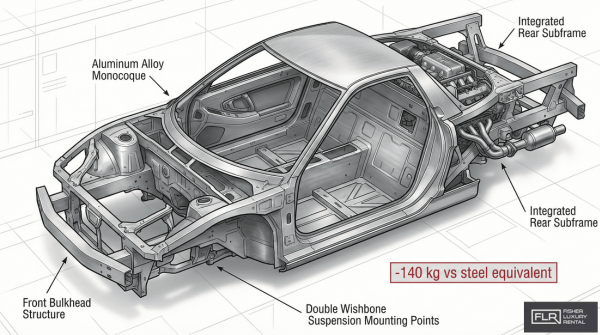
Honda pioneered innovations like VTEC variable valve timing and all-aluminum monocoque construction, which saved roughly 140 kg over steel equivalents. These technologies gave Honda’s exotic models a power-to-weight advantage that translated directly to sharper handling and higher engine output.
When benchmarked against Ferrari, Lamborghini, and Porsche, Honda’s performance cars deliver competitive acceleration and top speed while offering significantly lower maintenance costs and superior long-term durability.
Collector demand has surged dramatically. NSX-R examples have crossed the $1 million mark at auction, and an Integra Type R sold for over $204,000 in 2025. Low-mileage S2000 CR models now command prices exceeding $200,000.
Which Honda Models Are Considered Exotic or High-Performance?
Honda’s exotic and high-performance models include the NSX, the Type R lineup (NSX Type R, Civic Type R, Integra Type R), and the S2000 roadster. The sections below define what makes a Honda “exotic” and how rare these models truly are.
What Defines an Exotic Car in the Context of Honda?
An exotic car in the context of Honda is a model that combines limited production, advanced engineering, and performance capabilities rivaling traditional European supercars. The NSX exemplifies this definition most directly. Honda engineered it as a mid-engine sports car with an all-aluminum monocoque chassis, a groundbreaking achievement that reduced weight by approximately 140 kg compared to a steel equivalent, according to Honda Global’s heritage documentation.
Beyond the NSX, the Type R badge signifies Honda’s pinnacle of performance through weight reduction, increased engine power, and enhanced handling. Models like the Integra Type R and S2000 CR further blur the line between mainstream and exotic, offering raw driving experiences typically reserved for far more expensive marques. For a manufacturer known primarily for reliability, these cars represent something genuinely rare: Japanese exotics built with supercar intent.
How Rare Are Honda’s Most Coveted Performance Models?
Honda’s most coveted performance models are exceptionally rare by any automotive standard. According to Classic.com market data, the first-generation NSX (NA1/NA2) totaled just 8,949 units across its 1990 to 2005 production run, while the second-generation hybrid NSX (NC1) saw only 2,908 units built between 2016 and 2022.
Key production figures that underscore this scarcity:
- The first-generation NSX produced 8,949 total units over 15 years.
- The second-generation NSX produced 2,908 units over six years.
- The Integra Type R (DC2) was limited to select markets with restricted allocations.
- The S2000 CR was a limited-edition, track-focused variant within an already niche model.
These low numbers place Honda’s rarest models in the same production territory as many European exotics. Combined with surging collector demand, this scarcity only intensifies over time, making firsthand access increasingly difficult for enthusiasts who want to experience these cars on the road.
How Has Honda Contributed to the World of High-Performance and Rare Cars?
Honda has contributed to the world of high-performance and rare cars by producing groundbreaking models like the NSX and by partnering with Acura to bring these vehicles to global markets.
What Is the Historical Legacy of the Honda NSX as an Exotic Car?
The historical legacy of the Honda NSX as an exotic car is rooted in its 1990 debut, which fundamentally altered the supercar landscape. Honda designed the NSX (New Sportscar eXperimental) as a mid-engine sports car capable of rivaling established European exotics while delivering superior reliability and daily usability. According to Classic.com market data, the first-generation NSX (NA1/NA2) was produced from 1990 to 2005, with only 8,949 units built, while the second-generation hybrid NSX (NC1) added just 2,908 units between 2016 and 2022.
Beyond raw numbers, the NSX earned credibility on the world stage. The model secured a GT2 class victory at the 24 Hours of Le Mans in 1995, proving its performance credentials against purpose-built race cars. Few manufacturers have managed to bridge the gap between everyday drivability and track-proven excellence so convincingly, and that balance remains central to the NSX’s enduring reputation.
How Did Honda Collaborate with Acura for High-Performance Vehicles?
Honda collaborated with Acura for high-performance vehicles by using Acura as its luxury and performance division in North American markets. While Honda sold the NSX under its own badge in Japan and Europe, Acura branded and distributed the car in the United States and Canada. This strategy gave Honda access to a premium retail network, positioning the NSX alongside other luxury competitors at dedicated Acura dealerships.
The partnership extended beyond the NSX. The Integra Type R (DC2), launched in 1995, reached American buyers as the Acura Integra Type R, featuring a high-revving B18C engine producing 195 horsepower. By channeling its most ambitious performance models through Acura, Honda achieved a level of brand positioning that a mainstream nameplate alone could not sustain. This dual-brand approach remains one of the most effective strategies a Japanese automaker has used to compete in the exotic segment.
With its legacy firmly established, Honda’s engineering innovations further distinguish these models from the competition.
What Are the Signature Features and Technology in Honda’s Exotic Models?
The signature features and technology in Honda’s exotic models include VTEC engine technology, aluminum chassis construction, and advanced aerodynamic design. These innovations define what separates Honda’s performance cars from conventional vehicles and traditional European exotics.
What Advanced Engineering Sets These Honda Models Apart?
The advanced engineering that sets these Honda models apart centers on three core innovations: VTEC technology, lightweight aluminum construction, and aerodynamic optimization.
VTEC (Variable Valve Timing and Lift Electronic Control) allows Honda engines to use multiple camshaft profiles, optimizing power delivery at both low and high RPMs. This technology enabled exceptional output from engines like the F20C in the S2000 and the B16B in the Civic Type R.
According to Honda Global, the first-generation NSX’s all-aluminum monocoque chassis reduced weight by approximately 140 kg compared to a steel equivalent. Modern exotic car enthusiasts in Phoenix and Portland can experience similar cutting-edge engineering through Fisher Luxury Rental’s fleet of contemporary supercars, which includes the McLaren 720S with its carbon fiber monocoque chassis and the Ferrari 488 Spider featuring aluminum space frame construction.
How Do Honda’s Exotic Cars Compare in Terms of Design and Innovation?
Honda’s exotic cars compare favorably to European rivals by matching performance while prioritizing reliability and usability.
The following comparison highlights key specifications across generations:
| Model | Engine | Power (hp) | 0-60 mph (s) | Top Speed (mph) |
| Honda NSX (1991) | 3.0L V6 | 270 | 5.7 | 168 |
| Ferrari 348 TB | 3.4L V8 | 300 | 5.6 | 171 |
| Honda NSX (2017) | 3.5L Twin-Turbo V6 Hybrid | 573 | 3.1 | 191 |
| Lamborghini Huracán LP 610-4 | 5.2L V10 | 602 | 3.2 | 202 |
The original NSX nearly matched the Ferrari 348 in acceleration and top speed while offering significantly lower maintenance costs. By the second generation, Honda’s hybrid powertrain produced 573 hp and a 3.1-second 0-60 time, placing it within striking distance of the Lamborghini Huracán. This blend of innovation and everyday drivability is what makes Honda’s approach to exotic car design genuinely distinctive among supercar manufacturers.
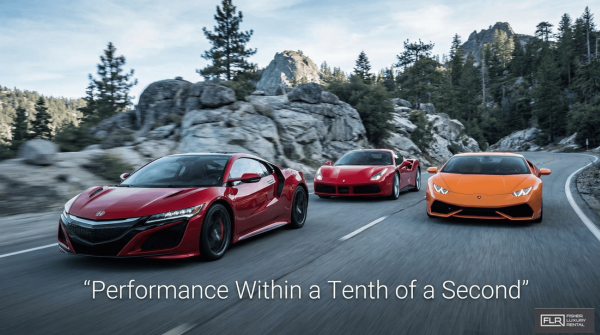
Understanding these engineering achievements helps explain why collectors and enthusiasts value Honda’s rare models so highly.
Who Typically Seeks Out Rare or High-Performance Honda Cars?
Rare and high-performance Honda cars attract a diverse range of buyers, from dedicated collectors to younger tuning enthusiasts. The following subsections explore what drives these buyers and how they rate the ownership experience.
What Motivates Enthusiasts and Collectors to Choose Honda Exotics?
Enthusiasts and collectors choose Honda exotics for a combination of engineering excellence, proven reliability, and rapidly appreciating value. Honda’s reputation for building durable, high-revving engines through technologies like VTEC gives these models a mechanical character that European rivals rarely match at comparable maintenance costs.
Collectors are also motivated by scarcity. The first-generation NSX totaled only 8,949 units across its entire 15-year production run, according to Classic.com market data. Limited production numbers, combined with Honda’s racing pedigree, create strong long-term investment potential.
Several key motivations draw buyers to Honda’s rare models:
- Reliability that surpasses European exotics at a fraction of the upkeep cost.
- The raw, driver-focused experience delivered by the Type R philosophy of weight reduction and chassis tuning.
- Cultural significance within the JDM community and global tuner scene.
- Appreciating market values that reward informed collectors.
For many buyers, the appeal goes beyond specifications on paper. Honda exotics reward skilled driving inputs in a way that feels analog and connected, which is increasingly rare in an era of electronically mediated performance.
How Do Owners and Drivers Rate the Experience of Rare Honda Models?
Owners and drivers consistently rate rare Honda models among the most engaging vehicles ever produced. The S2000’s high-revving F20C engine and perfectly balanced chassis have earned it cult status, while the Integra Type R’s razor-sharp handling remains a benchmark for front-wheel-drive performance decades after its release.
The second-generation NSX has attracted a younger demographic, with a significant portion of buyers being under 40 years old. This shift reflects Honda’s ability to blend hybrid technology with supercar performance in a way that resonates across generations.
For those curious about the exotic car experience but hesitant about ownership costs, luxury rental services like Fisher Luxury Rental offers access to European supercars including Ferrari, Lamborghini, and McLaren models, providing a low-commitment way to understand what high-performance driving feels like.
As these models age, specialized knowledge becomes more important for maintenance, yet the ownership community remains deeply supportive. Understanding what draws people to these cars sets the stage for comparing Honda’s exotics directly against established supercar brands.
How Do Honda’s High-Performance Cars Compare to Other Exotic Brands?
Honda’s high-performance cars compare to other exotic brands by delivering competitive acceleration, handling, and engineering at a lower cost of ownership. The sections below examine direct performance benchmarks against Ferrari, Lamborghini, and Porsche, then explore what makes Honda a unique choice.
In What Ways Do Honda Exotics Stand Up Against Ferrari, Lamborghini, or Porsche?
Honda exotics stand up against Ferrari, Lamborghini, and Porsche through nearly identical acceleration figures and comparable handling, paired with significantly greater reliability. The original NSX was designed to rival the Ferrari 348, and it matched that car’s performance while offering superior daily usability. The second-generation NSX, producing 573 horsepower from its twin-turbo V6 hybrid, posted a 3.1-second 0-60 mph time, placing it within a tenth of a second of the Ferrari 488 GTB and ahead of the Lamborghini Huracán LP 610-4.
| Model | Power (hp) | 0-60 mph (s) | Top Speed (mph) |
| Honda NSX (2017) | 573 | 3.1 | 191 |
| Ferrari 488 GTB | 661 | 3.0 | 205 |
| Lamborghini Huracán LP 610-4 | 602 | 3.2 | 202 |
| Porsche 911 Turbo S (991.2) | 580 | 2.8 | 205 |
What Makes Honda a Unique Choice for High-End Car Enthusiasts?
Honda is a unique choice for high-end car enthusiasts because it combines supercar-level performance with legendary reliability and lower maintenance costs. Unlike most European exotics, Honda engineered the NSX with daily drivability as a core design goal. According to Honda Global, the first-generation NSX’s all-aluminum monocoque chassis reduced weight by approximately 140 kg compared to a steel equivalent, a pioneering achievement for a mass-produced car. Technologies like VTEC, which optimizes engine performance across the entire RPM range, gave Honda’s naturally aspirated engines a character that still feels distinct from turbo-heavy European rivals. For enthusiasts who value precision engineering without the anxiety of exotic-level repair bills, Honda occupies a space no other manufacturer has convincingly claimed.
With performance credentials firmly established, the rising market value of these models reflects just how seriously collectors now take Honda’s rarest cars.
What Is the Market Value and Collectability of Rare Honda Models?
The market value and collectability of rare Honda models have surged dramatically, with several iconic models now commanding six- and seven-figure auction prices. Below, we explore how valuations have shifted over time and which specific models collectors prize most.
How Has the Value of Honda Exotic Cars Changed Over Time?
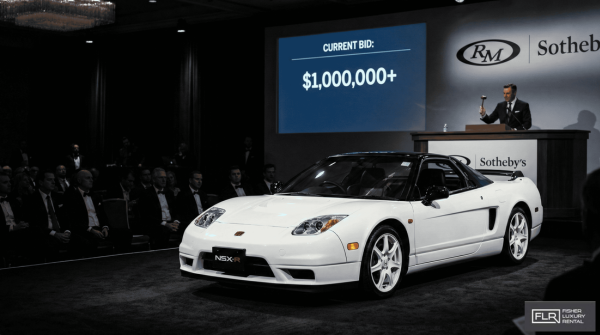
The value of Honda exotic cars has changed from affordable performance bargains to blue-chip collector assets over the past decade. The original NSX, once attainable for under $50,000 on the used market, now sees low-mileage examples fetching well over $100,000. Limited-edition variants have climbed even higher; according to Japanese Nostalgic Car, a 2003 NSX-R sold for over $1 million at auction in 2025.
This appreciation reflects broader recognition of Honda’s engineering significance. Limited production numbers, combined with growing demand from a new generation of collectors, have accelerated prices across the entire lineup. For enthusiasts who dismissed these cars as “just Hondas” a decade ago, the window for affordable entry has largely closed.
Which Models Are Most Sought After by Collectors and Why?
The models most sought after by collectors are the NSX-R, the Integra Type R, and the S2000 CR. Each combines limited production, motorsport DNA, and a visceral driving experience that modern cars rarely replicate.
Key factors driving collector demand include:
- The NSX-R represents Honda’s ultimate expression of lightweight, track-focused engineering, with first-generation production totaling only 8,949 units across all variants.
- The Acura Integra Type R (DC2) reached a record-breaking $204,204 at sale in 2025, fueled by its legendary B18C engine and unmatched front-wheel-drive handling.
- The S2000 CR, a limited-edition Club Racer variant, commands prices exceeding $200,000 for low-mileage examples, according to a 2025 Hagerty buyer’s guide.
Honda’s reputation for reliability adds a practical dimension that European exotics often lack, making these models appealing to collectors who actually drive their investments. Understanding what these cars are worth today helps frame why access through rental experiences continues to grow in popularity.
How Can You Experience Driving an Exotic or Rare Car from Top Luxury Brands?
You can experience driving an exotic or rare car through specialized luxury rental services. The sections below cover how Fisher Luxury Rental provides access to iconic performance models and the key takeaways from this guide.
Can Fisher Luxury Rental Provide Access to Exotic and High-Performance Cars for Special Occasions?
Yes, fisher luxury rental services can provide access to exotic and high-performance cars for special occasions, allowing enthusiasts to experience rare vehicles without the commitment of ownership.
Whether the occasion is a wedding, prom, or a weekend of spirited driving, this service lets enthusiasts get behind the wheel of rare cars without the commitment of ownership. Given the rapidly appreciating values of these models, renting is one of the most practical ways to experience their legendary driving dynamics firsthand.
What Are the Key Takeaways About Honda Exotic Cars: Rare and High-Performance Models We Covered?
The key takeaways about Honda exotic cars are that these rare and high-performance models combine engineering innovation, motorsport pedigree, and rapidly rising collector value in ways few other manufacturers can match. The most important lessons from this guide include:
- The NSX redefined the supercar segment starting in 1990 by proving Japanese engineering could rival European exotics in performance while exceeding them in reliability.
- VTEC technology and aluminum chassis construction gave Honda a measurable engineering edge, with the NSX’s aluminum monocoque saving approximately 140 kg over steel equivalents.
- Honda’s Type R lineup and S2000 have reached remarkable collector valuations, making hands-on driving experience through rental services increasingly valuable.
- Racing success at events like the 24 Hours of Le Mans validates these cars as genuine performance machines, not just styled grand tourers.
For anyone who wants to feel what makes these cars special, Fisher Luxury Rental offers direct access to the models that defines legacy.