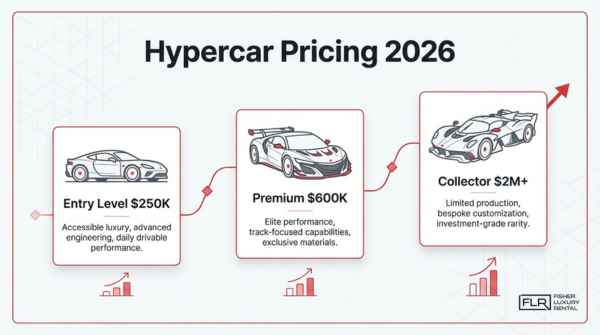
Hypercar and supercar pricing in 2026 spans from roughly $250,000 for entry-level Ferrari and McLaren models to well over $2 million rare collector vehicles. The sticker price, however, represents only part of the total cost.
This guide covers the factors that drive pricing, current brand and model price ranges, new versus used market dynamics, ongoing ownership costs, and accessible alternatives like exotic car rentals.
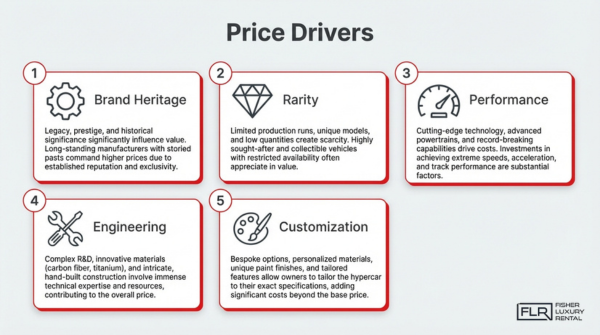
Brand reputation, production rarity, and technical specifications form the foundation of every price tag. Tighter supply and rising demand for internal combustion engine models are pushing exotic car prices higher across the board in 2026, while advanced powertrain development continues to increase manufacturing costs.
Lamborghini, Ferrari, and McLaren anchor the 2026 market at distinct price tiers. The McLaren 750S starts around $375,500, new Ferraris range from $300,000 to over $600,000 in popular configurations, and limited-edition or track-focused variants command significantly more.
Used supercars do not always depreciate. Select models like the Porsche Carrera GT now hold concours values near $2,000,000, making ownership history and mileage critical pricing factors in the secondary market.
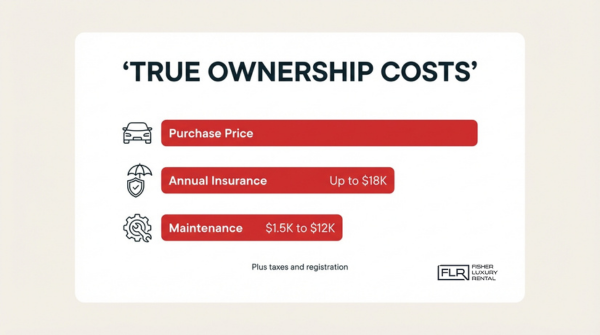
Beyond the purchase price, owners face annual maintenance ranging from $1,500 to $12,000 depending on the brand and mileage, insurance premiums that can reach $18,000 per year for top-tier hypercars, and registration fees tied to vehicle value.
For enthusiasts who want the experience without long-term commitment, daily rental rates for high-performance exotics start around $1,099, offering a practical entry point into the hypercar world.
What Factors Most Influence the Price of Hypercars and Supercars?
The price of hypercars and supercars is influenced by brand reputation, rarity, technical specifications, customization options, and ongoing ownership costs. Each factor compounds the final price in distinct ways.
How Do Brand Reputation and Rarity Affect Supercar Pricing?
Brand reputation and rarity affect supercar pricing by creating exclusivity that sustains demand well above production costs. Ferrari, Lamborghini, and McLaren command premium prices because decades of motorsport heritage and cultural prestige anchor buyer willingness to pay. Limited production runs intensify this effect; when manufacturers cap output to a few hundred units, scarcity drives prices higher on both primary and secondary markets.
According to a 2026 MPH report, exotic car prices are rising due to tighter limited supply and the increasing value of internal combustion engine models as the industry shifts toward electrification. This scarcity premium means that brand cachet alone can account for a six-figure difference between otherwise comparable vehicles.
Why Do Technical Specifications Impact Hypercar Value?
Technical specifications impact hypercar value because advanced engineering directly increases both development and production costs. Key performance attributes that drive pricing include:
Horsepower and powertrain configuration
0-60 MPH acceleration time
Top speed capability
Lightweight materials such as carbon fiber monocoque chassis
Hybrid or electric drivetrain integration
A study from the University of Naples Federico II found that high-performance engine development meeting advanced requirements can increase production costs by approximately 32%. These costs pass directly to the buyer. For perspective, the Ferrari 488 Spider pairs a 661-horsepower twin-turbo 3.9L V8 with a 3.0-second 0-60 time and 205 MPH top speed, and that level of engineering justifies its position well above entry-level supercar pricing.
What Role Does Customization Play in Driving Up Costs?
Customization plays a significant role in driving up costs because manufacturers offer extensive personalization programs that transform each vehicle into a bespoke product. Options such as unique paint finishes, hand-stitched interior leather, carbon fiber trim packages, and bespoke wheel designs can add tens of thousands of dollars to the base price.
New Ferrari models in 2026 typically start at approximately $250,000, yet many modern configurations range between $300,000 and over $600,000, according to Ferrari Lake Forest. That gap between base and configured price illustrates how quickly personalization escalates the total. For buyers at this level, customization is rarely optional; it is part of the ownership identity.
How Do Maintenance and Insurance Add to the Overall Expense?
Maintenance and insurance add substantially to the overall expense of hypercar and supercar ownership, often surprising first-time buyers. Routine service costs for these vehicles far exceed standard automotive rates due to specialized parts, proprietary tooling, and factory-trained technician requirements.
Annual maintenance for a Lamborghini Huracán typically costs between $3,500 and $6,000 for vehicles under 10,000 miles, climbing to $8,000 to $12,000 after 20,000 miles. Ferrari annual maintenance generally ranges from $1,500 to $2,000, though specialized services push costs higher.
Insurance premiums reflect similar extremes. According to HotCars, annual insurance for a hypercar like the McLaren P1 runs approximately $18,000, compared to the national average of $2,312 for standard full coverage. These recurring costs make total ownership significantly more expensive than the sticker price alone suggests, which is why many enthusiasts explore rental alternatives instead.
Which Brands and Models Dominate Hypercar and Supercar Pricing in 2026?
Lamborghini, Ferrari, and McLaren dominate hypercar and supercar pricing in 2026, with models spanning from roughly $250,000 to well beyond $600,000. Below, we break down price ranges, limited edition costs, and the models setting new records.
What Are the Price Ranges for Lamborghini, Ferrari, and McLaren Models?
The price ranges for Lamborghini, Ferrari, and McLaren models in 2026 stretch from approximately $250,000 to over $600,000, depending on configuration and trim level. According to Car and Driver, the 2026 McLaren Artura starts between $260,400 and $295,400, while the McLaren 750S ranges from $365,100 to $386,700. New Ferrari models typically start at approximately $250,000, with many modern configurations climbing between $300,000 and over $600,000.
McLaren Artura: $260,400 to $295,400
McLaren 750S: $365,100 to $386,700
Ferrari (new models): $250,000 to $600,000+
Lamborghini positions its newest entries competitively within this range. For buyers who find these figures steep, the gap between entry-level supercars and flagship hypercars has never been wider.
How Much Do Limited Edition and Track-Focused Supercars Cost?
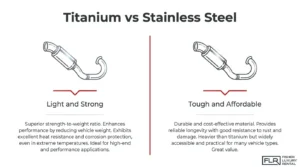
Limited edition and track-focused supercars cost significantly more than standard production models, often exceeding $1 million. Exclusivity drives these premiums; manufacturers produce only a handful of units, and allocation typically requires an existing purchase history with the brand. Track-focused variants layer in lightweight materials, such as carbon fiber body panels and titanium exhaust systems, which push production costs higher. A 2024 study from the University of Naples Federico II found that high-performance engine development integrating advanced technical solutions can increase production costs by approximately 32%. Collector demand for low-volume models frequently pushes transaction prices well above MSRP on the secondary market, making these vehicles as much investment assets as driving machines.
Which 2026 Models Are Setting New Price Records?
The 2026 models setting new price records reflect a broader market surge fueled by limited supply and shifting powertrain strategies. According to a 2026 MPH report, exotic car prices are rising due to tighter production allocations and the increasing collectibility of internal combustion engine models as the industry transitions toward electrification. Precedence Research projects the global hypercar market will grow from $33.48 billion in 2025 to $44.26 billion in 2026, confirming the upward pricing pressure across the segment.
Flagship models from Ferrari, Lamborghini, and McLaren are all commanding record MSRPs compared to their predecessors. This trend is unlikely to reverse as manufacturers prioritize margin over volume, making 2026 one of the most expensive years to buy a new supercar.
With pricing climbing across every tier, understanding how new and used hypercar values compare becomes essential for informed buying decisions.

How Do New and Used Hypercar Prices Compare in 2026?
New and used hypercar prices in 2026 diverge significantly depending on model rarity, production status, and collector demand. Some used supercars now sell for multiples of their original MSRP, while others depreciate sharply after leaving the dealership. The sections below explore why certain models appreciate and how mileage and ownership history shape used pricing.
Why Do Some Supercars Appreciate in Value Instead of Depreciating?
Some supercars appreciate in value instead of depreciating because limited production runs, discontinued powertrains, and rising collector demand create scarcity that outpaces supply. As the industry shifts toward electrification, internal combustion engine models are gaining particular investment appeal. According to Hagerty’s 2026 Bull Market report, the 2004–2007 Porsche Carrera GT now carries a condition-1 (concours) value of approximately $2,000,000, illustrating how discontinued, low-volume supercars can command extraordinary premiums decades after production ends.
Models from Ferrari, Lamborghini, and McLaren with limited allocations often trade above MSRP on the secondary market within months of delivery. Factors that typically drive appreciation include:
Original allocation exclusivity and waitlist demand
End-of-generation status for a celebrated powertrain
Motorsport heritage or special edition designation
Low production numbers below 500 units globally
For buyers evaluating supercars as potential stores of value, production context matters more than sticker price alone.
How Does Mileage and Ownership History Affect Used Supercar Costs?
Mileage and ownership history affect used supercar costs by directly influencing both market value and ongoing maintenance expenses. Low-mileage examples with single-owner provenance and complete service records consistently command premiums of 15% to 30% over comparable higher-mileage counterparts. A clean chain of custody, documented through manufacturer service programs, signals that the vehicle was properly maintained during critical wear intervals.
Higher mileage also escalates operating costs substantially. According to We Buy Exotics, annual maintenance for a Lamborghini Huracán costs between $3,500 and $6,000 under 10,000 miles, but climbs to $8,000–$12,000 after 20,000 miles. Buyers should evaluate these factors when comparing used pricing:
Total odometer mileage relative to the model’s production year
Number of previous owners and length of each ownership period
Completeness of factory-authorized service history
Accident or repaint history verified through inspection reports
Used supercars with gaps in documentation or multiple short-term owners tend to sell at steeper discounts, reflecting the uncertainty buyers price into those transactions. Understanding total cost of ownership, including maintenance, insurance, and registration, rounds out the full pricing picture.
What Are the Typical Ownership Costs Beyond the Purchase Price?
The typical ownership costs beyond the purchase price include recurring maintenance, high insurance premiums, and various taxes and registration fees. Each category adds thousands to annual expenses.
What Maintenance and Service Costs Should Owners Expect?
Owners should expect maintenance and service costs ranging from $1,500 to $12,000 annually, depending on the brand and vehicle mileage. Ferrari models tend to sit at the lower end, while Lamborghini costs escalate significantly with use.
Key maintenance cost factors include:
Routine checkups for a Lamborghini Huracán cost between $850 and $1,500 per visit.
Specialized services like spark plug replacements on a Huracán can reach $6,000.
Annual Lamborghini Huracán maintenance runs $3,500 to $6,000 under 10,000 miles, climbing to $8,000 to $12,000 after 20,000 miles.
According to Ferrari Lake Forest, average annual Ferrari maintenance costs generally range between $1,500 and $2,000. The Ferrari Genuine Maintenance Program covers new production vehicles for 7 years (2015 model year onward), which softens early ownership expenses considerably. For most buyers, budgeting at least $5,000 annually for maintenance is a realistic starting point.
How Expensive Is Insurance for Hypercars and Supercars?
Insurance for hypercars and supercars is significantly more expensive than standard vehicle coverage, often costing $10,000 to $18,000 or more per year. The high replacement value, repair complexity, and theft risk all drive premiums well above average.
According to HotCars, annual insurance for a hypercar like the McLaren P1 runs approximately $18,000. For context, the average annual cost for full coverage on a standard vehicle reached $2,312 by December 2025, meaning hypercar owners can pay five to eight times that amount. Major providers for luxury and exotic car insurance in 2026 include USAA, Progressive, and GEICO. Agreed-value policies, which guarantee a set payout in the event of a total loss, are essential for vehicles that may appreciate over time.
Are There Additional Fees and Taxes to Consider?
Yes, there are additional fees and taxes to consider when purchasing a hypercar or supercar, and they can add tens of thousands of dollars to the total cost.
Notable fees and taxes include:
California charges a vehicle registration fee of 0.65% of the vehicle’s value in the first year, which on a $375,000 McLaren 750S amounts to roughly $2,440.
The maximum first-year tax deduction for light vehicles (6,000 lbs GVWR or less) is capped at $12,200 for 2026.
Some European markets impose even steeper levies; Hungary’s 27% VAT rate is the highest in the EU for luxury vehicle purchases.
According to DriveElectric, from April 2026 the luxury car tax threshold for electric vehicles in certain jurisdictions rises to £50,000 to encourage zero-emission adoption. These layered costs make it critical to factor in registration, sales tax, and jurisdiction-specific surcharges before committing to a purchase. Understanding the full financial picture helps separate realistic ownership from sticker-price optimism.
How Accessible Are Hypercars for Renters and Enthusiasts?
Hypercars are accessible to renters and enthusiasts through daily rental programs that eliminate the commitment of ownership. The sections below cover typical rental costs, deposit and policy requirements, and insurance considerations.
What Is the Typical Cost to Rent a Hypercar or Supercar in 2026?
The typical cost to rent a hypercar or supercar in 2026 ranges from approximately $500 to $1,500 per day, depending on the make and model. Entry-level exotics like the Porsche 911 Carrera S start around $499 daily, while flagship supercars command higher premiums. Rental rates for high-performance exotics in 2026 include $1,099 per day for a Lamborghini Huracan Spyder and $1,299 per day for a modified 1,100-horsepower McLaren 720S, according to Fisher Luxury Rental.
Multi-day and weekly bookings often reduce the effective daily rate. Compared to six-figure purchase prices, insurance premiums exceeding $18,000 annually, and maintenance bills in the thousands, renting provides the most cost-efficient path to seat time in a world-class machine.
How Do Rental Policies and Deposit Requirements Vary?
Rental policies and deposit requirements vary significantly across exotic car rental providers. Most companies require the following before handing over the keys:
A valid driver’s license with a clean driving record.
A minimum renter age, typically 25 years old, though some providers accept drivers as young as 21 with a surcharge.
A security deposit ranging from $1,000 to $10,000 or more, often held on a credit card.
Mileage caps, commonly 100 to 150 miles per day, with overage fees applied beyond the limit.
Some providers also restrict where the vehicle can be driven, prohibiting track use or out-of-state travel. Always review cancellation terms carefully, since exotic rentals frequently carry stricter refund windows than standard car hire. Reading the full rental agreement before signing protects against unexpected charges.
What Should Renters Know About Insurance and Damage Liability?
Renters should know that insurance and damage liability represent the most financially significant risk in any exotic car rental. Standard personal auto policies rarely extend full coverage to vehicles valued above $200,000, leaving renters exposed if an incident occurs.
Most rental companies offer supplemental liability and collision damage waivers for an additional daily fee, typically $50 to $200 depending on the vehicle’s value. According to a 2025 USA Today report, the average annual cost for full coverage car insurance reached $2,312 by December 2025, with luxury and high-performance models commanding significantly higher premiums in 2026. That gap underscores why verifying your coverage before pickup is essential.
Key points every renter should confirm include:
Whether personal auto insurance or a credit card benefit covers exotic rentals.
The deductible amount if damage occurs.
Whether the rental provider’s insurance covers single-vehicle incidents, not just collisions.
Understanding these details upfront is the single most important step a renter can take to avoid a five-figure surprise.
How Can You Experience Hypercars Through Fisher Luxury Rental’s Services?
You can experience hypercars through Fisher Luxury Rental’s services by renting high-performance exotic cars at a fraction of ownership cost. The following sections cover how renting replaces ownership barriers and the key takeaways from this guide.
Can Renting an Exotic or Luxury Car from Fisher Luxury Rental Help You Experience Hypercars Without Ownership?
Yes, renting an exotic or luxury car from Fisher Luxury Rental can help you experience hypercars without ownership. With new Ferrari models starting at approximately $250,000 and McLaren 750S pricing reaching $386,700 according to Car and Driver, buying outright demands significant capital before factoring in insurance, maintenance, and registration fees.
Fisher Luxury Rental offers daily access to vehicles like the Ferrari 488 Spider, featuring a 661-horsepower twin-turbo V8 with a 205 MPH top speed and 3.0-second 0-60 time. Additional fleet highlights include:
Lamborghini Huracan Spyder at $1,099 per day
McLaren 720S with 1,100 horsepower at $1,299 per day
Ferrari California T starting at $599 per day
For most enthusiasts, renting delivers the full sensory thrill of hypercar performance while eliminating the six-figure commitment and ongoing ownership burden.
What Are the Key Takeaways About Hypercar Cost Guide 2026: How Much Do Supercars Cost?
The key takeaways about Hypercar Cost Guide 2026: How Much Do Supercars Cost are:
- Purchase prices for mainstream supercars from Ferrari, Lamborghini, and McLaren range from $250,000 to over $600,000, with limited-edition hypercars commanding far more.
- Annual ownership costs add thousands in maintenance, insurance premiums up to $18,000, and state-specific taxes and registration fees.
- The hypercar market continues expanding rapidly, with rising exotic car prices driven by limited supply and increasing ICE model valuations.
- Used supercars can appreciate significantly, making condition and provenance critical factors in long-term value.
- Renting from Fisher Luxury Rental provides an accessible path to experience these machines without the financial weight of ownership, maintenance schedules, or depreciation risk.