
The McLaren 720S and Ferrari F8 Tributo are mid-engine, twin-turbocharged V8 supercars that represent two distinct philosophies in high-performance driving. Both produce over 700 horsepower, yet each delivers that power through fundamentally different chassis, suspension, and electronic control strategies.
This guide covers McLaren 720S handling strengths, Ferrari F8 driving dynamics, the key differences in on-road feel between both cars, value and ownership costs, and how to experience them firsthand through Fisher Luxury Rental.
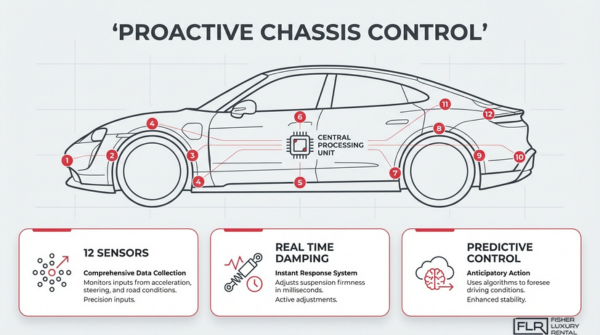
The 720S builds its handling identity around the Carbon Fibre Monocage II structure and Proactive Chassis Control II, a hydraulic suspension system that uses dedicated wheel-hub accelerometers to apply damping forces in real time. The result is steering often described as scalpel-like: precise, composed, and clinically fast on track.
Ferrari takes a different approach with Side Slip Control 6.1 integrated with the Ferrari Dynamic Enhancer, prioritizing adjustable grip and controlled oversteer. Reviewers consistently note the F8’s steering is quick yet never twitchy, offering a more emotionally engaging, tail-happy character.
On value, the two diverge sharply. Ferrari holds stronger resale, losing roughly 20% over three years, while the 720S depreciates faster despite a higher original MSRP. Ferrari also includes seven years of complimentary maintenance; McLaren’s annual service runs lower out of pocket but lacks that bundled coverage.
For those who want seat time before committing to ownership, Fisher Luxury Rental offers both models in their exotic fleet with white-glove delivery and meticulously maintained vehicles.
What Makes the McLaren 720S Stand Out in Terms of Handling?
The McLaren 720S stands out in handling through its lightweight carbon fibre structure, advanced adaptive suspension, and proprietary chassis technology. The following sections explore how these elements work together, what technologies set it apart, and how real-world testers evaluate the experience.
How Does the McLaren 720S Achieve Its Handling Performance?
The McLaren 720S achieves its handling performance through a combination of structural rigidity, low weight, and precisely tuned suspension geometry. The Carbon Fibre Monocage II body structure provides an exceptionally stiff yet lightweight platform, reducing mass where it matters most. Built around a double-wishbone suspension system with adaptive dampers, the 720S manages body roll, pitch, and dive with remarkable composure.
This foundation allows the car to change direction with minimal delay. Rather than relying on aggressive spring rates that punish occupants on rough surfaces, the 720S uses adaptive damping to balance ride comfort with cornering precision. For drivers who prioritize surgical accuracy over theatrical drama, this chassis philosophy delivers a distinct advantage.
What Driving Technologies Are Unique to the McLaren 720S?
The driving technologies unique to the McLaren 720S center on its Proactive Chassis Control II system. According to a 2017 Carscoops report, this system uses 12 additional sensors compared to previous Super Series models, including wheel-hub accelerometers, to monitor and instantly apply damping forces that harmonize vehicle dynamics.
What makes this technology distinctive is its predictive nature. Rather than reacting after body movement occurs, Proactive Chassis Control II reads road conditions and driver inputs simultaneously, adjusting each damper independently before the chassis can pitch or roll. This approach eliminates the need for traditional anti-roll bars entirely, giving each wheel true independence. The result is a car that stays remarkably flat through high-speed corners while remaining compliant over surface imperfections.
How Do Owners and Testers Rate the McLaren 720S Handling Experience?
Owners and testers rate the McLaren 720S handling experience as exceptionally precise and confidence-inspiring. Professional reviewers consistently describe the steering as “scalpel-like,” favoring surgical accuracy over the playful, edgy character found in rival supercars. A bone-stock 720S completed a lap of the Nürburgring Nordschleife in 7:08.34, as reported by The Drive, underscoring how effectively its handling translates to real track performance.
Owner feedback reinforces these professional assessments. The car rewards smooth, deliberate inputs with immediate and predictable responses. For those accustomed to more theatrical supercars, the 720S can initially feel clinical, but that precision builds deep trust at higher speeds. Understanding how Ferrari’s F8 approaches handling differently helps frame what each philosophy offers.
How Does the Ferrari F8 Perform in Handling Compared to the McLaren 720S?
The Ferrari F8 performs in handling compared to the McLaren 720S by prioritizing driver engagement and controllable oversteer over clinical precision. Its electronic systems, steering feel, and chassis tuning create a more emotive dynamic character.
What Handling Technologies Does the Ferrari F8 Offer?
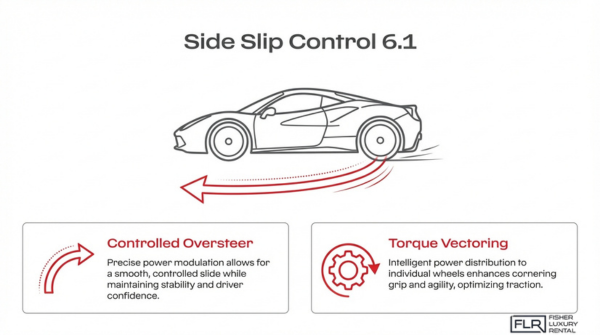
The handling technologies the Ferrari F8 offers center on Side Slip Control 6.1, an electronic vehicle dynamics system that integrates with the Ferrari Dynamic Enhancer (FDE+) to optimize grip during cornering and reduce traction loss. According to Ferrari Magazine, this system is specifically designed to allow controlled drifting while maintaining overall vehicle stability. Where the McLaren 720S relies on sensor-dense damper control, the F8 Tributo uses software-driven torque vectoring to let drivers explore the car’s limits progressively. The result is a handling system that rewards skill rather than simply compensating for it.
How Do Reviews Describe the Ferrari F8’s Road and Track Feel?
Reviews describe the Ferrari F8’s road and track feel as confidence-inspiring and communicative. Motor Trend characterized the F8 Tributo’s steering as “quick yet never twitchy,” noting that it provides high-speed roadholding by optimizing available grip. On track, the F8 Tributo delivers a recorded lateral acceleration of 1.06 g, confirming strong mechanical grip through high-speed corners. Being 40 kg lighter and 10% more aerodynamically efficient than the 488 GTB it replaced, the F8 feels sharper and more planted at speed. That combination of lightness and aerodynamic refinement translates to a car that feels agile on the road without becoming nervous.
Does the Ferrari F8 Offer a More Engaging Driving Experience?
Yes, the Ferrari F8 offers a more engaging driving experience for drivers who value emotional feedback over outright lap-time efficiency. Its Side Slip Control 6.1 system actively encourages the driver to push closer to the limit, creating a dynamic dialogue between car and pilot that the more clinical McLaren 720S intentionally filters out. The F8’s 3.9-liter twin-turbocharged V8 produces 710 bhp and 770 Nm of torque, delivering a visceral powertrain response that amplifies the sensation of every corner. For many enthusiasts, this emotional connection is what separates a great supercar from a merely fast one. Understanding these handling differences firsthand is ultimately what makes seat time invaluable.
What Are the Key Differences in Driving Feel Between McLaren 720S and Ferrari F8?
The key differences in driving feel between the McLaren 720S and Ferrari F8 come down to suspension philosophy, chassis construction, and steering character. The following subsections break down how each supercar’s tuning and feedback create distinct experiences.
How Do Suspension and Chassis Tuning Differ Between these Supercars?
Suspension and chassis tuning differ between these supercars in both structural approach and electronic control philosophy. The McLaren 720S builds on a Carbon Fibre Monocage II body structure paired with a double-wishbone suspension system and adaptive dampers. According to Carscoops, McLaren’s Proactive Chassis Control II system uses 12 additional sensors, including wheel-hub accelerometers, to monitor and instantly apply damping forces that harmonize vehicle dynamics.
The Ferrari F8 Tributo takes a different path. Side Slip Control 6.1 integrates with the Ferrari Dynamic Enhancer (FDE+) to optimize grip during cornering and reduce traction loss. This system is specifically designed to allow controlled drifting while maintaining overall stability.
McLaren’s approach prioritizes surgical composure; Ferrari’s prioritizes expressive involvement. For drivers who value adjustable confidence at the limit, that distinction matters more than raw specs suggest.
Which Car Delivers Better Steering Response and Feedback?
The car that delivers better steering response depends on whether a driver values clinical precision or communicative engagement. The McLaren 720S steering is widely described as “scalpel-like,” prioritizing pinpoint accuracy over playfulness. Every input translates into an exact, measured response with minimal slack.
The Ferrari F8 Tributo’s steering, by contrast, is characterized as “quick yet never twitchy,” according to a Motor Trend review, providing high-speed roadholding by optimizing available grip. Where the 720S feels like a surgical instrument, the F8 layers in more natural road texture and driver interaction.
Neither approach is objectively superior. Precision-focused drivers will gravitate toward the McLaren’s directness, while those seeking a more emotionally connected experience tend to prefer Ferrari’s communicative balance. Understanding which style suits your driving personality is the real deciding factor when comparing these supercars on value.
How Do the Value Propositions of the McLaren 720S and Ferrari F8 Compare?
The value propositions of the McLaren 720S and Ferrari F8 differ across purchase price, depreciation, and long-term ownership costs. Below, each factor is broken down to clarify which supercar delivers stronger financial returns.
What Are the Purchase and Depreciation Trends for Each Model?
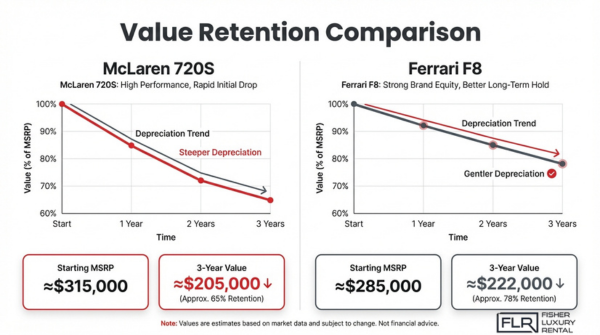
The purchase and depreciation trends for each model reveal a notable gap in value retention. According to TrueCar, the Ferrari F8 Tributo carried a starting MSRP of approximately $283,950, while the McLaren 720S started higher at $301,500. Despite McLaren’s higher entry price, its depreciation curve is steeper. Market analysis data indicates some McLaren models lose up to 20% of their value per year. The 720S typically retains about 66% of its original value, often reselling around $260,000. Ferrari models, by contrast, experience a total value decline of roughly 20% over the first three years. For buyers weighing long-term investment, Ferrari’s flatter depreciation curve represents a measurable financial advantage.
How Do Maintenance and Running Costs Stack Up?
Maintenance and running costs stack up differently depending on ownership phase. The McLaren 720S requires service at 10,000-mile or 12-month intervals, with annual routine maintenance costing between $2,000 and $3,000 for oil, filters, and fluids. Major service events every three to five years can run $5,000 to $10,000. Ferrari takes a different approach. According to Ferrari of Fort Lauderdale, new Ferrari models include seven years of complimentary scheduled maintenance. After that period, standard inspections typically cost $1,500 to $2,000 annually, though some owners budget $3,000 to $8,000 depending on service scope. Insurance adds further separation: the F8 Tributo averages $3,500 to $4,000 annually, while the 720S ranges from $4,413 to $5,481.
Which Brand Holds Better Resale Value Among Supercar Enthusiasts?
Ferrari holds better resale value among supercar enthusiasts. The brand’s controlled production volumes, racing heritage, and cultural cachet create consistent demand in the secondary market. With only a 20% total decline across three years, the F8 Tributo depreciates at a significantly slower rate than the 720S. McLaren’s more aggressive depreciation, while less favorable for investors, actually creates opportunity for buyers seeking performance at a lower entry point on the used market. Among collectors and enthusiasts who prioritize long-term value retention, Ferrari’s track record remains the stronger bet. For those who care more about raw performance per dollar, McLaren’s steeper depreciation makes previously unattainable technology accessible sooner.
With value dynamics clarified, the next consideration is how each supercar performs as a daily ownership experience.
Which Supercar Offers a Better Ownership Experience Overall?
The better ownership experience depends on whether you prioritize daily comfort or brand prestige. Below, the McLaren 720S and Ferrari F8 Tributo are compared across comfort, practicality, and their unique ownership benefits.
How Do Comfort, Practicality, and Everyday Usability Compare?
Comfort, practicality, and everyday usability compare favorably for both supercars, though each takes a different approach. The McLaren 720S features a Carbon Fibre Monocage II structure that keeps curb weight low while providing a surprisingly compliant ride through its adaptive dampers. Dihedral doors add drama but can complicate tight parking situations.
The Ferrari F8 Tributo delivers steering that Motor Trend describes as “quick yet never twitchy,” translating to composed highway cruising. Ferrari’s 7-year complimentary scheduled maintenance program also reduces the logistical burden of ownership considerably.
Both mid-engine layouts limit cargo space, so neither qualifies as a practical daily driver in the traditional sense. For owners who value long-distance touring comfort, the McLaren’s suspension tuning edges ahead; for those who want lower ownership friction in the early years, Ferrari’s included maintenance is hard to beat.
What Unique Features and Benefits Come With Each Model?
The unique features and benefits that come with each model reflect their distinct engineering philosophies:
- The McLaren 720S uses Proactive Chassis Control II with 12 additional sensors, including wheel-hub accelerometers, delivering real-time damping adjustments no other supercar in this segment matches.
- The Ferrari F8 Tributo integrates Side Slip Control 6.1 with Ferrari Dynamic Enhancer (FDE+), allowing controlled drifting while maintaining stability.
- McLaren’s scalpel-like steering precision suits drivers who want clinical feedback at the limit.
- Ferrari’s 710 bhp V8 pairs with an emotionally engaging exhaust note and a heritage-driven ownership community.
According to Carscoops, McLaren’s Proactive Chassis Control II monitors and instantly applies damping forces to harmonize vehicle dynamics, a level of active ride management that defines the 720S ownership character. For most enthusiasts, the choice comes down to whether ownership means technical precision or emotional connection to a storied marque.
With ownership priorities clarified, renting both supercars offers the most direct comparison.
How Can You Experience the McLaren 720S or Ferrari F8 Through Fisher Luxury Rental?
You can experience the McLaren 720S or Ferrari F8 through Fisher Luxury Rental by reserving a top-trim exotic vehicle from a curated fleet designed for performance enthusiasts. Below, explore the rental options available and the key takeaways for choosing between these supercars.
What Exotic and Luxury Car Rental Options Does Fisher Luxury Rental Provide?
Fisher Luxury Rental provides exotic and luxury car rental options that include a modified McLaren 720S, a Ferrari 488 Spider, a Lamborghini Huracan Spyder, and over a dozen other high-performance vehicles. The McLaren 720S in the fleet features a fully built 1,100 horsepower twin-turbo engine with aftermarket downpipes and exhaust, available at $1,299 per day. Fisher Luxury Rental specializes in top-trim luxury and exotic vehicles, with white glove deliveries and meticulous vehicle preparation that set the experience apart from standard rental agencies. For anyone torn between the McLaren’s surgical precision and the Ferrari’s emotive character, renting eliminates the depreciation risk and six-figure commitment entirely. A single day behind the wheel reveals more about driving compatibility than any spec sheet can.
What Are the Key Takeaways in Choosing Between McLaren 720S and Ferrari F8 for Handling and Value?
The key takeaways in choosing between the McLaren 720S and Ferrari F8 for handling and value center on driving priority and financial goals:
- The McLaren 720S delivers scalpel-like precision through its Proactive Chassis Control II system and Carbon Fibre Monocage II structure, favoring drivers who prioritize clinical accuracy.
- The Ferrari F8 provides a more expressive driving feel through Side Slip Control 6.1 and the Ferrari Dynamic Enhancer, rewarding those who value engagement and emotion.
- Ferrari models hold value more consistently, with roughly 20% total depreciation over three years, while McLaren models depreciate faster at up to 20% annually.
- Renting through Fisher Luxury Rental offers a risk-free path to experience both philosophies firsthand, without the ownership costs that complicate the decision.