
Micro LED headlights are a next-generation automotive lighting technology that uses thousands of individually controllable pixel-sized LED chips to deliver higher brightness, sharper beam control, and dramatically smaller form factors than conventional LED or OLED systems. They represent the most significant shift in supercar and hypercar lighting design in over a decade.
This guide covers the technical advantages driving Micro LED adoption, the design and engineering transformations they enable for exotic car manufacturers, the real-world challenges of durability and cost at this performance tier, their impact on nighttime visibility and adaptive safety systems, and what this technology means for the luxury driving experience.
Micro LED chips pack over 16,000 individually controllable pixels onto a thumbnail-sized surface while cutting energy consumption by 40% and boosting brightness by 20% compared to standard LEDs. These gains make the technology particularly compelling for electric hypercars, where every watt saved extends range.
Leading manufacturers are already integrating advanced matrix LED systems into flagship models like the Lamborghini Revuelto and Bugatti Tourbillon, using Chip-on-Board miniaturization to create ultra-slim, brand-defining lighting signatures that were physically impossible with older technology.
Thermal management, regulatory compliance with global adaptive driving beam standards, and a per-unit cost around USD 580 currently limit Micro LED deployment to the luxury segment. Seven production models had adopted the technology by early 2026, with the broader market forecasted to grow at 13.9% CAGR through 2033.
Real-time pixel-level beam adjustment allows these headlights to reshape light distribution based on road conditions, oncoming traffic, and ambient visibility, directly improving driver reaction time and safety at supercar speeds.
For enthusiasts who want to experience this technology firsthand, renting a top-trim exotic equipped with Micro LED headlights offers an accessible way to see how precision lighting transforms nighttime performance driving.
How Will Micro LED Headlights Change Supercar and Hypercar Design by 2026?
Micro LED headlights will change supercar and hypercar design by enabling slimmer lighting modules, brand-specific light signatures, and radically reshaped front fascias. The following sections cover brand adoption trends and the specific design innovations this technology unlocks.
Are Leading Exotic and Hypercar Brands Adopting Micro LED Headlights?
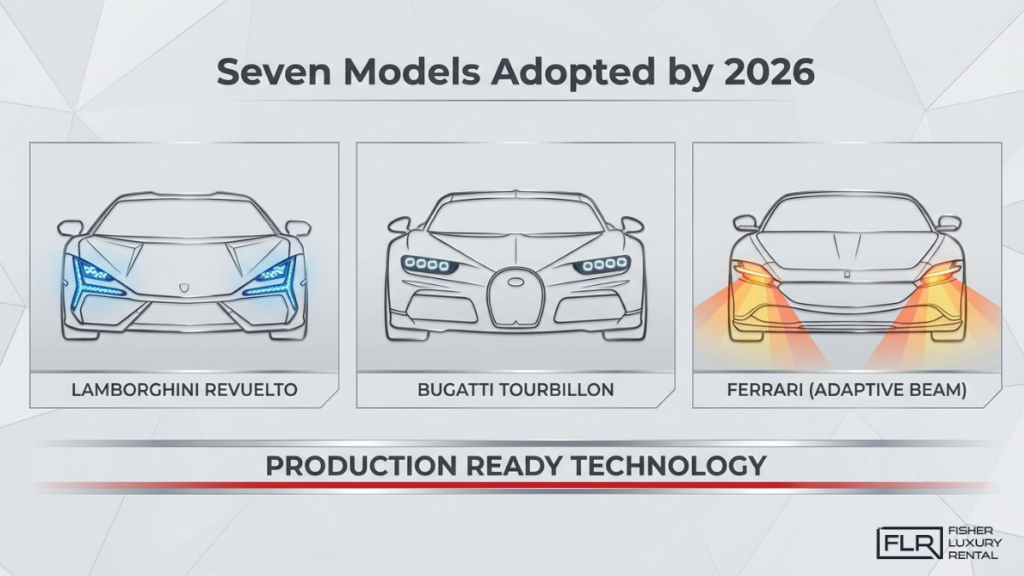
Yes, leading exotic and hypercar brands are adopting Micro LED headlights. Lamborghini integrated compact LED matrix innovation into the Revuelto hybrid supercar, with production and deliveries extending through 2026. Bugatti’s Tourbillon uses slimline LED technology to reimagine the brand’s iconic “eight-eye” visual identity while enhancing its low, wide aerodynamic profile. Ferrari introduced matrix LED technology for active beam control across its high-performance lineup. According to TechInsights, seven production vehicle models had officially adopted Micro LED matrix headlights as of early 2026, marking the technology’s shift into premium automotive segments. This pace of adoption signals that pixel-dense lighting is quickly becoming a baseline expectation rather than a novelty for top-tier manufacturers.
What Design Innovations Are Enabled by Micro LED Headlights?
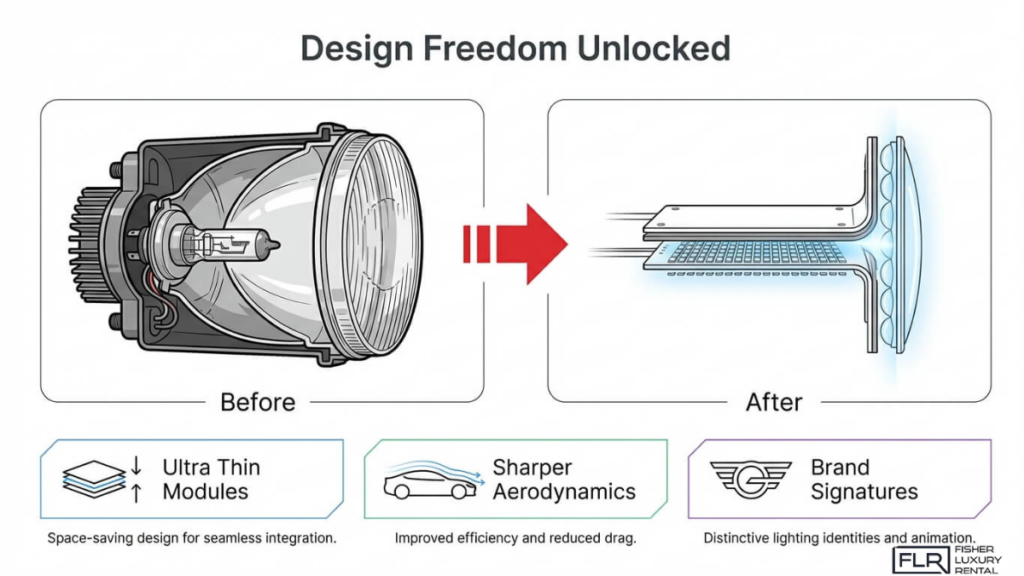
The design innovations enabled by Micro LED headlights include ultra-thin lighting modules, parametric light signatures, and aerodynamically optimized front-end styling. According to a paper published through the SPIE Digital Library, Micro LED miniaturization is enabled by Chip-on-Board (COB) technology, where individual LED dies are packed directly next to each other in a single housing to achieve high contrast and efficiency. This extreme component density allows designers to embed headlights into body lines that were previously too narrow for conventional assemblies. Freed from bulky housings, stylists can sculpt sharper leading edges and lower hood profiles, directly improving drag coefficients. For supercar enthusiasts, these innovations mean each new model carries a distinctive, unmistakable face visible both day and night.
With design boundaries expanding, the underlying technology still faces challenges worth examining.
What Are the Technological Challenges and Limitations for Micro LED Headlights?
The technological challenges and limitations for Micro LED headlights center on thermal durability under extreme conditions and long-term system maintenance. The following subsections examine high-performance resilience and projected longevity factors.
Can Micro LED Headlights Withstand the Demands of High-Performance Driving?
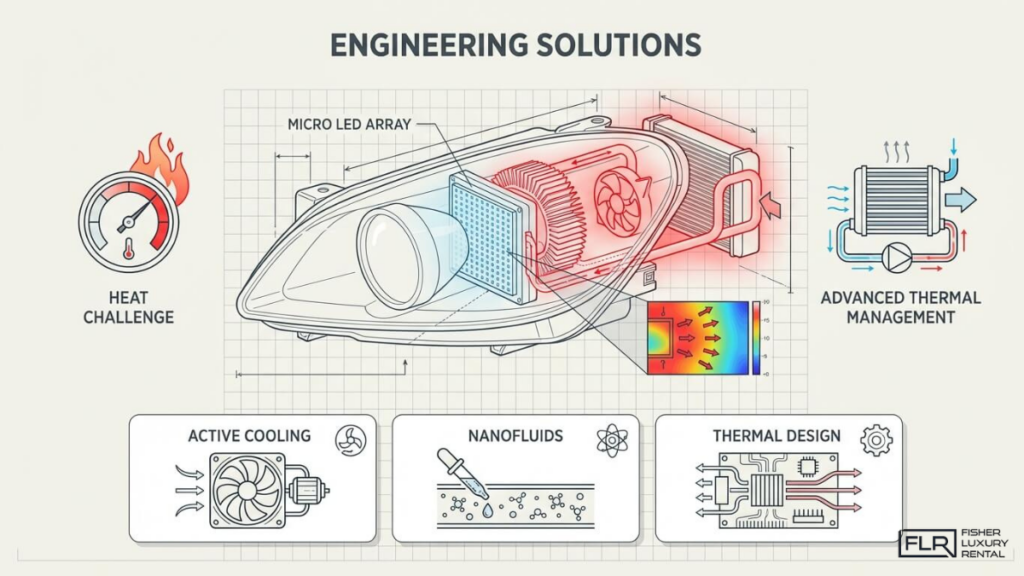
Yes, Micro LED headlights can withstand the demands of high-performance driving, though doing so requires advanced engineering solutions. Sustained high speeds generate intense engine heat, road vibration, and airflow turbulence that stress lighting components far beyond typical driving conditions. Thermal management remains the primary obstacle; densely packed pixel arrays produce concentrated heat that must be dissipated without degrading output or lifespan. Current solutions involve electronic thermal management systems and active cooling with specialized nanofluids, but these add complexity to an already intricate module. For supercars and hypercars pushing aerodynamic and powertrain limits, integrating compact yet effective cooling within slim headlight housings presents an ongoing design trade-off between form and function.
What Are the Projected Maintenance and Longevity Factors of Micro LED Systems?
The projected maintenance and longevity factors of Micro LED systems involve lumen output stability, component replaceability, and dual-use durability. According to an EPIC Photonics technical presentation by Volvo’s Paul-Henri Matha, next-generation Micro LED headlight systems deliver a low beam output of approximately 2,000 lumens and a combined high beam output of 4,000 lumens. Maintaining those output levels over thousands of operating hours depends on effective heat dissipation and robust semiconductor quality.
Key longevity considerations include:
- Pixel-level failure management, since individual Micro LEDs can degrade independently without disabling the entire module.
- Integration of visible light communication (VLC) capabilities, which leverage fast LED response times for inter-vehicular data transfer, adding functional complexity that requires reliable long-term performance.
- Single-mount certification under global standards, reducing the need for frequent recalibration.
For most supercar owners, Micro LED longevity represents a meaningful upgrade over traditional LED modules, though repair costs for pixel-dense arrays remain higher than conventional units. As adoption scales beyond the current luxury segment, serviceability and parts availability should improve steadily.
How Will Micro LED Headlights Affect Nighttime Driving and Visibility for Supercar Enthusiasts?
Micro LED headlights will affect nighttime driving and visibility for supercar enthusiasts by delivering precision-controlled adaptive beams that illuminate roads more effectively while reducing glare. Ferrari introduced its first application of matrix LED technology for active beam control to improve nighttime visibility in its high-performance supercar lineup. The following sections cover how these systems adapt to conditions and what they mean for the luxury rental experience.
Do Micro LED Headlights Adapt to Different Driving Conditions?
Micro LED headlights adapt to different driving conditions by using individually addressable pixels to reshape beam patterns in real time. When sensors detect oncoming traffic, the system selectively dims specific pixel zones to prevent glare while keeping surrounding areas fully illuminated. On winding mountain roads or wet highways, the beam widens or narrows automatically based on speed and steering input.
According to a 2026 report from Driving Vision News, modern Micro LED modules are designed for full compatibility with ECE R149 and FMVSS 108 standards, ensuring they meet global requirements for adaptive driving beams. This regulatory alignment means supercar manufacturers can deploy identical ADB systems across markets without regional hardware changes. For enthusiasts pushing high-performance vehicles at night, this adaptive precision transforms visibility from a passive safety feature into an active driving tool.
How Do Micro LED Headlights Enhance the Experience of Renting a Luxury Supercar?
Micro LED headlights enhance the experience of renting a luxury supercar by providing renters with the same cutting-edge visibility technology found in factory-fresh, top-trim exotic vehicles. Nighttime drives become more confident and immersive when adaptive beams automatically optimize illumination for every road condition encountered during a rental.
Advanced thermal management plays a critical role in maintaining consistent light output throughout extended evening drives. Research published on ResearchGate demonstrated that Water-MWCNT nanofluids and copper porous media can significantly enhance the cooling efficiency of high-power automotive LED headlights, ensuring these systems perform reliably across long sessions. This thermal stability means renters experience zero degradation in beam quality, whether cruising through city streets or exploring scenic routes after dark. For anyone considering a supercar rental, the lighting system alone elevates the drive from ordinary to unforgettable.
With nighttime visibility redefined by Micro LED technology, experiencing it firsthand through an exotic rental becomes the most accessible way to appreciate the difference.
How Should You Experience Micro LED Headlights in Exotic Car Rentals from Fisher Luxury Rental?
You should experience Micro LED headlights by renting a top-trim supercar from Fisher Luxury Rental, where advanced lighting technology pairs with high-performance driving. The following sections cover how a rental elevates the experience and the key takeaways about this technology in 2026 supercars.
Can Renting a Top-Trim Supercar with Advanced Headlights Elevate Your Driving Experience?
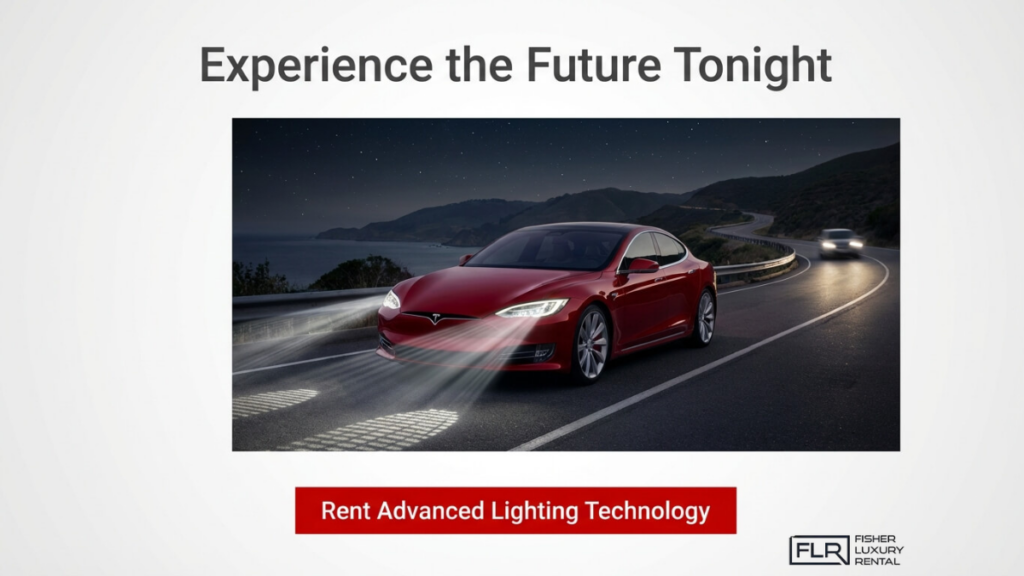
Yes, renting a top-trim supercar with advanced headlights can elevate your driving experience by combining cutting-edge lighting performance with the thrill of piloting an exotic vehicle. Fisher Luxury Rental stocks only top-trim models, including vehicles like the Lamborghini Huracan Spyder and Ferrari 488 Spider, which feature the latest in lighting innovation. Lamborghini has integrated compact LED matrix technology into the Revuelto hybrid supercar, with production and deliveries extending through 2026, according to Autocar. Behind these systems, electronic thermal management and active cooling with nano-encapsulated phase change materials keep headlights performing at peak output during spirited driving. Few experiences match a nighttime cruise through Scottsdale or along the Columbia River Gorge in a supercar whose headlights reshape the road ahead in real time.
What Are the Key Takeaways About Micro LED Headlights and Their Role in 2026 Supercars?
The key takeaways about Micro LED headlights and their role in 2026 supercars center on rapid adoption, measurable market growth, and a clear shift toward intelligent lighting across the premium segment. Seven production vehicle models have officially adopted Micro LED matrix headlights as of early 2026, marking the technology’s transition into premium and upper-mid automotive segments. According to a 2026 LinkedIn market analysis, the automotive Mini and Micro LED market is forecasted to grow at a CAGR of 13.9% from 2026 through 2033. For anyone considering an exotic car rental, this means the supercars available today already carry lighting systems that define the next generation of automotive performance and safety. Fisher Luxury Rental offers a direct way to experience that future firsthand.