A dual-clutch transmission is a gearbox architecture that uses two separate clutches to pre-select gears simultaneously, eliminating the torque interruption found in traditional automatics and delivering shift times measured in milliseconds.
This guide covers how DCT technology works and why supercars use it, the top DCT supercars available today, how performance and driving character compared across brands, what ownership and maintenance actually involve, and how to get behind the wheel of one yourself.
DCTs operate as two gearboxes in one, with odd and even gears on separate driveshafts, and wet-clutch architecture that handles the thermal demands of 800-plus horsepower engines. That mechanical foundation explains why manufacturers like Ferrari, Lamborghini, McLaren, and Porsche have replaced manual gearboxes with DCTs across their flagship models.
The best DCT supercars available today span ten models across six manufacturers, from the Ferrari 296 GTB (the quickest rear-wheel-drive car ever tested by Car and Driver at 2.4 seconds to 60 mph) to the Lamborghini Revuelto’s 1,001-horsepower hybrid system built around a transverse 8-speed DCT. Each model reflects a distinct philosophy in how a dual-clutch system should behave.
On the driving side, DCT character shifts dramatically depending on context: smooth and unobtrusive in city traffic, ferociously direct at full throttle on track, and genuinely interactive when paddle shifters put gear selection in the driver’s hands.
For those weighing ownership, DCT maintenance carries brand-specific service intervals, wet-clutch repair costs, and driving habits that directly affect longevity. Fisher Luxury Rental offers a practical path to experience these platforms firsthand before any purchase decision.
What Is a Dual-Clutch Transmission and Why Do Supercars Use It?
A dual-clutch transmission is a gearbox architecture that uses two separate clutches to pre-select gears simultaneously, eliminating the torque interruption found in traditional automatics. The sections below cover how DCTs differ mechanically from conventional automatics and why supercar manufacturers consistently choose them over manual gearboxes.
How Does a Dual-Clutch Transmission Differ from a Traditional Automatic?
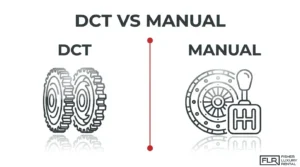
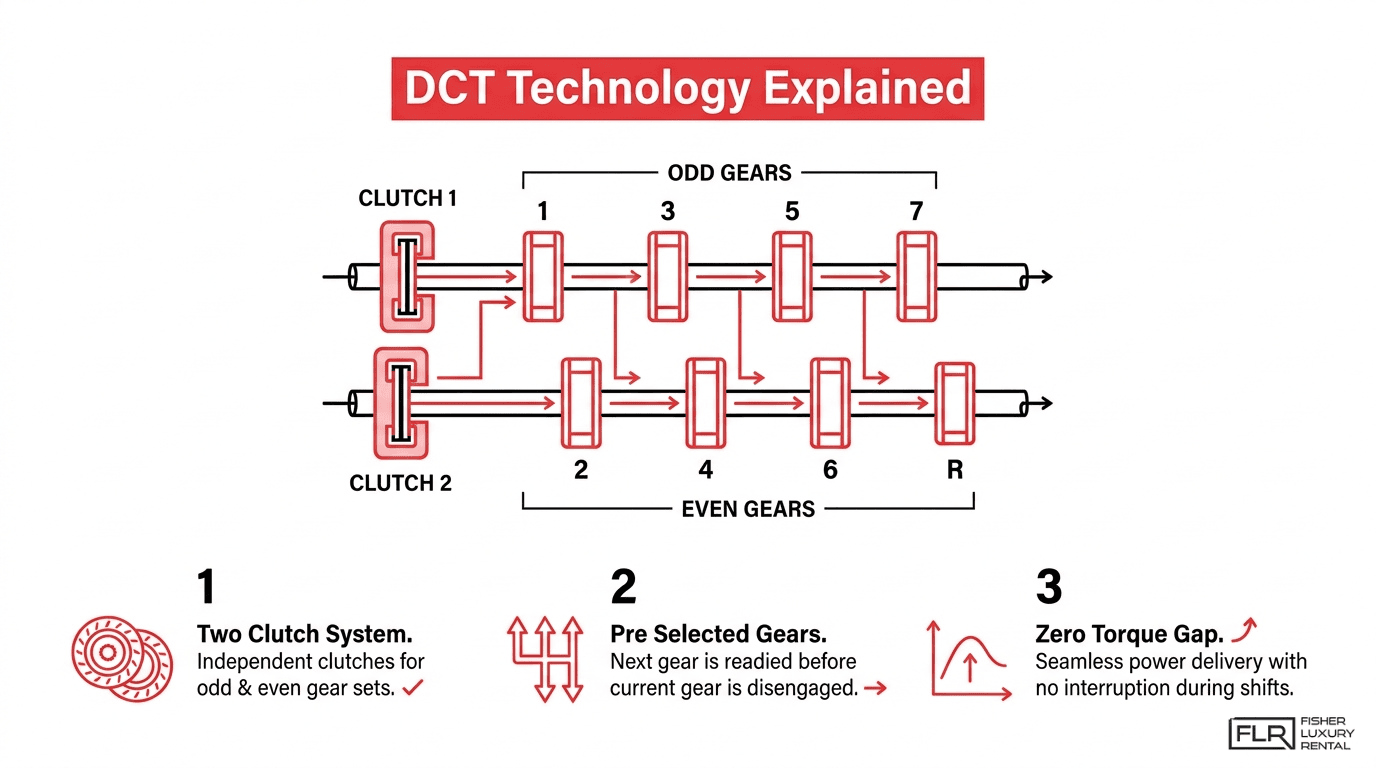
A dual-clutch transmission differs from a traditional automatic by operating as two gearboxes in one, with separate driveshafts handling odd gears (1st, 3rd, 5th, 7th) and even gears (2nd, 4th, 6th). While the car runs in a given gear, the next gear is already pre-selected via a dog gear on the second shaft. Shifting happens within milliseconds by simply opening one clutch while closing the other, with no torque interruption.
According to Mat Foundry Group, the primary purpose of this design is to reduce the gap between gear shifts to a minimum, improving both performance and fuel efficiency compared to traditional torque-converter automatics. High-performance applications typically use multi-plate wet clutches rather than single-plate dry clutches, because wet units dissipate heat far more effectively under sustained load. This wet-clutch architecture is precisely what makes DCTs suitable for supercars like the Ferrari 296 GTB and Lamborghini Revuelto, where thermal demands would overwhelm a dry-clutch system.
Why Do Supercar Manufacturers Prefer DCT Over Manual Gearboxes?
Supercar manufacturers prefer DCT over manual gearboxes because DCTs deliver faster shifts, better fuel efficiency, and superior driver control. According to The Autopian, modern automatics are over 5% more fuel efficient than manual transmissions as of 2022, while also executing gear changes faster than any human hand and foot combination can manage.
Beyond raw numbers, a well-calibrated DCT like Porsche’s PDK or Ferrari’s 8-speed unit removes the skill ceiling from shifting, letting drivers focus entirely on braking, cornering, and throttle management. For a supercar producing 800 to 1,000 horsepower, a missed gear shift in a manual is not merely inconvenient; it is a meaningful performance and safety liability. DCT makes that variable irrelevant.
Which Are the Best DCT Supercars Currently Available?
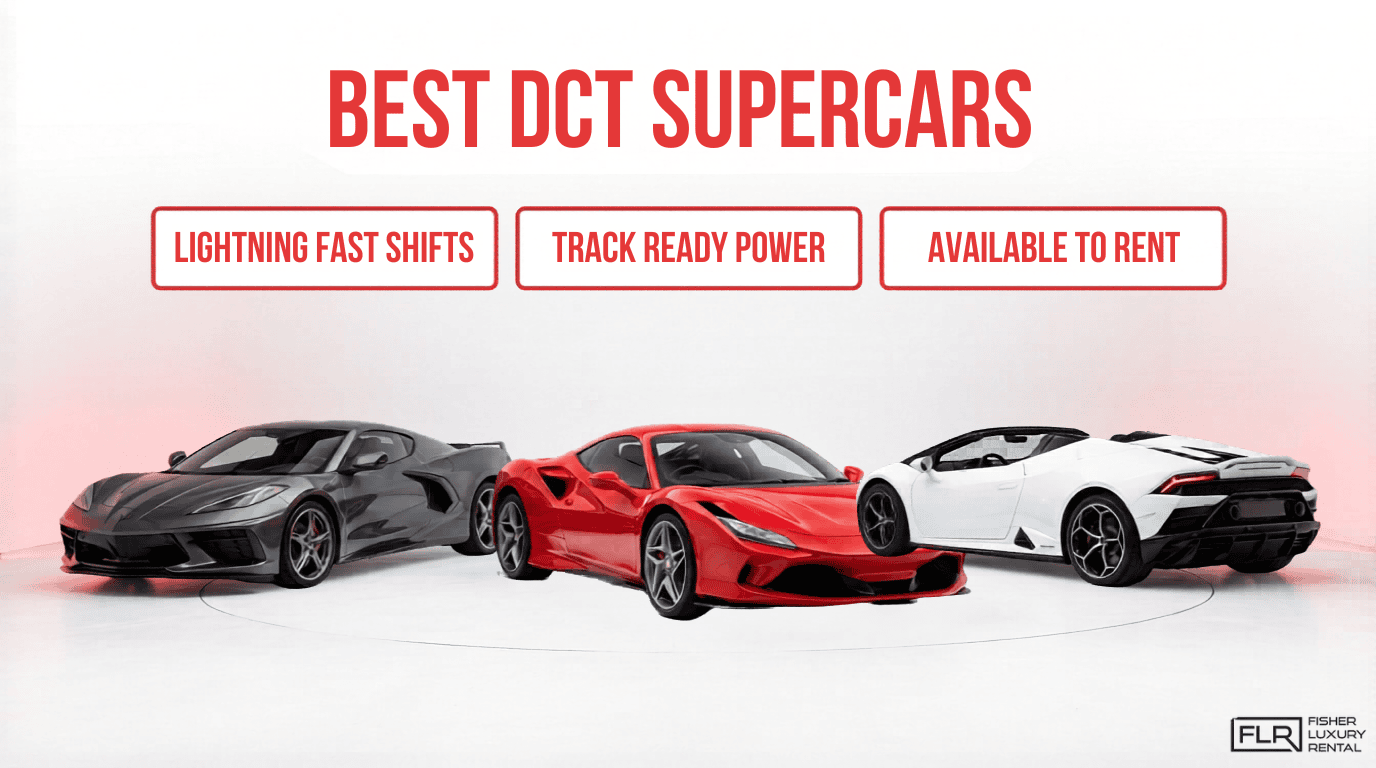
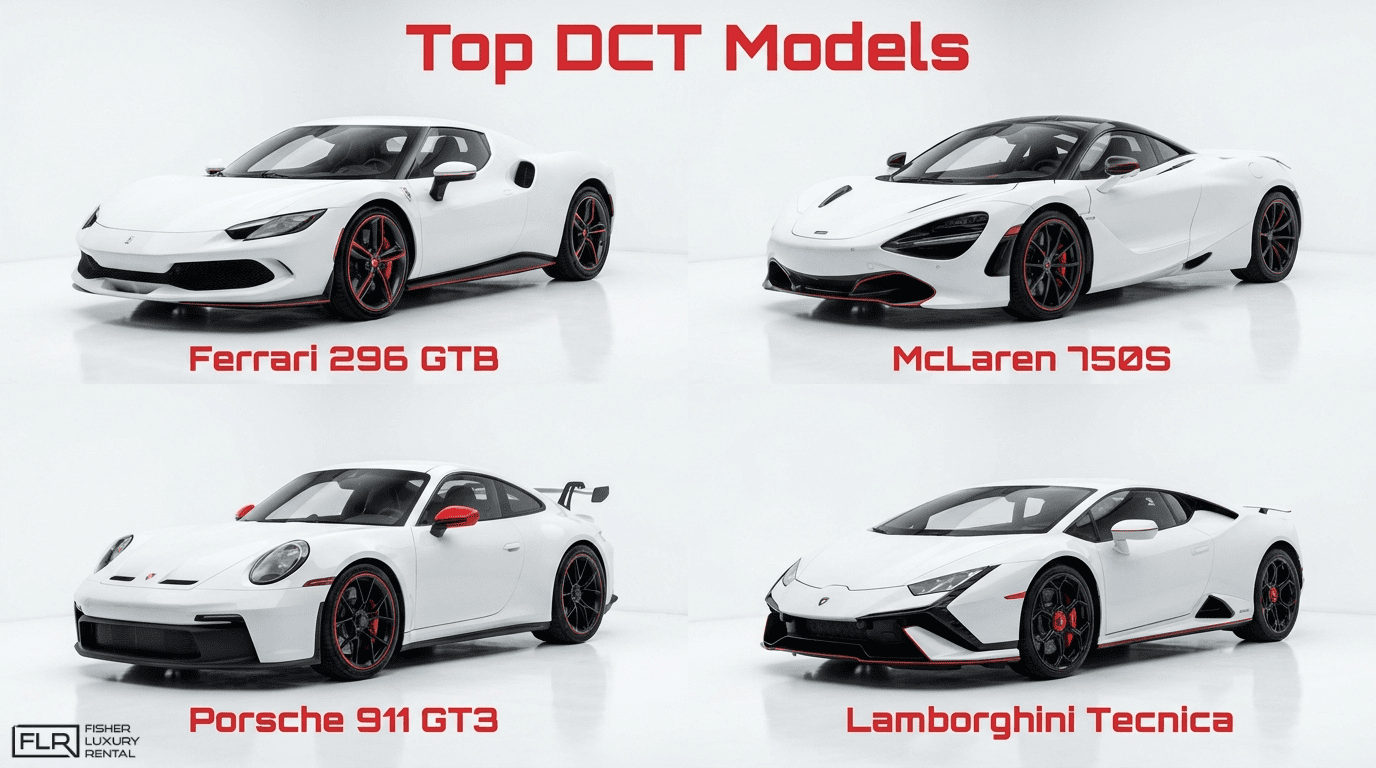
The best DCT supercars currently available span Ferrari, Lamborghini, McLaren, Porsche, Audi, and Nissan. Each model below pairs a distinct dual-clutch system with supercar-level performance, offering benchmarks in shift speed, acceleration, and driving character.
Ferrari 296 GTB
The Ferrari 296 GTB is an 8-speed dual-clutch supercar and the quickest rear-wheel-drive car ever tested by Car and Driver, reaching 60 mph in 2.4 seconds and completing the quarter-mile in 9.7 seconds at 150 mph. Its turbocharged hybrid six-cylinder produces 819 bhp, with Top Gear describing the complete package as a “deeply, furiously complex car.” For enthusiasts prioritizing raw, rear-drive acceleration, the 296 GTB represents the current pinnacle of what a DCT-equipped mid-engine Ferrari can deliver.
Lamborghini Huracán Tecnica
The Lamborghini Huracán Tecnica uses a 7-speed dual-clutch transmission that adjusts shift characteristics based on the selected ANIMA driving mode: Strada, Sport, or Corsa. According to Road and Track, this mode-dependent behavior meaningfully transforms the car’s personality, making it docile in Strada and aggressive in Corsa. That adaptability is what makes the Tecnica’s DCT genuinely impressive across everyday and performance driving contexts.
McLaren 750S
The McLaren 750S features a 7-speed Seamless Shift Gearbox with shift maps recalibrated for snappier response and a final drive ratio 15 percent shorter than its predecessor, the 720S. According to Car Magazine, these changes sharpen top-gear response noticeably. Jethro Bovingdon of Evo Magazine called the paddle-shift box a “delight,” crediting it as central to the car’s “organ-rearranging” 2.8-second 0-62 mph time.
Porsche 911 GT3
The Porsche 911 GT3 pairs a naturally aspirated flat-six with a 7-speed PDK featuring seven short gear ratios optimized specifically for track performance, with the 7th gear ratio set at 0.84. This configuration prioritizes acceleration over top-speed cruising. Porsche’s PDK is widely regarded as one of the benchmark dual-clutch systems in motorsport-derived road cars.
Ferrari SF90 Stradale
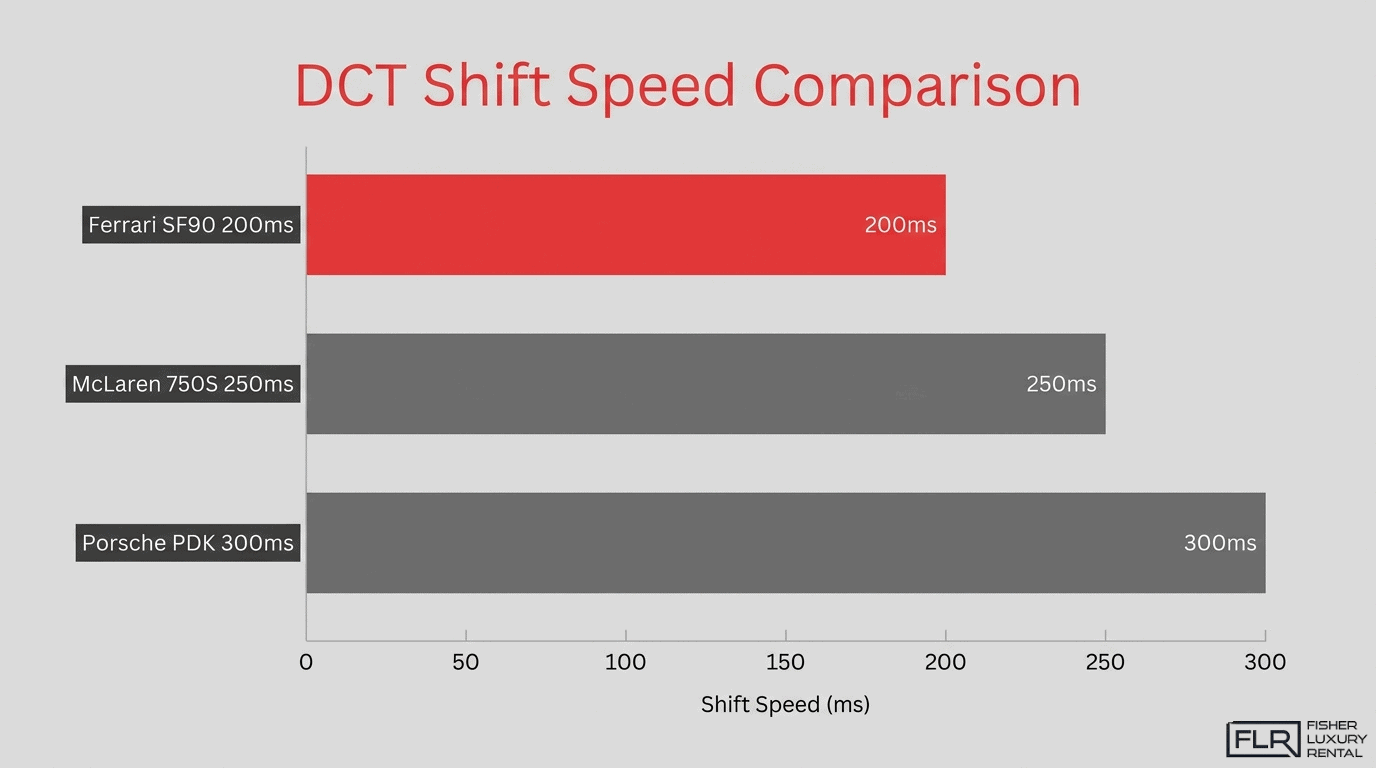
The Ferrari SF90 Stradale uses an 8-speed dual-clutch transmission that is 10 kg lighter and more compact than Ferrari’s previous 7-speed units, enabling a 0-62 mph time of 2.5 seconds and a top speed of 211 mph. According to Ferrari, this transmission shifts in approximately 200 milliseconds, which is 30% faster than previous models. The weight reduction combined with that shift speed makes the SF90’s DCT a genuine engineering achievement in hybrid supercar design.
Lamborghini Revuelto
The Lamborghini Revuelto is equipped with a transverse 8-speed dual-clutch transmission mounted behind its V12 engine, a first for Lamborghini’s V12 lineup. This layout optimizes weight distribution within the car’s hybrid architecture and works alongside three electric motors to produce 1001 horsepower combined.
McLaren Artura
The McLaren Artura features an 8-speed Seamless Shift Gearbox (SSG) with an unconventional design: it has no physical reverse gear. According to Motor Authority, the electric motor reverses the car by spinning in the opposite direction, eliminating a traditional mechanical component and reducing system complexity.
Audi R8 Performance
The Audi R8 Performance RWD uses a seven-speed S-tronic dual-clutch transmission that enables a 0-60 mph sprint in 3.6 seconds and a top speed of 204 mph. The S-tronic system channels the naturally aspirated V10’s output directly to the rear wheels, making the R8 one of the most driver-focused DCT experiences in its class.
Porsche 718 Cayman GT4 RS
The Porsche 718 Cayman GT4 RS uses a 7-speed PDK with extremely short ratios. According to Porsche Newsroom, this configuration allowed the GT4 RS to lap the Nürburgring Nordschleife in 7:09.300 minutes, over 23 seconds faster than the standard GT4. No other mid-engine sports car in this price segment demonstrates more clearly what a purpose-built PDK calibration can accomplish on track.
Nissan GT-R Nismo
The 2024 Nissan GT-R NISMO uses a 6-speed dual-clutch transmission paired with an advanced all-wheel-drive system, with a starting price of approximately $220,990, according to Nissan USA. While older in platform than its European counterparts, the GT-R NISMO’s DCT-AWD combination remains a technically sophisticated setup that has defined the car’s legendary launch performance for over a decade.
How Does DCT Performance Compare Across Supercar Brands?
DCT performance varies significantly across Ferrari, Lamborghini, McLaren, and Porsche, with each brand tuning shift speed, clutch architecture, and gear ratios to match its performance philosophy. The H3s below break down each brand’s defining DCT characteristics.
How Fast Do Ferrari DCT Supercars Shift?
Ferrari DCT supercars shift with some of the fastest response times in the supercar segment. The SF90 Stradale’s 8-speed dual-clutch unit delivers a shift time of approximately 200 milliseconds, 30% faster than previous Ferrari models. The 296 GTB pairs its 8-speed DCT with a turbo-hybrid six-cylinder to reach 60 mph in 2.4 seconds, making it the quickest rear-wheel-drive car ever tested by Car and Driver. Ferrari recommends servicing DCT-equipped models annually or every 12,500 miles to sustain that level of performance.
How Does Lamborghini’s DCT Compare to McLaren’s?
Lamborghini’s DCT and McLaren’s SSG (Seamless Shift Gearbox) are both dual-clutch systems, but they differ in architecture and integration. Lamborghini’s Huracán Tecnica uses a 7-speed DCT that adjusts shift character across three ANIMA driving modes: Strada, Sport, and Corsa. The Revuelto escalates this with an 8-speed transverse DCT working alongside three electric motors for 1,001 horsepower. McLaren’s 750S uses a 7-speed SSG recalibrated for snappier shifts, with a final drive ratio 15% shorter than the 720S. The Artura’s SSG takes a different approach entirely, omitting a physical reverse gear and relying on the electric motor instead. In practice, McLaren’s SSG feels more driver-focused and immediate, while Lamborghini’s DCT prioritizes drama and mode-driven character.
What Makes Porsche PDK Stand Out Among Dual-Clutch Systems?
Porsche PDK stands out among dual-clutch systems for its predictive intelligence and track-tuned gear architecture. Often described as “borderline telepathic,” PDK anticipates driver intent and executes upshifts and downshifts faster than any manual or torque-converter automatic. The 911 GT3’s PDK features seven short gear ratios optimized for track use, with a 7th gear ratio of 0.84. The 718 Cayman GT4 RS’s 7-speed PDK contributed to a Nürburgring Nordschleife lap of 7:09.300, over 23 seconds quicker than the standard GT4. PDK is also marketed under consumer search terms such as “twin-clutch” and “double-clutch,” reinforcing its broad recognition across enthusiast audiences.
What Does a DCT Feel Like When Driving a Supercar?
A DCT feels distinctly different depending on context: smooth and manageable in traffic, ferociously direct at full throttle, and deeply involved when you take manual control via the paddles. The following sections cover each of these three driving scenarios.
How Does a DCT Behave in Everyday City Driving?
A DCT behaves smoothly in everyday city driving, though it requires a slightly different approach than a traditional automatic. Low-speed crawling, such as inching through traffic with minimal throttle input, can cause the first-gear clutch to slip under repeated engagement. Giving the throttle a deliberate, light input rather than relying on pure creep keeps the transmission operating as intended and minimizes unnecessary clutch wear. For most city driving situations, the DCT simply fades into the background, holding gears predictably and shifting without fuss.
How Does a DCT Perform on a Track at Full Throttle?
A DCT performs at its absolute best on a track at full throttle, where its gear-pre-selection architecture eliminates hesitation between ratios entirely. The Porsche 911 GT3’s (992) PDK transmission illustrates this well: it uses seven short gear ratios, with a 7th gear ratio of 0.84, prioritizing rapid sequential acceleration over top-speed efficiency. According to Excellence Magazine, the Porsche PDK has demonstrated high reliability even under sustained race conditions, with some units completing track use without reported issues. In this environment, shifts feel like controlled, instantaneous impulses rather than mechanical transitions.
How Do Paddle Shifters Change the DCT Driving Experience?
Paddle shifters change the DCT driving experience by placing gear selection entirely in the driver’s hands, transforming an otherwise automated system into something that feels genuinely interactive. Each pull of a paddle delivers an immediate, physical response: a sharp rev change and a noticeable forward surge as the next gear engages. In automatic mode, the transmission anticipates shifts; in manual paddle mode, the driver dictates the exact moment of each ratio change, which adds a clear layer of driver engagement that traditional automatics cannot replicate. For enthusiasts, this is what bridges the gap between a pure manual and a fully automated gearbox.
Are DCT Supercars Faster Than Manual Supercars?
DCT supercars are faster than manual supercars in nearly every measurable performance metric, including acceleration, lap times, and shift speed. Pre-selecting the next gear eliminates the torque interruption that manual clutch engagement always introduces, closing the gap between shifts to milliseconds.
According to Engineering Explained, Porsche’s PDK transmission is “borderline telepathic” in its ability to predict driver intent and execute shifts faster than any manual or torque converter automatic on the track. That responsiveness translates directly into quicker 0-60 times and shorter lap splits that no human-operated clutch can match consistently.
The speed advantage of a DCT is not a matter of opinion at this point; the data from every major supercar manufacturer confirms it. For drivers who value pure performance over the tactile ritual of a manual gearbox, a DCT supercar is the objectively faster choice.
How Reliable Are Dual-Clutch Transmissions in Exotic Cars?
Dual-clutch transmissions in exotic cars are generally highly reliable when properly maintained and driven correctly. Reliability varies by brand engineering, usage conditions, and service habits. The sections below examine wet versus dry clutch durability, heat management, and how real-world track use affects longevity.
How Durable Are Wet-Clutch DCTs Compared to Dry-Clutch Systems?
Wet-clutch DCTs are more durable than dry-clutch systems in high-performance applications because multi-plate wet clutches dissipate heat more effectively under sustained high-torque loads. Dry-clutch designs, common in lower-output vehicles, are more susceptible to overheating during aggressive or repeated launches. For exotic cars producing 500 to 1,000-plus horsepower, wet-clutch architecture is the engineering standard precisely because durability depends on thermal management under extreme stress.
Do DCTs Hold Up Under Track Conditions?
DCTs hold up well under track conditions, particularly in well-engineered exotic applications. According to Excellence Magazine, the Porsche PDK transmission has been reported as highly reliable even in race conditions, with some units performing without issues throughout extended track use. This track-proven durability reflects the maturity of modern DCT engineering, and it is one reason manufacturers like Porsche, Ferrari, and Lamborghini trust DCTs over traditional automatics for their highest-performance models.
What Causes DCT Wear in Exotic Cars?
DCT wear in exotic cars is most commonly caused by low-speed clutch slippage, repeated aggressive launches, and overheating from insufficient cooling. Creeping forward without applying the throttle increases wear on the first-gear clutch due to sustained slipping, a behavior some modern DCT units electronically prevent by requiring active gas pedal input to advance, according to The Drive. Avoiding stop-and-go traffic abuse and following manufacturer service intervals are the most practical steps owners can take to protect clutch longevity.
What Should You Know About DCT Maintenance Costs in Supercars?
DCT maintenance costs in supercars are higher than those for standard vehicles, driven by specialized fluid requirements, clutch pack servicing, and brand-specific service intervals. Key factors include fluid change schedules, clutch wear patterns, and manufacturer-mandated service visits.
What Are the Typical DCT Service Intervals for Supercars?
The typical DCT service intervals for supercars vary by manufacturer but follow demanding schedules. Ferrari recommends servicing its DCT-equipped supercars annually or every 12,500 miles to maintain performance and longevity. For Porsche’s PDK, clutch fluid requires replacement every 48,000 miles, though no official service interval exists for the clutch packs themselves. Skipping these intervals risks accelerated wear on components that already operate under extreme thermal and mechanical stress, making adherence non-negotiable for owners of high-performance machines.
What Driving Habits Increase DCT Wear and Costs?
Driving habits that increase DCT wear include low-speed clutch slipping, aggressive launches, and stop-and-go traffic in sport mode. Creeping forward with the foot off the gas increases wear on the first-gear clutch due to slipping, a behavior some modern units electronically prevent by requiring gas pedal input to advance. Repeated standing starts and track use also elevate clutch pack temperatures significantly. In practice, owners who primarily use their supercars on track days should budget for more frequent inspections than the standard service schedule suggests.
How Do DCT Repair Costs Compare to Other Transmission Types?
DCT repair costs in supercars exceed those of traditional automatics because replacement parts are brand-specific, labor-intensive to source, and require specialist technicians. Multi-plate wet clutch systems, which are common in high-performance supercars due to superior heat dissipation, carry higher replacement costs than single-plate dry clutch alternatives. Unlike a standard torque-converter automatic where rebuild kits are widely available, DCT components for models like the Ferrari 296 GTB or Lamborghini Revuelto are often sourced exclusively through the manufacturer’s dealer network, adding significant cost to any repair.
Is a DCT Supercar Better Than a Single-Clutch Automated Supercar?
A DCT supercar is better than a single-clutch automated supercar in nearly every measurable performance category. Single-clutch automated manuals interrupt torque during shifts, producing the jerky, hesitant gear changes that defined early supercars like the Ferrari F430’s F1 gearbox. DCTs eliminate that interruption entirely by pre-selecting the next gear on a second shaft, delivering seamless, continuous acceleration.
The performance gap is substantial. The Ferrari SF90 Stradale’s 8-speed DCT shifts in approximately 200 milliseconds, 30% faster than previous Ferrari units. The Ferrari 296 GTB, using the same 8-speed DCT architecture, reaches 60 mph in 2.4 seconds, making it the quickest rear-wheel-drive car ever tested by Car and Driver. No production single-clutch automated supercar matches those figures.
Beyond raw speed, DCTs offer superior refinement at low speeds, where single-clutch systems are notoriously clumsy. For everyday usability combined with track-level performance, the DCT wins decisively. Single-clutch systems are largely a relic; every major supercar manufacturer has since migrated to DCT technology for precisely this reason.
How Can You Experience a DCT Supercar Firsthand?
Experiencing a DCT supercar firsthand is most accessible through a reputable exotic car rental company. The sections below cover Fisher Luxury Rental’s available fleet and the key takeaways from this guide.
Can You Rent DCT Supercars from Fisher Luxury Rental?
Yes, you can rent DCT supercars from Fisher Luxury Rental, with options including the McLaren 720S, Ferrari 488 Spider, Audi R8 Spyder, and Porsche 911 Carrera S, all available in Phoenix, AZ and Portland, OR. Rental access to these machines has never been more in demand. The global luxury supercar rental market was valued at USD 12.2 billion in 2025 and is projected to reach USD 21.4 billion by 2033, according to Real Time Data Stats. For most enthusiasts, renting before buying is the single smartest way to experience how a DCT performs under real-world conditions, not just on paper.
What Are the Key Takeaways About the Best DCT Supercars?
The key takeaways about the best DCT supercars are that dual-clutch technology consistently delivers faster shifts, stronger acceleration, and greater driver control than any alternative transmission type. The top models worth knowing include:
- The Ferrari 296 GTB and SF90 Stradale lead in outright shift speed and hybrid integration.
- The Lamborghini Huracán Tecnica and Revuelto offer mode-adaptive DCT behavior across road and track use.
- The McLaren 750S and Artura prioritize seamless, driver-focused paddle response.
- The Porsche 911 GT3 and 718 Cayman GT4 RS deliver PDK precision optimized for track environments.
- The Nissan GT-R NISMO and Audi R8 provide accessible DCT performance at a comparatively lower price point.
Fisher Luxury Rental makes several of these platforms available to drive today, no ownership required.