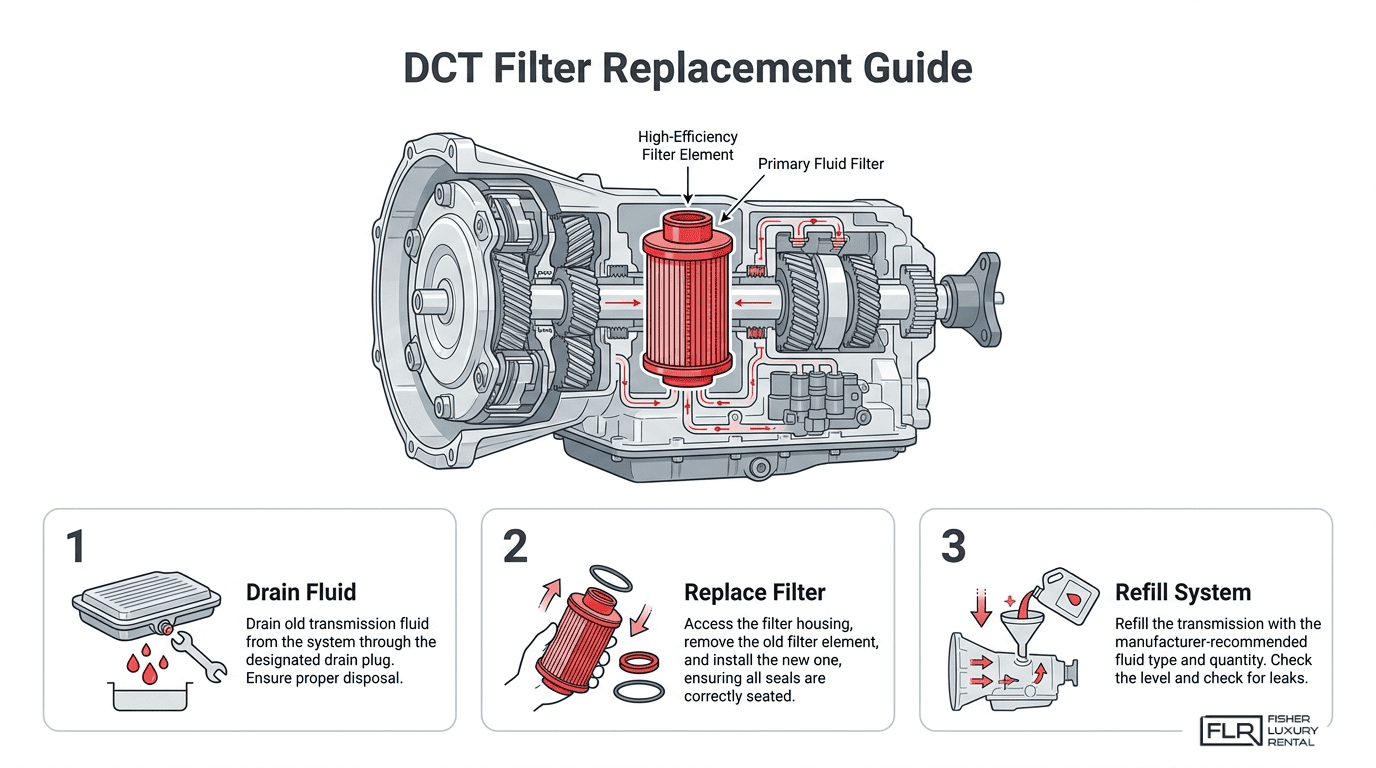
A DCT filter is a transmission component that removes metallic debris, clutch particles, and contaminants from the hydraulic fluid circulating through a dual-clutch transmission. Keeping it clean protects the solenoids, valve bodies, and clutch packs that make precise, rapid gear changes possible.
This guide covers what the DCT filter does and how to recognize failure, the tools and parts the job requires, the full step-by-step replacement procedure, post-service verification, platform-specific differences across BMW, Porsche, Volkswagen, and Ferrari, common mistakes that cause transmission damage, cost comparisons between DIY and dealer service, and how Fisher Luxury Rental removes the maintenance burden entirely.
The filter’s role goes beyond basic filtration: in a wet DCT, the hydraulic fluid both lubricates clutch packs and actuates gear shifts, so a clogged filter degrades shift precision and accelerates wear throughout the system. Recognizing symptoms early, including rough shifts, shudder at low speed, and delayed engagement, alongside mileage-based intervals and diagnostic scan confirmation, determines whether a service is proactive or reactive.
The replacement procedure itself follows a precise sequence from draining fluid and removing the filter housing to installing a new filter with a fresh O-ring, torquing fasteners to platform-specific values, and verifying the fluid level at the correct temperature using a compatible scan tool. Each of those steps carries distinct failure points that the sections below address directly.
Service procedures, fluid specifications, and diagnostic requirements differ substantially across BMW M models, Porsche PDK systems, Volkswagen DSG transmissions, and Ferrari F1 DCT platforms, and the cost difference between doing it yourself and paying a dealer can reach several hundred dollars depending on the vehicle and what tools you already own.
What Is a DCT Filter and Why Does It Matter?
A DCT filter is a transmission component that removes metallic debris, clutch particles, and contaminants from the hydraulic fluid circulating through a dual-clutch transmission. The sections below cover the filter’s role in transmission performance and the consequences of neglecting it.
What Role Does the DCT Filter Play in Transmission Performance?
The DCT filter plays the role of protecting the transmission’s hydraulic circuits, solenoids, and clutch packs by keeping the fluid clean and free of wear particles. In a wet DCT, hydraulic fluid both lubricates the clutch packs and actuates gear shifts, so any contamination directly degrades shift precision and component life.
The filter sits between the fluid sump and the hydraulic control unit, trapping metal fines before they reach sensitive valve bodies and solenoids. According to Porsche factory specifications, the PDK transmission service, which includes the Pentosin FFL-3 fluid, filter, and pan, is required every 40,000 miles, illustrating how seriously manufacturers treat filter condition. Considering that Chevrolet dealers can charge approximately $600 for a DCT filter change alone, staying on schedule matters both mechanically and financially.
What Happens When a DCT Filter Becomes Clogged or Worn?
A clogged DCT filter starves the hydraulic system of adequate fluid flow, causing erratic or delayed gear changes, shuddering during low-speed engagement, and increased clutch slippage. As restriction builds, the hydraulic control unit cannot generate consistent pressure, and solenoids begin to operate outside their calibrated parameters.
The downstream effects escalate quickly. Contaminated fluid carrying metallic particles circulates back through the clutch packs, accelerating friction material wear and scoring precision-machined valve bores. In advanced cases, sustained oil starvation can trigger limp mode or cause irreversible clutch pack failure, turning a straightforward filter service into a transmission rebuild. From a maintenance perspective, a worn filter is rarely a standalone problem: it signals that the fluid has also degraded and must be replaced simultaneously.
How Do You Know When Your DCT Filter Needs Replacement?
Knowing when to replace a DCT filter involves reading symptom patterns, following mileage-based intervals, and using diagnostic tools to confirm transmission health. The sections below cover the key warning signs, service schedules, and scan-based confirmation methods.
What Are the Common Symptoms of a Failing DCT Filter?
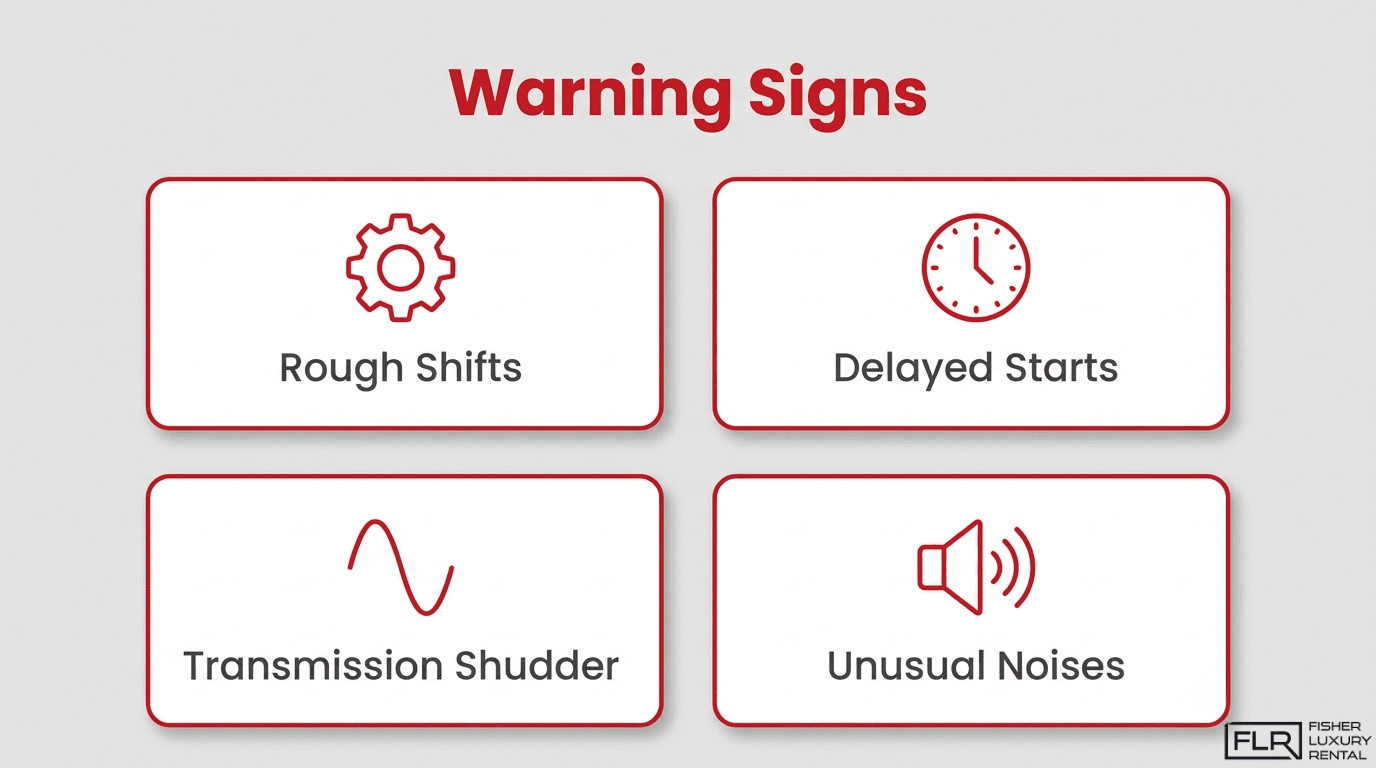
The common symptoms of a failing DCT filter include rough or hesitant gear shifts, delayed engagement when pulling away from a stop, transmission shudder at low speeds, and unusual whining noises under load. A clogged filter restricts fluid flow to the clutch packs and hydraulic circuits, causing pressure irregularities that the transmission control unit registers as faults. In some cases, the gearbox warning light illuminates before the driver notices any mechanical change. Slipping between gears or an inability to hold a gear under hard acceleration are late-stage signs that should prompt immediate inspection rather than a scheduled service.
How Often Should You Replace a DCT Filter by Mileage?
DCT filter replacement intervals vary by manufacturer, but a practical baseline is every 40,000 miles for most dual-clutch systems under normal driving conditions. According to Rosso Service, most exotic cars with DCTs should be serviced at least once per year regardless of mileage to preserve performance and protect long-term investment value. Hard driving, track use, or stop-and-go traffic accelerates fluid and filter degradation significantly, often cutting that interval in half. Relying solely on odometer readings without factoring in driving conditions is one of the most common maintenance mistakes owners make with high-performance transmissions.
Can a Diagnostic Scan Confirm DCT Filter Issues?
Yes, a diagnostic scan can confirm DCT filter issues by reading transmission fault codes, monitoring fluid pressure data, and flagging abnormal clutch engagement patterns stored in the transmission control module. Manufacturer-specific tools such as Porsche PIWIS or VCDS for Volkswagen DSG systems provide real-time parameter data that generic OBD-II scanners cannot access. Pressure-related fault codes or temperature anomalies logged during normal operation often point directly to restricted fluid flow caused by a contaminated filter. A scan does not replace a physical inspection, but it narrows the diagnosis before any components are removed.
What Tools and Parts Do You Need for a DCT Filter Replacement?
The tools and parts you need for a DCT filter replacement vary by vehicle platform, but most jobs share a common set of requirements. The sections below cover specific tools, filter selection, and OEM fluid specifications.
What Specific Tools Are Required for the Job?
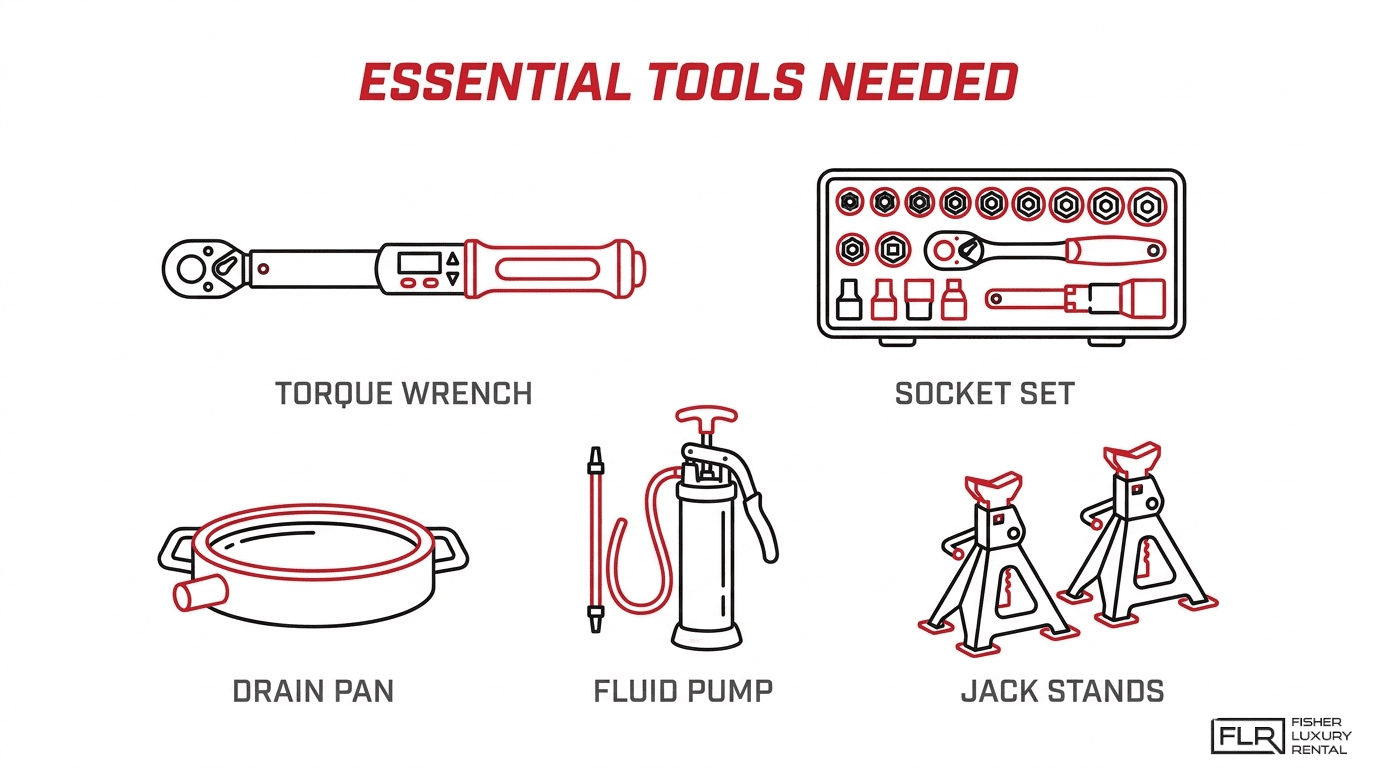
The specific tools required for the job include a floor jack and jack stands, a torque wrench, drain pans, a fluid pump, and a socket set. Most DCT filter jobs also require:
- A calibrated torque wrench (capable of low Nm values for delicate fasteners)
- Metric socket set and extensions
- A drain pan with adequate capacity
- A fluid transfer pump or syringe for refilling
- Shop rags and nitrile gloves for fluid containment
- A scan tool compatible with your vehicle (such as VCDS for VAG platforms or PIWIS for Porsche)
A scan tool is not optional on most modern platforms. Without one, you cannot verify fluid temperature during the level check, which makes accurate refilling impossible.
What Type of Replacement Filter Should You Use?
The replacement filter you should use is always an OEM or OEM-equivalent unit matched to your specific transmission model and vehicle year. Aftermarket filters may differ in micron rating, bypass valve calibration, or housing geometry, and an improper fit risks seal failure. Always cross-reference your vehicle’s VIN against the manufacturer parts catalog to confirm the correct filter part number before ordering.
What DCT Fluid Specifications Should You Follow?
The DCT fluid specifications you should follow are those published by your vehicle’s manufacturer for your exact model year and transmission variant. Different platforms use chemically distinct fluids that are not interchangeable:
| Platform | Recommended Fluid | Service Interval |
| Volkswagen 6-speed DSG | VW-approved DSG fluid | Every 40,000 miles |
| Porsche PDK | Pentosin FFL-3 | Every 40,000 miles |
| Ferrari 458 DCT | Shell TF 0870 (gearbox) / Shell DCT-F3 (clutch/hydraulics) | Per manufacturer schedule |
| BMW M-DCT | BMW-specified M-DCT fluid | Factory “lifetime fill” |
According to technical forum documentation referencing Porsche factory specifications, PDK service requires Pentosin FFL-3 fluid alongside filter and pan replacement. Using any fluid outside the OEM specification introduces chemistry incompatibilities that degrade clutch pack materials and shorten transmission life. This makes fluid selection arguably the single highest-stakes decision in the entire service procedure.
How Do You Prepare Your Vehicle Before Starting the Replacement?
Preparing your vehicle correctly before a DCT filter replacement prevents fluid spills, ensures accurate fluid level checks, and protects surrounding components. The steps below cover safe lifting, transmission warm-up, and spill protection.
How Do You Safely Lift and Support the Vehicle?
You safely lift and support the vehicle by positioning a floor jack under the manufacturer-specified jack points, then securing the chassis on rated jack stands before crawling underneath. Never rely on a floor jack alone; stands prevent catastrophic drops. Chock the rear wheels and engage the parking brake before lifting. For low-slung performance vehicles, use low-profile jacks to avoid scraping the underbody.
Should You Warm Up the Transmission Before Draining Fluid?
Yes, you should warm up the transmission before draining fluid, because heat reduces viscosity and allows old fluid to drain more completely. On Porsche PDK models, the Porsche PIWIS diagnostic system is required to activate “Fill Mode” and monitor real-time transmission fluid temperature throughout the service procedure. Similarly, Volkswagen DSG services require temperature monitoring, with the fluid level verified in a specific temperature window. Draining cold fluid leaves residual contaminants behind, which defeats much of the purpose of the service.
How Do You Protect Surrounding Components from Fluid Spills?
You protect surrounding components from fluid spills by laying absorbent shop towels and a wide drain pan beneath the transmission before loosening any plug. Tape plastic sheeting over brake calipers, CV boots, and exhaust components, as DCT fluid causes rubber degradation on contact. Ferrari DCT maintenance, for example, often requires the DEIS (Diagnostic Engineering and Information System) to perform self-acquisition procedures after fluid replacement, meaning a messy job can introduce secondary issues that require a reset. Keep brake cleaner and clean rags nearby to contain any overflow immediately.
How Do You Remove and Replace the DCT Filter Step by Step?
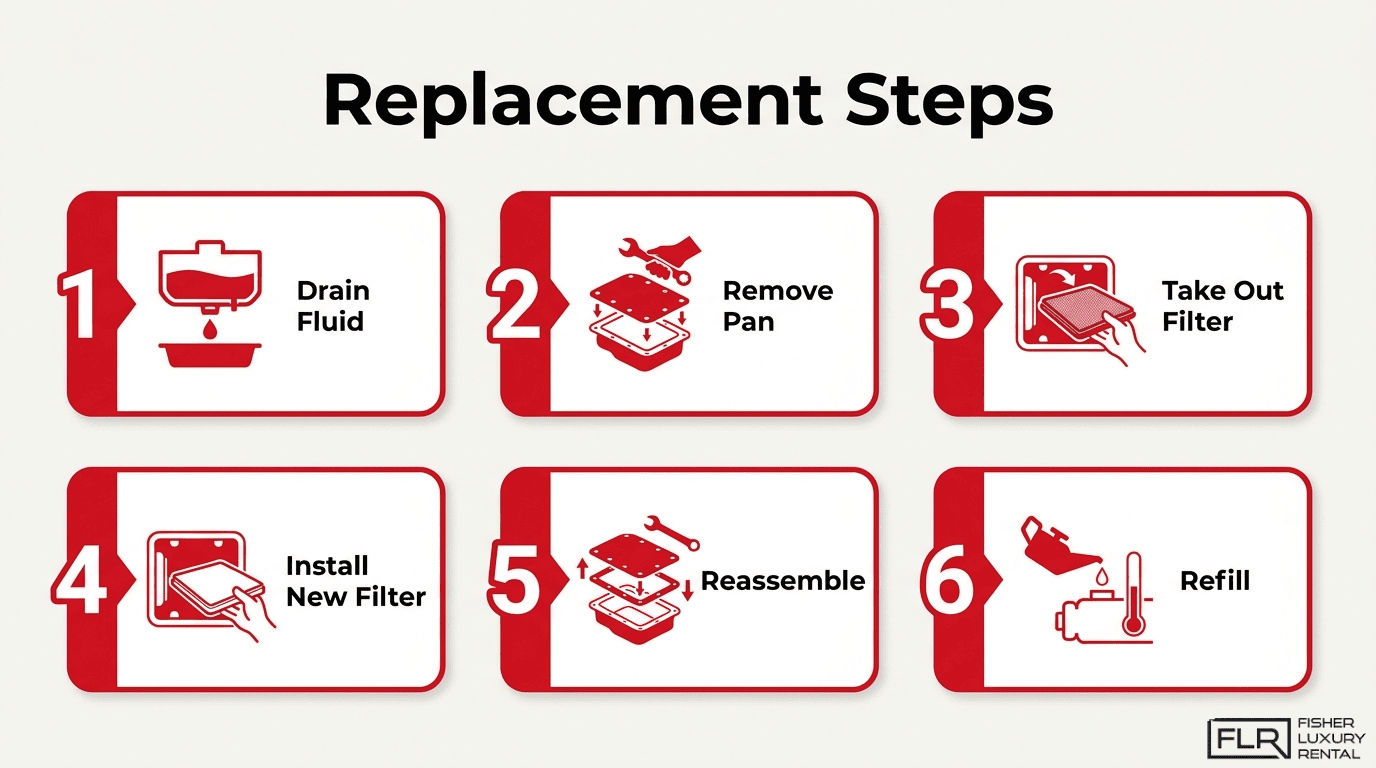
Replacing a DCT filter follows a precise sequence: drain the fluid, access and remove the filter housing, swap the filter, reassemble to torque spec, and refill with fresh fluid. Each step below covers the critical technique for that stage.
How Do You Drain the Existing DCT Fluid?
To drain the existing DCT fluid, position a drain pan beneath the transmission and locate the drain plug on the bottom of the transmission sump. Loosen the plug carefully, allowing all fluid to flow out completely before removing the plug entirely. Inspect the drain plug’s sealing washer; most manufacturers require a new crush washer at every service to prevent seepage. Allow full drainage before proceeding.
How Do You Access and Remove the DCT Filter Housing?
To access and remove the DCT filter housing, unbolt the transmission pan after the fluid has fully drained. Most DCT pans are secured with evenly spaced bolts around the perimeter. Lower the pan slowly, as residual fluid often remains inside. The filter housing or filter assembly mounts directly to the valve body or sump floor, typically retained by a small number of bolts or a locking collar depending on the platform.
How Do You Remove the Old Filter Without Damaging Seals?
To remove the old filter without damaging seals, grip the filter body firmly and pull with steady, even pressure rather than twisting aggressively. Many DCT filters seat with an O-ring that provides resistance. Use a pick tool to carefully loosen the O-ring groove if the filter resists. Never use a pry bar against the sealing surface, as scratching the bore will cause leaks with the replacement filter installed.
How Do You Install the New DCT Filter Correctly?
To install the new DCT filter correctly, lightly lubricate the replacement O-ring with fresh DCT fluid before insertion. Align the filter with its locating tab or directional arrow, then press firmly until fully seated. A distinct click or flush-seating confirms correct placement. Never reuse the old O-ring, even if it appears undamaged; O-ring degradation is often invisible and a fresh seal prevents future leaks.
How Do You Reassemble the Filter Housing and Torque to Spec?
To reassemble the filter housing and torque to spec, reinstall the transmission pan with a new gasket, threading all bolts finger-tight before applying torque in a crossing pattern. Per M5POST forum documentation, the BMW M5 (F10) drain plug torque is 8 Nm (5.9 ft-lb), a value printed directly on the OEM plug. For the Volkswagen DSG platform, the drain plug torques to 45 Nm (33 ft-lbs), while the plastic snorkel requires only 3 Nm (2.25 ft-lbs). Always consult your vehicle’s service documentation for platform-specific values; under-tightening causes leaks and over-tightening cracks aluminum sumps.
How Do You Refill the Transmission with Fresh DCT Fluid?
To refill the transmission with fresh DCT fluid, add the manufacturer-specified fluid through the fill port until fluid reaches the overflow tube or the level specified in your service manual. Although BMW M-DCT fluid carries a factory “lifetime fill” designation with no standard service interval, enthusiast forums consistently recommend periodic changes to protect performance. For DSG platforms, VCDS reports real-time fluid temperature, and the final level check must occur within the 35°C to 45°C window. For Porsche PDK transmissions, fluid level verification requires a diagnostic tool, with the final check performed between 30°C and 50°C. Checking fluid level outside these temperature windows produces inaccurate readings and risks incorrect fill levels that can damage the transmission.
How Do You Verify Proper Function After the Replacement?
Verifying proper function after a DCT filter replacement involves three steps: checking for fluid leaks, confirming the correct fluid level at the right temperature, and completing a structured test drive to evaluate shift quality.
How Do You Check for Leaks After Reassembly?
Leaks after reassembly are checked by wiping all mating surfaces clean, then running the engine for several minutes before inspecting the drain plug, filter housing, and pan gasket for seepage. Focus on the areas most disturbed during disassembly: the drain plug seat, the filter housing O-ring, and any banjo fittings or pressure lines. Even a minor weep at the drain plug can worsen under operating pressure, so address any seepage before proceeding to the fluid level check.
How Do You Set the Correct DCT Fluid Level?
The correct DCT fluid level is set by adding fluid incrementally while monitoring transmission temperature with a diagnostic tool, then verifying the level only once the fluid reaches the manufacturer’s specified temperature window. Using the incorrect fluid temperature during a transmission service will result in an improper fluid level, which can lead to performance issues or transmission damage. Cold fluid reads higher in the pan than it actually measures at operating range, so a level that appears correct on a cold check can leave the transmission under-filled once it warms up.
What Drive Cycle Should You Follow to Test Shift Quality?
The drive cycle to test shift quality starts with low-speed, low-load shifts, then progresses through each gear under light acceleration before moving to moderate throttle inputs. Begin in a parking lot or quiet road, completing several 1-2-3-4 upshifts and downshifts at normal speed. Listen for hesitation, shudder, or abnormal engagement during the 1-2 shift, which is the most sensitive to contaminated or low fluid. Finish with two or three firm but not aggressive acceleration runs to verify kickdown response. Return and re-inspect for leaks while the transmission is at operating temperature.
Which Vehicles Commonly Require DIY DCT Filter Replacement?
DCT filter replacement procedures vary significantly by manufacturer, covering BMW M models, Porsche PDK systems, Volkswagen DSG transmissions, and Ferrari F1 DCT platforms. Each has unique fluid specs, torque values, and diagnostic requirements.
How Does DCT Filter Replacement Differ on BMW M Models?
DCT filter replacement on BMW M models differs primarily because BMW M-DCT fluid carries an official “lifetime fill” designation, meaning no service interval appears in the standard maintenance booklet. Despite this factory position, many M-series owners and independent specialists recommend periodic changes, particularly after track use. The oil pan bolts require tightening to 10±1 Nm in the specific sequence defined in BMW TIS documentation, and the drain plug torque on the M5 (F10) is 8 Nm (5.9 ft-lb), a value often printed directly on the OEM plug itself. Skipping this torque spec risks both leaks and housing damage.
How Does DCT Filter Replacement Differ on Porsche PDK Models?
DCT filter replacement on Porsche PDK models differs because it requires a specialized diagnostic tool throughout the entire service process. The Porsche PIWIS system is required to activate “Fill Mode” and monitor real-time fluid temperature, with the final fluid level check performed between 30°C and 50°C. Porsche factory recommendations specify a full PDK service, including fluid, filter, and pan replacement, every 40,000 miles using Pentosin FFL-3 fluid. Attempting a PDK service without PIWIS access makes correct fluid level verification impossible, making this one of the more tool-dependent DIY procedures among common DCT platforms.
How Does DCT Filter Replacement Differ on Volkswagen DSG Models?
DCT filter replacement on Volkswagen DSG models differs in that Volkswagen publishes a clear, defined service interval: a full DSG transmission service, including fluid and filter replacement, every 40,000 miles for most 6-speed DSG-equipped models. The drain plug torque is 45 Nm (33 ft-lbs), while the plastic snorkel requires only 3 Nm (2.25 ft-lbs). VCDS is used to monitor fluid temperature, ensuring the level is verified within the 35°C to 45°C window. Compared to BMW and Ferrari, the DSG is arguably the most DIY-accessible platform, with well-documented intervals and widely available tooling.
How Does DCT Filter Replacement Differ on Ferrari F1 DCT Models?
DCT filter replacement on Ferrari F1 DCT models differs because the system uses two distinct oils: Shell TF 0870 for gearbox lubrication and Shell DCT-F3 for the clutches and hydraulics. Mixing these or substituting alternatives risks severe transmission damage. Ferrari DCT maintenance also often requires the DEIS (Diagnostic Engineering and Information System) to perform self-acquisition procedures after fluid or component replacement. This combination of dual-fluid architecture and proprietary diagnostic requirements places Ferrari DCT service firmly at the professional or highly specialized DIY level, well beyond what most home mechanics should attempt without factory-grade tooling.
What Mistakes Should You Avoid During a DCT Filter Replacement?
The most costly DCT filter replacement mistakes involve using incompatible fluid, over-tightening hardware, and skipping the fluid level verification procedure. The H3s below cover each error and its specific consequence.
What Happens If You Use the Wrong DCT Fluid Type?
Using the wrong DCT fluid type causes clutch slip, overheating, and accelerated wear inside the transmission. DCT systems are engineered around precise fluid viscosity and friction-modifier chemistry. A wet-clutch DCT, for example, requires fluid that modulates clutch engagement; a generic ATF or dry-clutch-spec fluid will not provide the correct friction coefficient. According to MBWorld forum technical documentation, using incorrect fluid during a transmission service results in an improper fluid level reading and can lead to direct performance degradation or transmission damage. Always cross-reference the OEM specification, such as Pentosin FFL-3 for Porsche PDK or Shell DCT-F3 for Ferrari clutch circuits, before purchasing fluid.
Can Over-Tightening the Filter Housing Cause Damage?
Yes, over-tightening the filter housing can cause damage, including cracked sumps, stripped threads, and deformed gaskets that result in fluid leaks. DCT pans and filter housings are frequently made from aluminum or plastic, both of which are highly susceptible to thread damage under excessive torque. Torque specifications exist for this reason: the Volkswagen DSG drain plug requires just 45 Nm, and the plastic snorkel only 3 Nm. Exceeding these values, even slightly, can destroy a housing that costs hundreds of dollars to replace. Always use a calibrated torque wrench and verify the OEM spec before tightening any fastener in the transmission circuit.
Why Is Skipping the Fluid Level Procedure Risky?
Skipping the fluid level procedure is risky because an incorrect fluid level, either overfilled or underfilled, directly causes shift quality degradation and can result in transmission damage. DCT fluid level checks are temperature-dependent and cannot be performed accurately by sight alone. Porsche PDK level verification, for instance, must occur between 30°C and 50°C using a diagnostic tool to confirm the correct fill height. Performing the check outside this window produces a false reading, leaving the transmission either starved of lubricant or hydraulically overloaded. Treating the fluid level check as optional is one of the most common and damaging oversights in a DIY DCT service.
How Much Does a DIY DCT Filter Replacement Cost Versus a Shop?
DIY DCT filter replacement costs significantly less than dealer service, though the gap depends on your vehicle and what parts are required. The sections below compare typical parts costs against professional service pricing.
DIY Parts and Fluid Costs
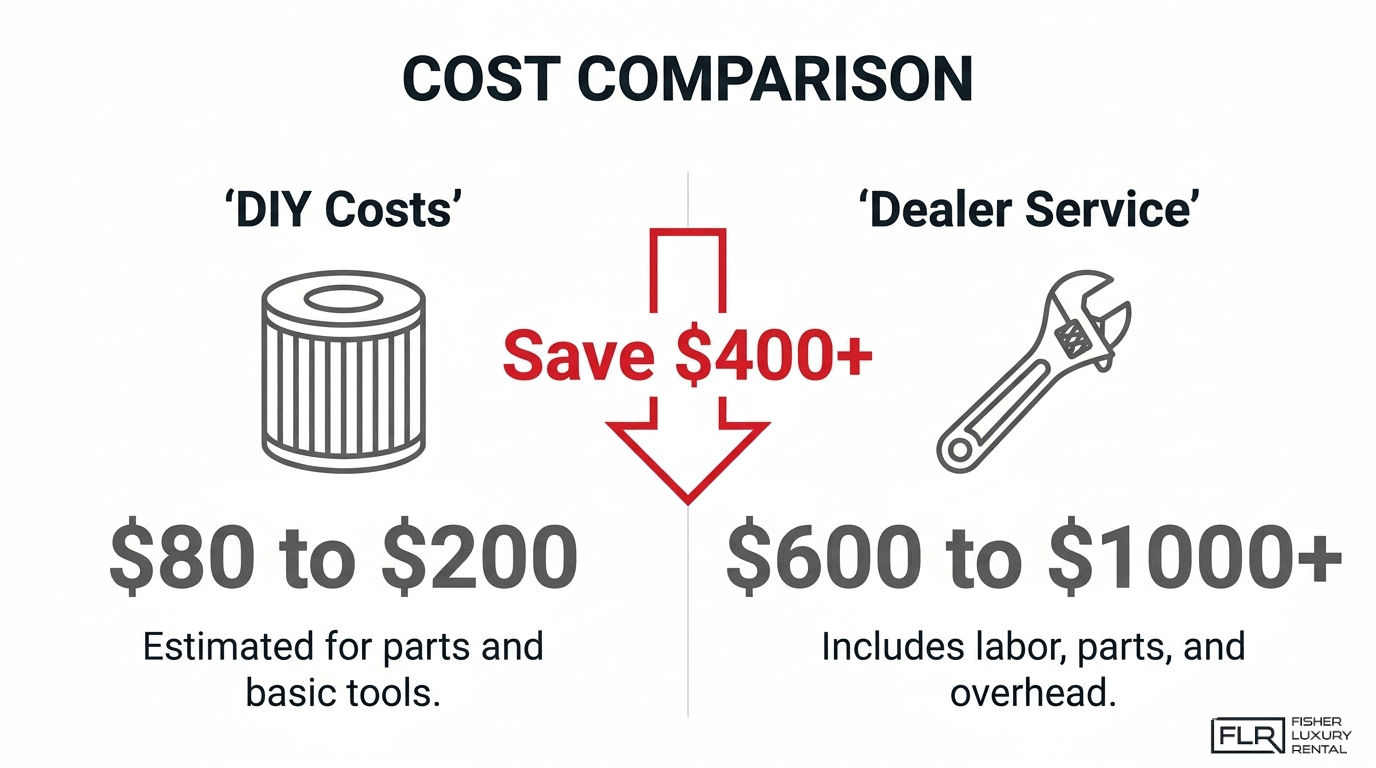
DIY DCT filter replacement costs vary by vehicle but generally fall between $80 and $200 for parts and fluid combined. A replacement filter kit typically runs $40 to $80, while OEM-spec transmission fluid adds another $40 to $120 depending on the brand and quantity required. Tools such as a torque wrench and fluid pump may add upfront expense if you do not already own them, though those are one-time investments.
Professional Shop and Dealer Service Costs
Professional DCT filter service costs range from $600 to over $1,000 at dealerships. According to CorvetteForum discussions, Chevrolet dealers charge approximately $600 for a DCT filter change and fluid top-off, with a full service exceeding $1,000. Independent specialist shops often charge less, but labor rates for precision transmission work remain substantial. For most owners, the DIY savings are real, though the diagnostic tools required for some vehicles, such as PIWIS or VCDS, can close that gap quickly on European platforms.
Should You Attempt a DCT Filter Replacement or Leave It to a Pro?
Whether to DIY a DCT filter replacement depends on your vehicle type, available tools, and technical skill level. The following factors help determine the right choice.
When DIY Is Reasonable
DIY is reasonable for DCT filter replacement when you have mechanical experience, access to OEM-spec tools, and a vehicle with a straightforward service procedure, such as a Volkswagen DSG. A VW DSG service is comparatively well-documented, with clear torque specifications and widely available VCDS diagnostic software. For confident, experienced home mechanics working on non-exotic vehicles, the cost savings are real and the procedure is achievable.
When You Should Leave It to a Professional
You should leave DCT filter replacement to a professional when your vehicle requires proprietary diagnostic systems, such as Porsche PIWIS or Ferrari DEIS, to complete the procedure correctly. These systems activate fill modes, run self-acquisition routines, and monitor real-time fluid temperatures. Without them, fluid level verification is guesswork. According to MBWorld, using the incorrect fluid temperature during a transmission service will result in an improper fluid level, leading to performance issues or transmission damage. For high-value exotics, the risk of a costly mistake far outweighs any DIY savings.
What Are the Key Risk Factors to Weigh?
The key risk factors to weigh before attempting a DCT filter replacement are tool access, diagnostic requirements, and the cost of failure. Consider these before starting:
- Diagnostic tools: Does your vehicle require PIWIS, DEIS, or VCDS to verify fluid level?
- Torque precision: Can you accurately hit tight specs such as 8 Nm on a BMW drain plug?
- OEM fluid availability: Can you source the correct, manufacturer-specified fluid?
- Cost of failure: Chevrolet dealers charge approximately $600 to over $1,000 for DCT service; transmission damage costs far more.
For most performance and exotic vehicles, professional service is the safer, smarter choice.
How Does DCT Maintenance Factor Into Driving a High-Performance Rental?
DCT maintenance factors into the high-performance rental experience by determining whether a vehicle delivers peak shift response or degraded performance on every drive. The H3s below cover how Fisher Luxury Rental handles that maintenance burden and the key takeaways from this guide.
Can Renting Exotic Cars from Fisher Luxury Rental Let You Experience Peak DCT Performance Without the Maintenance?
Yes, renting exotic cars from Fisher Luxury Rental lets you experience peak DCT performance without handling any maintenance yourself. Fisher Luxury Rental maintains its fleet, including DCT-equipped exotics such as the Ferrari 488 Spider, McLaren 720S, and Corvette C8, to precise operational standards so every vehicle is rental-ready. According to Rosso Service, most exotic cars should be serviced at least once per year regardless of mileage to protect performance and investment value. Fisher Luxury Rental absorbs that obligation entirely, meaning renters arrive at a vehicle already serviced, calibrated, and performing at its best.
What Are the Key Takeaways About DCT Filter Replacement?
The key takeaways about DCT filter replacement are that interval, fluid specification, and diagnostic verification are the three factors that determine success or failure. Service intervals vary by manufacturer, OEM fluid must match the transmission exactly, and a diagnostic tool is required to set the correct fluid level by temperature. Skipping any of these steps risks shift degradation or transmission damage. For drivers who want the DCT experience without the technical burden, renting from Fisher Luxury Rental provides access to maintained, high-performance vehicles in Phoenix and Portland on demand.